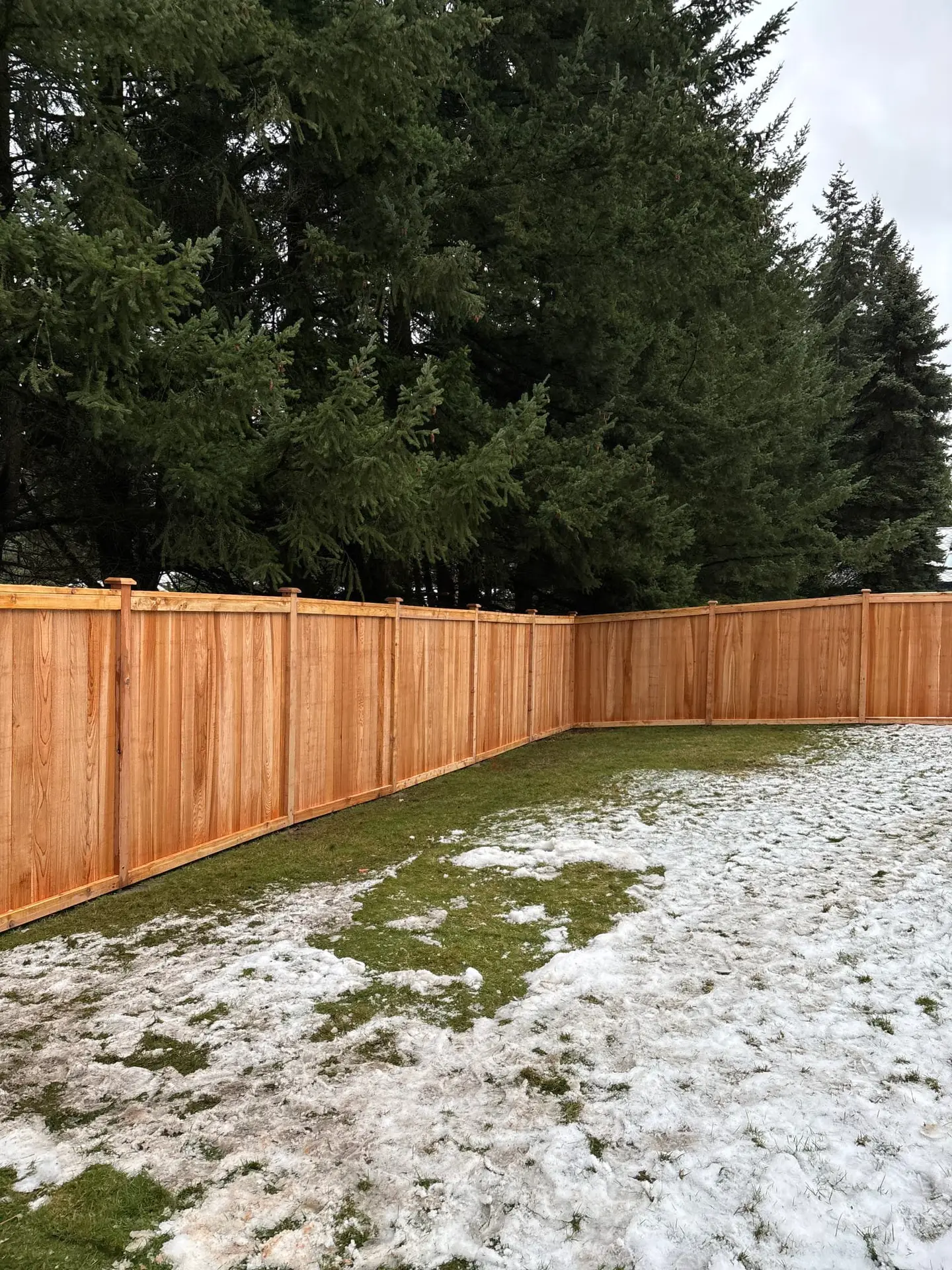
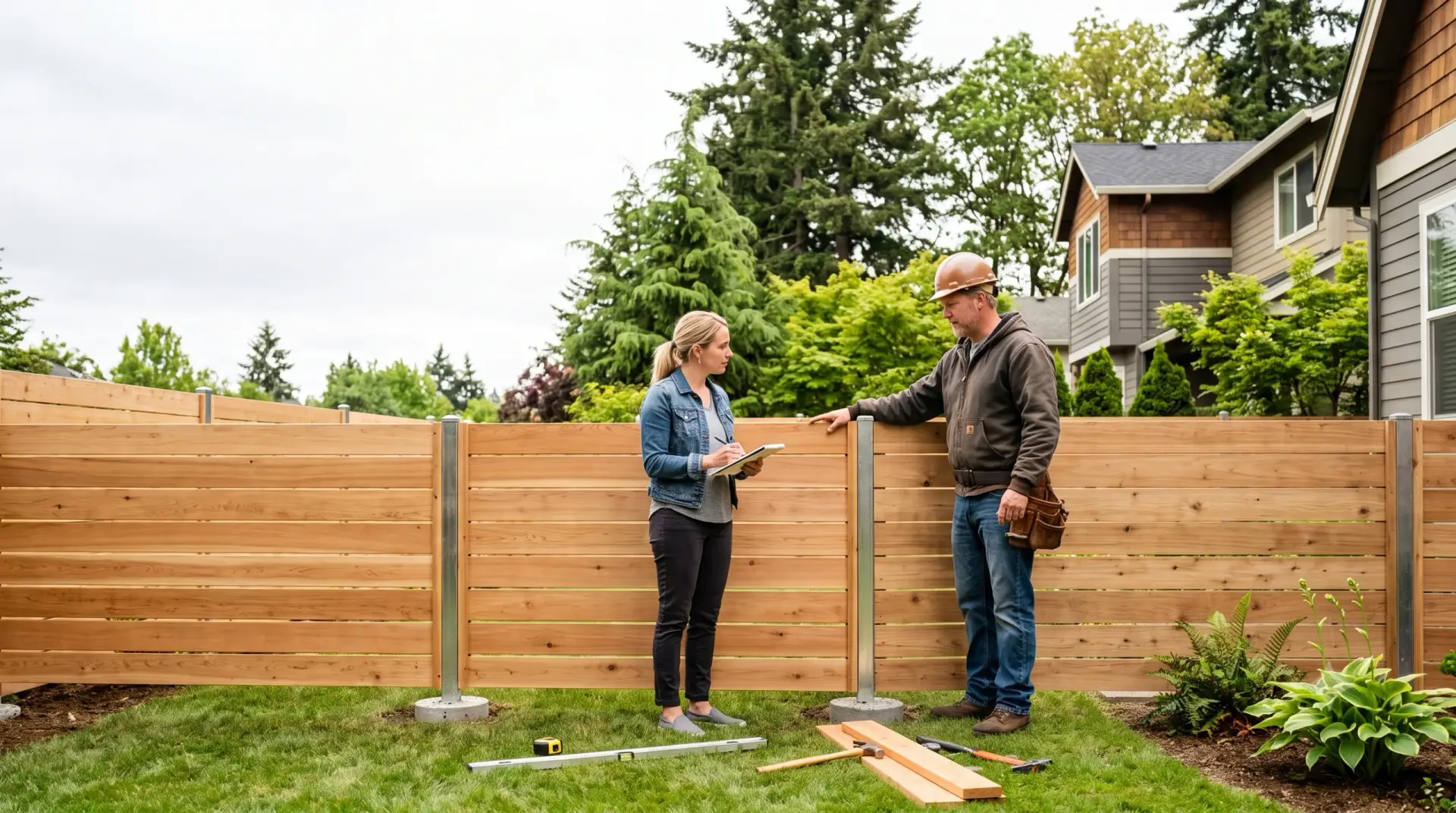
Fence drainage refers to the targeted strategies that direct surface water and soil moisture away from fence structures, particularly at the post bases where most failures actually begin. At Cool Cat Fence, we see this pattern repeatedly across Seattle, Portland, and coastal communities: homeowners replace boards while ignoring the real problem happening at grade level. Fence failures in the Pacific Northwest usually do not begin where people expect. The damage often starts at the bottom, around the posts, because that is where prolonged moisture creates the worst conditions for decay, corrosion, and gradual movement in the fence line.
This guide explains what Pacific Northwest homeowners should know about fence drainage, from the early signs that water is becoming a problem to the repairs and drainage system fixes that actually make sense in a wet climate. It is written for homeowners who are tired of dealing with the same issues after every long rainy stretch and want yard drainage improvements that do more than push the problem to another part of the yard. Seattle averages roughly 38 inches of precipitation a year, so drainage becomes essential much faster than many homeowners expect.1 The way rainwater moves around a fence, across the landscape, and away from the house has a direct effect on how long the structure holds up.
The direct answer is simple. When excess water collects around fence posts, it speeds up rot, encourages metal components to corrode, and can contribute to frost heave that pushes the fence out of alignment. Effective drainage helps direct water away before standing water undermines the structure.
Why Excess Water and Wet Soil Destroy Fences Faster Than People Expect
Most fence damage around here begins where people do not immediately notice it — at the bottom of the post. Clay-heavy soil holds moisture for a long time, especially once the rainy months settle in, and that leaves the wood base exposed to constant dampness. That is when fungal decay begins. It weakens the wood fibers from the ground up, especially where the post is buried or pressed against saturated soil. For a while, nothing may look seriously wrong. Then the post starts leaning or wobbling, and it becomes clear that the real damage has been developing below eye level the whole time.
The hardware follows a similar pattern. Brackets, screws, and fasteners weaken in wet, acidic soil, particularly where moisture never has much chance to dry out. Corrosion does not look dramatic in the beginning, but it keeps building. Galvanized steel can buy a few extra years, though even that protection wears down under constant dampness. Powder-coated finishes are not immune either. The coating usually gives way first around penetrations and exposed edges, which is exactly where water likes to collect.
Then there is frost heave, which many homeowners do not think about until the fence starts leaning for good. As trapped soil moisture freezes, it expands and pushes upward on the footing. In Portland-area yards, that repeated movement adds up over time. A slight lift one winter may not seem like much. Several winters later, the fence line tells a different story. At that point, bracing may hold things temporarily, but it does not address the cause of the movement.
All of these mechanisms lead to visible signs. The trick is catching them before the structural damage gets expensive.
The Field Signs of Standing Water and Fence Drainage Problems
Recognizing drainage problems early prevents small issues from becoming expensive replacements. The following table outlines common symptoms, their likely causes, and what to check next.
Symptom | What it usually means | What to check next |
Standing water at posts | Water pooling at grade due to flat or negative slope | Check grade with a level, inspect downspouts, probe for compacted soil |
Moss/algae on lower boards | Constant moisture exposure from irrigation or poor airflow | Check sprinkler direction, assess shade from overhanging vegetation |
Soil washing out near footings | Water runoff channeling along the fence line | Look for erosion paths, check uphill grading, trace water flow during rain |
Posts feel soft or move | Decay or heave at the base | Probe post with screwdriver below grade, check plumb, inspect footing area |
Standing water is the most obvious indicator after rain, but it is only part of the picture. Moss growth often points to a slower moisture problem — not dramatic, but constant. That usually means the base stays damp even when the yard looks dry overall. Erosion near the footing is another clue, since it often shows that water flow is being concentrated instead of spread out or redirected across the landscape. In some cases, you may also see erosion cutting through grass or washing soil away at the edge of the landscape. If the posts feel soft or unstable, the problem has likely already moved below the surface.
Drainage Solutions That Actually Improve Fence Drainage
Sometimes the best drainage fix is not complicated. The ground simply needs to stop holding water against the fence. Regrading the area near the posts helps create a steady slope so rainwater moves away instead of pooling in place. A 2% slope is usually enough — about 6 inches over 10 feet — and the area should be graded properly so runoff does not drift back toward the fence, the lawn, or the home’s foundation. That may involve removing 2 to 4 inches of soil near the fence and replacing it with a coarser material that lets water pass through more easily.
A gravel ring helps for similar reasons. When you dig around the post and backfill with crushed rock, you create a zone that drains much faster than dense native clay. The usual dimensions are around 12 to 18 inches in diameter and 6 to 12 inches deep, with 3/4-inch crushed stone doing most of the work. Some homeowners cover the top with geotextile fabric and a little soil so the ring blends into the landscape without clogging as quickly.2 This kind of small drainage fix is easy to install and often works well before a larger drainage project becomes necessary.
Downspouts are often the hidden source of the problem. Gutters that empty near the fence can dump a lot of water into one small area during a heavy storm, and the soil around the posts pays for it. Downspout extensions are usually the fastest first fix because they move runoff farther away from the fence, the house, and the home’s foundation. Where the lot is tighter, a buried pipe tied into a catch basin or another compact underground drainage system usually makes more sense. Installing a catch basin at the bottom of a problem downspout can also help route water away before it keeps saturating the same section of yard.3
If water still collects in the same area after all that, it usually points to the need for a French drain or shallow swale. A gravel-filled trench with perforated PVC pipe can move water away before it settles around the posts, in low areas, or along the edge of the lawn. On some properties, installers connect that pipe to basins, ditches, or even a dry well — an underground rock-filled basin that collects water and lets it percolate into the surrounding soil. The goal is to keep drainage moving instead of letting water sit and overwhelm smaller systems.
After addressing drainage, adding smart fence upgrades can further reduce repeat damage by incorporating moisture barriers, elevated post bases, or improved hardware that complements your drainage improvements.
Material Reality Check: Why Effective Drainage Still Matters in the PNW
Even durable materials demand proper drainage in the Pacific Northwest’s wet soil conditions. The assumption that premium materials eliminate drainage concerns leads to preventable failures. Moisture at grade remains the primary failure vector regardless of what the fence is made from.
Most residential wood fences depend on posts that spend their hardest years right at the soil line. In wet ground, that quickly becomes the weak point. Once the surrounding soil stays damp long enough, fungi begin breaking down the wood fibers that give the post its strength. Pressure-treated lumber slows that process, but it does not stop it. If the post remains in close contact with wet grade, visible signs of decay can still show up within three to seven years. The preservatives help, but they cannot completely overcome constant saturation, especially in a wooded area where shade, debris, slower airflow, and heavier landscape cover keep the ground wetter for longer.
Metal fencing avoids rot, but it has its own problems once moisture becomes constant. Galvanized steel, for instance, performs well until the protective zinc layer begins wearing down, and acidic clay soils tend to speed that up. The smaller openings and penetrations in the system — especially fastener holes — often become the first points where corrosion gets going. Stainless steel and aluminum are better suited to wet environments, though even those materials benefit from drainage that keeps the area drier and reduces movement at the connections.
The comparison reveals a consistent pattern: wood fails primarily through biological degradation under constant dampness, while metal fails through electrochemical attack and fatigue from seasonal ground movement. Both pathways accelerate when water sits at the base. Durable steel fence panels excel in wet conditions when combined with proper drainage and elevated or sleeved post installations, maintaining structural integrity where wood warps or heaves.
A 2-inch gravel lift or concrete collar alone extends service life by minimizing direct soil contact, yet without broader grading improvements, even premium materials degrade faster than they would in drier climates.
When to Call a Pro for Yard Drainage and Fence Problems
A fence that leans every spring is usually telling you something important: the issue is not fully above ground. If the same section keeps moving even after posts have been reset, saturated soil and frost heave are probably doing the real damage below grade. That kind of movement tends to come back because the cause was never removed. In cases like that, contractors may need to install underground drainage systems rather than rely on surface-level fixes alone.
The same is true when water continues to collect around the fence after you have already tried basic drainage improvements. That usually points to something more systemic — poor grading along the site, a blocked drain, clogging in the pipe, overloaded basins, or soil conditions that make water harder to manage than expected. In unincorporated King County, property owners are responsible for maintaining private drainage facilities on their property, so recurring problems do not stay someone else’s issue for long.
That is when professional help starts to make sense. A contractor can look beyond the leaning section itself and correct the yard drainage pattern that keeps triggering the problem. Regrading, subsurface drainage, swales, catch basins, and footing resets can all be handled together as one project, which usually leads to a better long-term result than repairing the fence in isolation. In more complex cases, the plan may also need to account for nearby driveways, ditches, streams, or other parts of the property that affect how water flows. On some sites, crews may need to install added drainage features, extend a trench, or rework connected systems so the fix holds up.
FAQ About Fence Drainage Solutions in Wet Yards
Why Does Effective Drainage Matter So Much in the Pacific Northwest?
Long wet seasons keep soil damp for months. When water sits at the post base, rot, frost heave, and structural movement speed up considerably compared to regions with distinct dry seasons. In this climate, effective yard drainage is essential because the same wet pattern can also affect the lawn, nearby landscape beds, and even the house if runoff is ignored for too long. That is one reason Seattle guidance recommends inspecting and cleaning gutters, drains, and catch basins at least annually, and more often when debris or sediment builds up faster.
How does poor drainage shorten a fence’s lifespan?
Waterlogged soil breaks down wood at ground contact, accelerates hardware corrosion, and stresses footings as the ground shifts and settles through seasonal cycles.
How Can I Tell if My Fence Has Yard Drainage Problems?
Look for puddles around posts after rain, moss or algae on the lower boards, soil washing out near footings, or posts that feel soft or wobble when pushed. In many yards, those signs also show up near gutters, downspouts, low areas, and the edges of landscape beds where water tends to catch and sit.
What French Drain and Yard Drain Fixes Help Protect Fence Posts?
Regrading to shed water away, adding gravel at the post base, installing a French drain or yard drain where water collects, and rerouting downspouts away from the fence line all help manage surface water effectively. In some cases, the best drainage system also includes downspout extensions, a catch basin, or a short trench with PVC pipe to drain water away from the problem area.5 If sediment starts building up, you may also need to remove sediment from the drain so the system keeps working the way it should.
Does gravel at the base of posts really help drainage?
Yes. Gravel gives water a path to move away instead of staying pressed against the post. It works best when the surrounding grade also drains away from the fence line and when the nearby yard drainage system is not blocked by sediment, debris, or clogging.
Can Drainage Solutions Extend the Life of an Older Wood Fence?
It cannot reverse rot that’s already there, but it can slow further damage. Fixing grade and improving drainage around posts often prevents early failure of remaining sound wood. In the right landscape setting, drainage solutions that use a simple drain, trench, or basin can support a much longer service life.
Can a Rain Barrel Help Reduce Water Near a Fence Line?
Sometimes. Seattle Public Utilities recommends rain barrels and cisterns as a way to reduce stormwater runoff, so they can help when one roof edge keeps dumping water into the same part of the yard. But a rain barrel is not a complete drainage solution on its own. It still needs proper overflow control, and the rest of the drainage system has to direct water away once the barrel fills.
When should I call a pro about fence drainage issues?
If water pooling keeps coming back, posts shift seasonally, or the fence starts leaning after winter, it is time. A professional can address both the fence repair and the drainage driver behind it. That is especially true when water starts to affect nearby lawn areas, basement walls, or the part of the yard that slopes toward the house. For urgent public flooding or clogged-drain issues in Seattle, residents can also report the problem to Seattle Public Utilities or use the Find It, Fix It app.