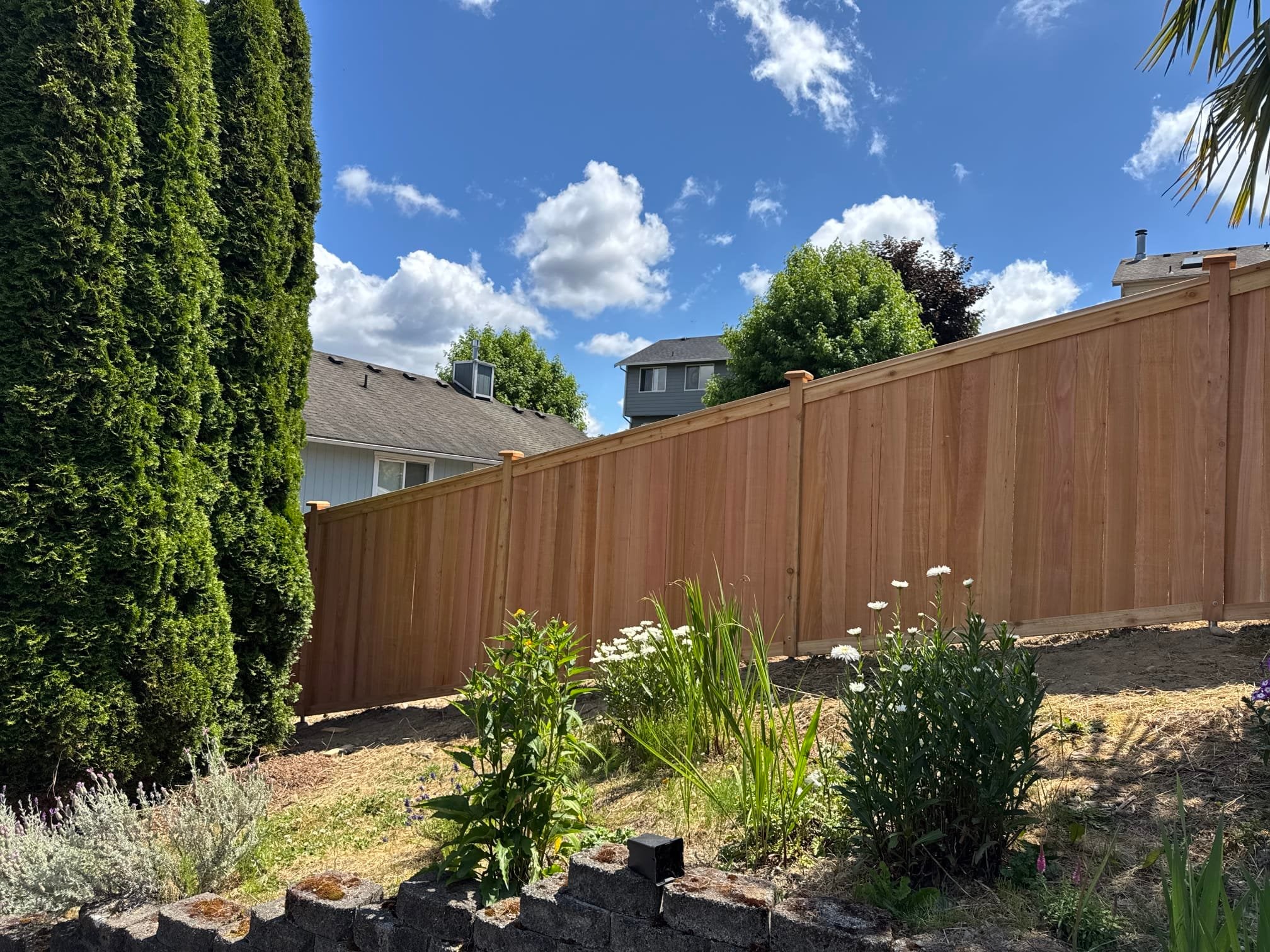
A thoughtful fence company in Bellevue, WA offering residential fence services and commercial fencing should understand what not to build and what to build. That tension sits at the heart of fence projects in neighborhoods like Vuecrest, Lake Hills, Enatai, and Somerset, where open front yards and low-profile boundaries between house and street were deliberate.
Today, many of those same streets are filling up with six-foot cedar walls that have nothing to do with the houses behind them. Local knowledge is essential for a fence company to provide solutions that withstand Bellevue’s specific weather conditions. Cool Cat Fence operates with a belief that restraint is its own kind of expertise in fence installation, and that knowing when to propose less fence is just as valuable as knowing how to install more.

The Postwar Yard Was Never Meant to Be Walled Off in Bellevue WA
Bellevue incorporated in 1953, right in the middle of America’s postwar building boom. https://www.visitbellevuewa.com/plan/bellevue-history/ Vuecrest was platted in 1946 as one of the city’s first planned residential developments, with generous lots and homes positioned for Lake Washington and Olympic Mountain views. Deed restrictions capped structure height at 20 feet, prohibited splitting lots, and favored low, unobtrusive site planning.
By the mid-1950s, Lake Hills followed as a planned community of ranch homes with notably no front-yard fences. In these neighborhoods, the yard was conceived as an extension of the house, and mid-century architects and planners believed in visual continuity between private and shared space. Low plantings, split-rail cedar, and post-and-beam structures were the boundary treatments of choice, rather than tall wood fence lines or chain link fence barriers. Solid privacy fences were unusual, and the openness reflected postwar ideals of light, connection, and visibility between neighbors.
What Changed—and Why It Matters for Your Bellevue Fence
Since the early 2000s, Bellevue has transformed. Tech-driven growth has pushed property values upward and put older housing stock under pressure, and a familiar teardown pattern emerged: a 1950s or 1960s rambler in Vuecrest, Lake Hills, or Enatai gets demolished and replaced with a much larger home that maximizes the buildable footprint.
On a 12,000-square-foot lot, the new construction often crowds the property lines. Sight lines compress, side yards shrink, and homeowners install tall privacy fences to reclaim seclusion the lot no longer provides naturally.
The issue isn’t privacy—privacy is legitimate. The issue is design incoherence. A six-foot solid board fence beside a low-slung 1958 rambler with deep eaves and a picture window doesn’t just look wrong. It contradicts the design language of the house itself. It’s like adding fake shutters to a glass-walled modernist building.
This is where choosing the right fence company in Bellevue WA matters. A Bellevue fence company should interrogate what the house and street are already saying before proposing height and style. A fence that works for a 2019 new build on a compressed lot may be completely inappropriate for a preserved mid-century home next door. Neighborhoods like Vuecrest also have active community associations and long-standing deed restrictions that shape expectations around structure height, lot splitting, and neighborhood character.
Fence Installation and Fencing Materials That Belong Next to a Mid-Century Home

Some fence styles feel native to Bellevue’s postwar streets; others look imported from a different era or a different city entirely. Knowing that difference is the foundation of a new fence that looks right and helps improve curb appeal.
Split-rail cedar is the most historically accurate boundary for Bellevue’s postwar ranch neighborhoods: two or three horizontal rails between posts, open and low-profile, defining space without blocking it. This style works especially well in front yards, where Bellevue code limits fence height to about four feet six inches within the required setback.
Hog wire with a cedar frame has become a modern favorite with legitimate mid-century roots. The design is simple: welded wire mesh in a rectangular grid, framed by cedar posts and rails. It maintains visibility, supports climbing plants, and bridges the gap between the rustic feel of Lake Hills backyards and the more polished character of Enatai or Somerset lots. This style suits side yards and garden boundaries particularly well, and fence fence contractors familiar with the Bellevue area often recommend it for residential fencing projects where privacy isn’t the primary goal but you still want security and clear boundaries for pets, play areas, and garden gates.
Horizontal board fencing can work next to mid-century homes, but only with restraint. Keep the height around four to five feet, use wider spacing between boards for partial transparency, and match the wood tone to the house. A tightly gapped six-foot horizontal wall reads as aggressively contemporary rather than sympathetic to the era.
Post-and-beam fences with wire or simple lattice infill represent the most architectural option. Heavy posts with a top beam and minimal infill echo exposed structural elements common in Bellevue ramblers. A carefully planned cedar fence installation in this style can define a boundary without visually fighting the house behind it.
What to avoid: tall vinyl fence panels, heavily ornamental iron with decorative scrollwork, and long, unbroken board-on-board privacy runs that wall off the entire property line. None of these belong next to a postwar rambler; they clash with the materials, the scale, and the intent of the original architecture.
Fence Installation Rules: Code, Covenants, and Common Sense
Fences in Bellevue up to 8 feet tall usually do not require permits unless they use concrete blocks or masonry or are located in critical areas. In residential areas, fences within the required front-yard setback are limited to about four feet six inches, while fences up to eight feet are typically allowed in side and rear yards without a building permit. Corner lots face additional sight-obstruction requirements in Bellevue City Code sections 14.60.240 and 14.60.241.
Beyond city code, HOA covenants and community association guidelines can be stricter. In Washington, these covenants can dictate materials, colors, styles, and heights with more specificity than municipal regulations. Vuecrest’s 20-foot overall structure height cap and prohibition on lot splitting reflect a neighborhood mindset that extends to fencing decisions. Bellevue homeowners should secure written approval from their HOA board before starting any fence project.
One practical note that catches people off guard: the right-of-way in Bellevue’s residential areas often extends beyond the paved street or sidewalk, so that grassy strip you maintain may not actually be your property. Confirm your property lines before building, especially in older neighborhoods where assumptions about yard limits can become expensive mistakes.
Combine code checks, covenant reviews, and basic courtesy toward neighbors. The goal is a fence that feels right both legally and socially on your street and creates a smooth process from early design discussions through final installation.
Closing: What Bellevue’s Planners Already Knew—and What a Bellevue Fence Company Should Remember
The postwar planners who shaped Vuecrest, Lake Hills, and Enatai understood something that’s easy to forget: a fence is a design decision, not just a property boundary. The open yards and low-profile boundaries of those neighborhoods were deliberate choices about how residential life should look and feel.
The best fences in Bellevue’s mid-century streets don’t compete with the homes behind them. They protect privacy and security while supporting curb appeal. Sometimes the most skilled thing an experienced, fully licensed fence company in Bellevue WA can do is build something that barely calls attention to itself, or suggest that the front yard needs no fence at all.
FAQ: Fence Leaning Problems and Fix Options
Do I need a permit for fence installation in Bellevue, Washington?
Most fences in Bellevue do not require a building permit. https://bellevuewa.gov/city-government/departments/development/permits Fences up to eight feet in side and rear yards can usually be built without one, while taller fences and some front-yard conditions trigger review. Always confirm current requirements with City of Bellevue Development Services before starting your project.
What are the fence height limits in Bellevue WA?
In residential areas, front-yard fences are limited to four feet six inches within the required setback, and fences up to eight feet are allowed in most side and rear yards. Corner lots must also comply with sight-obstruction rules at intersections per Bellevue City Code sections 14.60.240 and 14.60.241.
What fencing materials and styles work best for a mid-century modern home?
Split-rail cedar, hog wire with a cedar frame, and horizontal board fences with wider spacing work well with mid-century architecture. These styles respect the open, low-profile aesthetic that defined postwar residential design in the Bellevue area. Avoid tall solid vinyl panels or ornamental iron, which clash with the era’s emphasis on simplicity and natural materials. Vinyl and aluminum are also low-maintenance in Bellevue’s wet conditions.
Does Bellevue have historic district fence rules?
Bellevue does not currently have formally designated historic districts with fence-specific regulations for most residential neighborhoods. Many areas instead have HOA covenants or community associations that restrict fence height, materials, and design; Vuecrest, for example, has deed restrictions including a 20-foot structure height limit. Always check with your neighborhood association before building.
What kind of wood fence lasts longest in the Pacific Northwest climate?
Western red cedar is the most popular choice for the Pacific Northwest because of its natural resistance to rot, decay, and insect damage. It handles Bellevue’s rain and humidity well without heavy chemical treatment. Properly installed and maintained, a cedar fence often lasts 15 to 20 years or longer—a durable option that still needs some care and minimal upkeep. Many companies also back their work with material and workmanship warranties, so read the fine print before you commit.
Can my HOA control what kind of fence I build in Bellevue?
Yes. In Washington State, HOA covenants can dictate fence materials, colors, styles, and heights, sometimes more strictly than city code. The City of Bellevue has no authority to enforce HOA rules, but your association can. Review your CC&Rs carefully and get written approval from your HOA board before starting any fence project. A good fence company in Bellevue should offer free consultations and clear written estimates so you understand labor, materials, and permits before work begins.
What is a hog wire fence vs. a chain link fence (or chain link)—and does it work for residential properties?
A hog wire fence uses welded wire mesh panels, usually in a rectangular grid, framed by wooden posts and rails. Originally an agricultural style, it has become popular in residential settings for its clean lines, visibility, and ability to support climbing plants. It pairs well with mid-century and contemporary homes and works for both security and aesthetic appeal in your outdoor space. Chain link fencing is a low-cost option that offers quick installation and easy maintenance.
When was Vuecrest in Bellevue developed?
Vuecrest was platted in 1946 and established as one of Bellevue’s first planned subdivisions. The roughly 80-acre neighborhood was designed to maximize views of Lake Washington and the Olympic Mountains, and deed rules capped structure height at 20 feet and prohibited splitting lots.
What is the most common fence mistake homeowners make in Bellevue?
Installing a tall, solid privacy fence without considering the architectural style of the house or the character of the neighborhood. A six-foot board wall next to a low-slung 1950s rambler with large windows contradicts the home’s original design intent. The best approach is to match the fence style to the house and street, treating the new fence as a design element rather than just a property marker.