A horizontal wooden fence can transform your backyard or patio into a modern, elegant sanctuary while providing the privacy and protection that every homeowner wants. In this post, you’ll discover how a horizontal fence differs from traditional styles, why horizontal privacy fence designs are popular, and how to build one that will last in our climate. We’ll cover the best wood species, how to avoid rot, how to match your fence with pergolas or landscaping, and design ideas that bring function and beauty together.
What Is a Horizontal Wooden Fence and Why Choose It?
A horizontal wood fence consists of boards laid side by side, running horizontally rather than vertically. This method lends itself to a sleek, contemporary look, making the fence more of a design element than just a boundary. A horizontal privacy fence still ensures you get coverage and screening, but with cleaner visual lines.
Homeowners who want an outdoor space that feels open yet secluded often gravitate toward horizontal styles. It’s a way to upgrade your style while protecting your property at the same time. Whether your yard is flat or gently sloped, a well-built horizontal fence can serve as a strong anchor in your landscape.
The Advantages of a Horizontal Privacy Fence

Modern Visual Appeal
The first thing many people notice is how a horizontal wooden fence complements modern architecture and landscaping. It delivers that minimalist, bold aesthetic that makes a fence feel like part of your design rather than an afterthought. It matches well with clean lines, metal accents, and simple plantings.
Spacious Feel in Limited Areas
One of the strengths of horizontal design is that it can make a narrow yard feel wider. The eye naturally follows the horizontal lines, giving a visual illusion of more space. For homes with narrow outdoor space, that can be a big win.
Flexible Privacy and Airflow
Not every homeowner wants a fully solid wall. A horizontal privacy fence can be configured in several ways:
- Close-butted boards for maximum screening
- Narrow gaps between boards for airflow and light
- Alternating spacing or shadowbox patterns for partial openness
You gain control over privacy and ventilation without losing aesthetic appeal.
Durable with Proper Design
A horizontal fence built with strong posts and proper bracing can be extremely sturdy. With quality wood, good protective treatments, and consistent maintenance, it can last many years without excessive wear.
Easy Integration with Other Elements
If you have a pergola, garden beds, or a patio, a horizontal fence can match or complement those features. You might add built-in planters, lights, or gates that tie into your overall outdoor design. The fence becomes more than a perimeter, it becomes part of your environment.
Trade-Offs and Challenges to Consider
No solution is without drawbacks. Here are the issues homeowners should understand before committing to a horizontal design:
Higher Cost and Labor Intensity
Compared to a vertical picket or traditional panel fence, a horizontal wooden fence often costs more. Why? Each board might need precise cutting, leveling, and alignment. Extra effort in layout and adjustment typically equates to higher labor expense.
Compare the Complete Installation Scope
Ask whether the estimate includes existing fence removal, disposal, gate hardware, site preparation, and any applicable permit fees. Restricted access, roots, rocky ground, and changes in elevation can affect the work required.
Compare quotes for the same fence height, board dimensions, spacing, post system, and gate configuration. A price per linear foot is useful only when you understand what it includes. Have exclusions and separately priced work identified before approving the project.
Risk of Sagging
Because the boards span laterally between posts, there is more potential for sag or warp if you skip proper supports. Choosing solid materials, closer posts, and mid-span bracing can help mitigate that risk. Without vigilance, sagging is one of the most common long-term complaints.
Terrain and Slope Obstacles
If your property has significant grade changes, a horizontal fence becomes more complex. Stepped designs or custom framing might be necessary to follow contour lines. In such cases, a more traditional vertical or mixed style might be easier and more cost-effective.
Climbing Concerns
Horizontal lines can inadvertently give footholds. In settings where safety or security is a concern, this can be a disadvantage versus vertical pickets, which provide less grip.
Maintenance Commitment
Wood always demands attention. A horizontal fence may require more vigil: checking for rot, warping, or loosening boards. You must reapply stains or sealants periodically, especially in wet climates. Neglect can accelerate wear.
Best Wood, Posts, and Materials for Longevity

Building a horizontal fence that endures means picking the right wood, posts, and protective treatments. Here’s how to get it right:
Cedar: The Go-To Choice
Cedar is a top pick in our region. It resists decay, is relatively stable under seasonal moisture fluctuations, and takes stains or finishes well. It gives warm tones and ages gracefully.
Other Wood Options and Treatments
- Pressure-treated lumber: cheaper, more rot-resistant to start, but often more susceptible to warping if not properly dried and installed.
- Hardwoods (like ipe or garapa): dense, long-lasting, but expensive and heavy to work with.
- Engineered wood / composites: less common in purely horizontal builds, but viable for hybrid designs.
Posts and Framing
The post system is the backbone of your fence. Good posts must be strong, well-anchored, and properly spaced. Many builders combine wood posts with steel brackets or frames to reduce movement and improve rigidity. The connection between boards and posts must be precise to protect against warping or sag.
Protecting Against Rot and Weathering
To fight rot and weathering, apply quality sealants or stains that include UV protection and water repellents. Make sure you let the wood season (dry out) before sealing. Also, install the lowest boards slightly above ground to prevent moisture wicking. Use stainless steel or coated fasteners that resist corrosion.
Design Ideas to Match Your Outdoor Space and Style
Below are designs and techniques that build character into your fence, turning it into a feature, not a backdrop.
Tight, Clean Horizontal Privacy Fence
Closely fitted horizontal boards provide substantial screening, but individual boards can change dimensions as their moisture content changes. Small gaps may develop, so a butt-jointed layout should not be described as permanently opaque. If uninterrupted screening is essential, discuss an overlapping or interlocking board system and its installation requirements with your contractor.
Gapped Horizontal Slat Fence
Deliberate gaps between horizontal boards admit light and preserve partial views. Choose the spacing by reviewing a sample section from both sides, including from your usual seating areas. The installation gap should account for the selected boards and their moisture condition; one measurement does not suit every fence. Wider openings create a more open appearance but provide less visual screening.
Shadowbox Horizontal Patterns
By alternating board placement on either side of a central rail, you get partial concealment from direct view while keeping a sense of openness. This is a clever way to balance privacy and visual interest.
Mixed Material Combinations
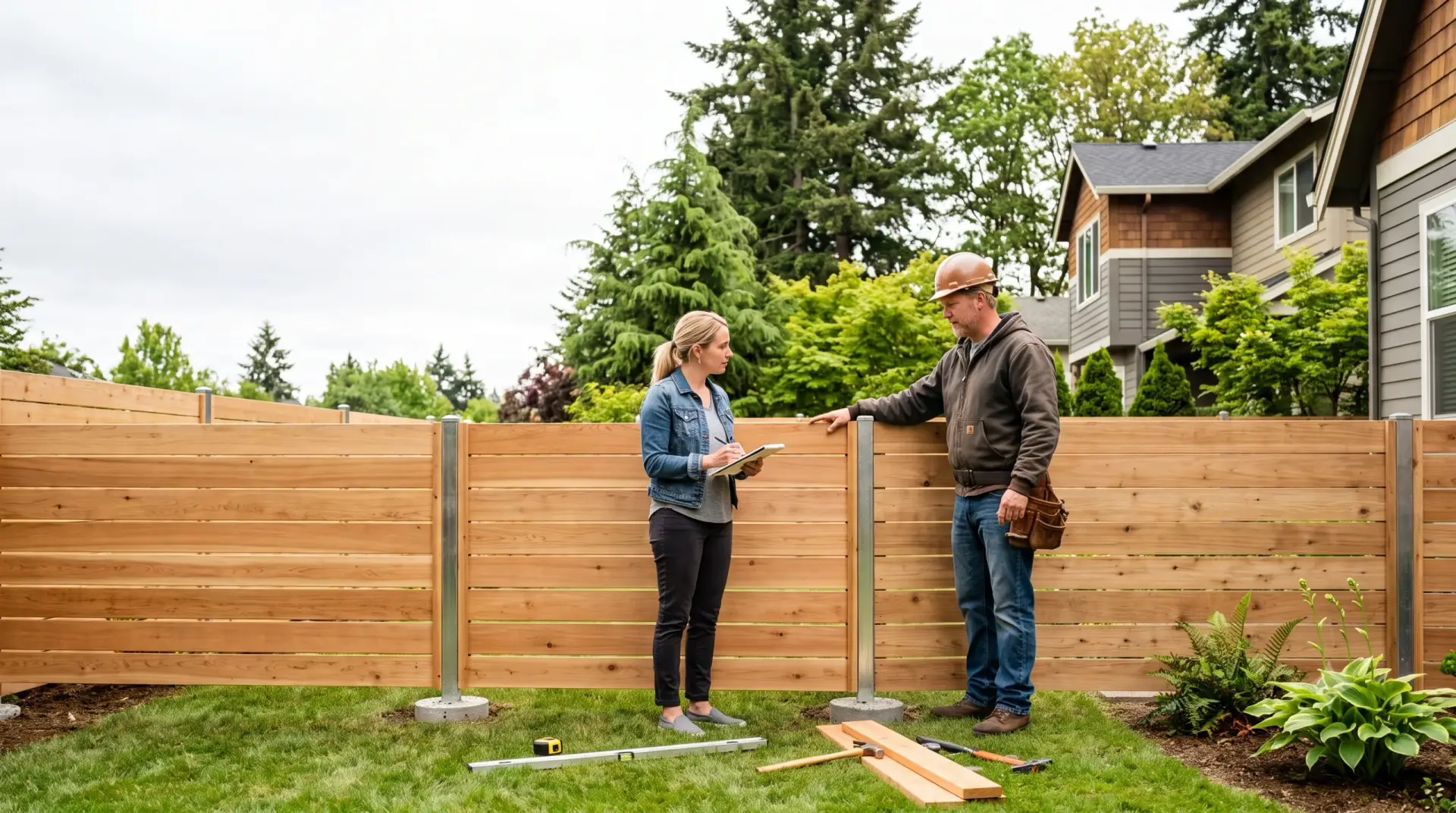
Combining wood and metal (steel or aluminum frames, posts, rails) gives you structure and visual contrast. Many homeowners choose a contemporary look where cedar slats are framed in dark metal, creating crisp edges and a long-lasting skeleton.
Integrated Features
- Pergola tie-ins: Extend the fence style across or around a pergola, creating a unified look.
- Planter walls or troughs built into lower sections of the fence.
- Gate designs that mirror the horizontal motif for seamless transition.
- Lighting: LED strips or post cap lights embedded into the fence for nighttime ambiance.
These design touches help your fence feel less like a structure and more like a curated border for your yard.
Plan Privacy and Access Around Everyday Use
Before choosing fence height and board spacing, check the views from your patio, seating areas, windows, and neighboring properties. A layout that screens a seated person may still leave clear views from a higher window or through gaps at an angle.
Mark gate locations around the routes you actually use. Allow room for trash bins, lawn equipment, and the gate’s full swing. Consider how planting beds and furniture will affect access once the fence is installed.
Review the proposed top line from several points in the yard. Horizontal boards can visually connect different areas, but height, spacing, and transitions should suit the property rather than follow one pattern everywhere.
A Seattle Project: Horizontal Cedar with Matching Gates
Cool Cat Fence installed a 6-foot horizontal cedar fence in Seattle with two double swing gates, measuring 12 and 8 feet wide, and two 4-foot single swing gates. Cedar top caps and a matching board pattern tied the fence and gates together.
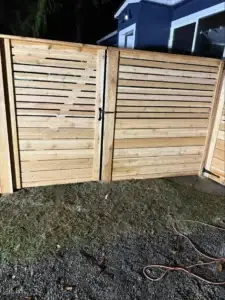
The design combines spaced upper boards with closely fitted lower rows. The upper openings preserve partial views, while the lower boards provide more screening. This project shows how board spacing can vary within one design to balance openness and privacy.
Explore the horizontal cedar fence and gate project in Seattle to see the completed installation.
Planning Tip
Before approving the board spacing, ask to see a small sample of the proposed layout. View it while standing and while seated at patio height, then check it from an angle. A gap that looks subtle straight on may reveal more of the yard from another viewpoint. Confirm the appearance before repeating the pattern across the entire fence.
Installation Best Practices: What Makes a Fence Stay Straight

Plan the installation in this order:
- Confirm the fence location, applicable local requirements, and underground utility markings before digging.
- Mark corners, ends, and gate openings, including the clearance needed for each gate to swing.
- Select the board dimensions and layout, then confirm the support spacing and footing requirements for that design.
- Review a sample section for board spacing, privacy, and appearance before installing the remaining boards.
- Check alignment, connections, ground clearance, and gate operation before the final walkthrough.
Post Spacing and Depth
Post spacing and footing dimensions depend on the board size, framing, fence height, soil, and site exposure. Confirm the allowable unsupported span for the selected design before marking post locations. Follow the footing requirements for the proposed post system and any applicable local requirements.
Mid-Span Support and Bracing
If you have longer runs or heavy boards, mid-span bracing or steel insert rails help reduce deflection. Without that support, even high-quality boards can sag over years.
Level Lines and Precision Layout
Because your boards run horizontally, any deviation in level or alignment shows up visually. Use strong layout tools, string lines, and laser levels during installation. A small error at the start amplifies across the span.
Board Attachment and Fasteners
Use corrosion-resistant fasteners (stainless or coated). Pre-drill to reduce splitting, especially near ends. Leave a small expansion gap if recommended by the manufacturer or conditions.
Slope Handling Strategies
On gradual slopes, consider stepping the fence in horizontal runs. On steeper land, you may need angled transitions or mixed styles. Always walk the terrain, adjust the layout, and coordinate with your installer early.
Stains, Sealants, and Ongoing Maintenance
Even with the best build, a fence must be maintained to last.
Timing: When to Apply Finish
Follow the finish manufacturer’s requirements for surface preparation, wood moisture, temperature, and dry weather. Do not rely on a fixed number of weeks after installation. The wood must meet the product’s application requirements before finishing.
Choosing Your Products
Choose a finish intended for exterior wood fencing and compatible with any existing coating. Compare the appearance, preparation requirements, and maintenance instructions. Semi-transparent products leave more grain visible, while solid-color finishes provide greater coverage. Determine recoating time from the product instructions and coating condition rather than a fixed schedule.
Regular Cleaning and Upkeep
Annually, rinse the fence, scrub shaded or damp areas, inspect for damage or fastener wear, and make spot repairs. Clear debris at the base so moisture doesn’t sit against the boards.
Monitoring for Rot and Damage
Check lower boards near ground for signs of rot or softness. Make sure boards remain straight and check for shifting. Early detection gives you repair options before replacement.
Local Considerations: Codes, HOAs, and Permits

Before you build, it’s smart to check local rules so you don’t run into surprises afterward.
Fence Height Limits and Setbacks
Many neighborhoods limit fences to 6 feet in backyards. Some front-facing or side areas may need to be lower. Verify setbacks from property lines or sidewalks. Some places require slat gaps or sightline allowances.
HOA Rules and Design Guidelines
Homeowners associations sometimes have strict rules about fence style, materials, or orientation, some disallow horizontal designs. If your neighborhood has an HOA, get design approval early.
Permit Requirements
In Seattle, Portland, or nearby cities, permits might be required for any fence over certain heights or in special zones (historic, view corridors, etc.). Account for permit time in your schedule and budget.
Bringing It All Together: When Horizontal Works Best
A horizontal wooden fence is ideal when you want to fuse style, privacy, and a bit of architectural flair in your outdoor space. It makes sense when:
- Your yard is fairly level or only gently sloped
- You want a modern, clean look
- You’re willing to invest in strong materials and installation
- You want the fence to blend with a pergola, garden, or lighting
- You need full or partial privacy but don’t want a wall
If your yard is very steep or your budget is tight, a vertical or hybrid privacy fence might be more practical. Still, a good designer can help find the best compromise.
Why Partner With a Pro Who Understands Horizontal Design
At Cool Cat Fence, we don’t just build fences, we craft structures that last. We know how to:
- Choose and pre-select cedar and other premium wood
- Create precise layouts so your boards stay level
- Use strong posts, proper spacing, and mid-span supports
- Coordinate with slope, plants, pergolas, and outdoor space design
- Guide you through local codes, HOA rules, and permits
- Provide maintenance guidance so your fence ages beautifully
We design and install fences that don’t just look good, they protect your investment and your peace of mind.
If you’re ready to get started, we’ll meet you on your property, talk through design and materials, and give you a transparent quote, no surprises. Check our project log to learn more about the variety of styles we continue to develop, ensuring a great fit for your home.
FAQs About Horizontal Wooden Fences
Does a horizontal wood fence with gaps provide privacy?
A gapped fence provides partial screening rather than complete privacy. Visibility depends on the opening size, board width, viewing angle, and the relative height of the viewer. Check a sample from the patio, windows, and neighboring sightlines before choosing the layout.
Can I alternate wide and narrow horizontal boards?
Yes. Alternating board widths can create a repeating pattern without changing the overall horizontal style. Plan the sequence before installation and check how it finishes at the top, bottom, corners, and gates. Board width and gap size are separate choices: changing the pattern does not automatically improve privacy.
Are horizontal fences more expensive than vertical ones?
Yes, they generally cost more in labor and precision. But many homeowners find the style and long-term durability worth it.
Will a horizontal fence sag over time?
Sagging can develop as boards weather, connections loosen, or posts move. Appropriate board spans, supports, and connections help reduce the risk. Inspect the fence periodically and have noticeable movement or deformation assessed before it worsens.
What is the best wood for a horizontal fence?
Western red cedar is a practical option because of its natural decay resistance and relative dimensional stability. However, the species alone does not determine performance. Compare the grade, board dimensions, moisture condition, support requirements, and maintenance needs of the materials offered for your project.
Can I install a horizontal fence on a slope?
You can, but it may require stepping, angled transitions, or custom frameworks. In steeper zones, other styles may be more practical.
How much maintenance is required?
Inspect boards, posts, connections, and gate hardware regularly and after severe weather. Remove debris from the base and clean the surface using a method suitable for the wood and finish. Follow the finish manufacturer’s instructions and coating condition when planning recoating.
Can I mix wood and metal in a horizontal fence?
Absolutely. Hybrid designs combining wood and steel or aluminum frames are some of the most durable and stylish fences out there.
Final Thoughts: Style, Privacy, and Durability in One Fence
A horizontal wooden fence is more than a boundary, it’s a bold design choice that merges style, privacy, and thoughtful construction. When done well, it becomes a feature that complements your backyard, outdoor space, and architecture. But success hinges on smart material choices, careful installation, and ongoing care.
If you’re ready to bring modern elegance and lasting performance to your property, let’s build something that’s both beautiful and built to last.