The appearance of a fence does not reliably establish who owns it. To determine whether a fence is yours, your neighbor’s, or subject to a shared arrangement, you need to confirm where it stands, review any relevant agreements, and check the history of its installation and use.
For Texas homeowners, the most reliable process is:
- Review your deed, recorded plat, closing survey, and any written fence agreements.
- Hire a licensed land surveyor if the exact boundary is uncertain.
- Determine whether the fence is entirely on one property, crosses the line, or sits directly along it.
- Check municipal regulations, deed restrictions, and HOA requirements.
- Discuss the findings with your neighbor before repairing, removing, or replacing the fence.
A survey can establish the fence’s position relative to the property line, but it may not identify who paid for the fence or what the owners previously agreed to. Those questions may require additional records and communication.
This article provides general information for Texas homeowners and is not a substitute for advice from a licensed surveyor or real estate attorney.
Understanding Fence Ownership and Property Lines

Start With Property Records
Review your property deed, recorded subdivision plat, closing documents, and any survey provided when you purchased the property. Relevant records may also be available through the county clerk or your title company.
These documents can help establish the legal boundaries, easements, and dimensions of the lot. However, a deed or plat will not necessarily identify the owner of an existing fence.
Look for any written agreement concerning:
- who installed or paid for the fence;
- whether the fence was intended to mark the legal boundary;
- responsibility for repairs and replacement;
- permission to place the fence on or across the property line;
- maintenance access from either property.
Use a Professional Boundary Survey
If the fence’s location is uncertain, a boundary survey performed by a licensed land surveyor is more reliable than measurements from an online map, an old fence line, or visible markers alone.
Survey pins, iron rods, and other monuments can help a surveyor locate the boundary. Homeowners should not move or rely exclusively on suspected markers because they may be displaced, damaged, or unrelated to the current legal description.
A survey answers where the fence stands. Ownership and maintenance responsibility may still depend on installation records, written agreements, and how both owners have used the fence.
Understand What Texas Law Does—and Does Not—Assume
Texas generally does not require a property owner to contribute to the cost or future maintenance of a fence built by a neighbor unless the owners have agreed otherwise.
A fence located on the boundary is not automatically proof of equal ownership. Shared ownership may depend on factors such as whether the fence crosses the line, whether both owners use it, and whether an agreement exists.
An old fence also does not automatically replace the legally surveyed boundary. Adverse possession involves specific legal requirements and cannot be established solely because a fence has remained in one location for many years. If a neighbor claims that an old fence changed the legal boundary, consult a Texas real estate attorney before altering it.
Check Local Regulations and HOA Requirements
Fence ownership and construction regulations are separate issues. Even if the fence belongs to you, a city ordinance, easement, deed restriction, or HOA rule may limit its height, materials, design, or placement.
For example, the City of Austin fencing regulations generally limit a solid fence constructed along a property line to six feet. Defined exceptions apply to certain grade changes and site conditions, while permit requirements depend on the fence’s height, location, and whether the property lies in a floodplain.
Requirements differ across Texas, so check the rules for your municipality and property before modifying the fence. HOA restrictions may be more stringent than local design requirements, but they do not eliminate the need to comply with applicable city and state laws.
Can the Finished Side Show Who Owns the Fence?

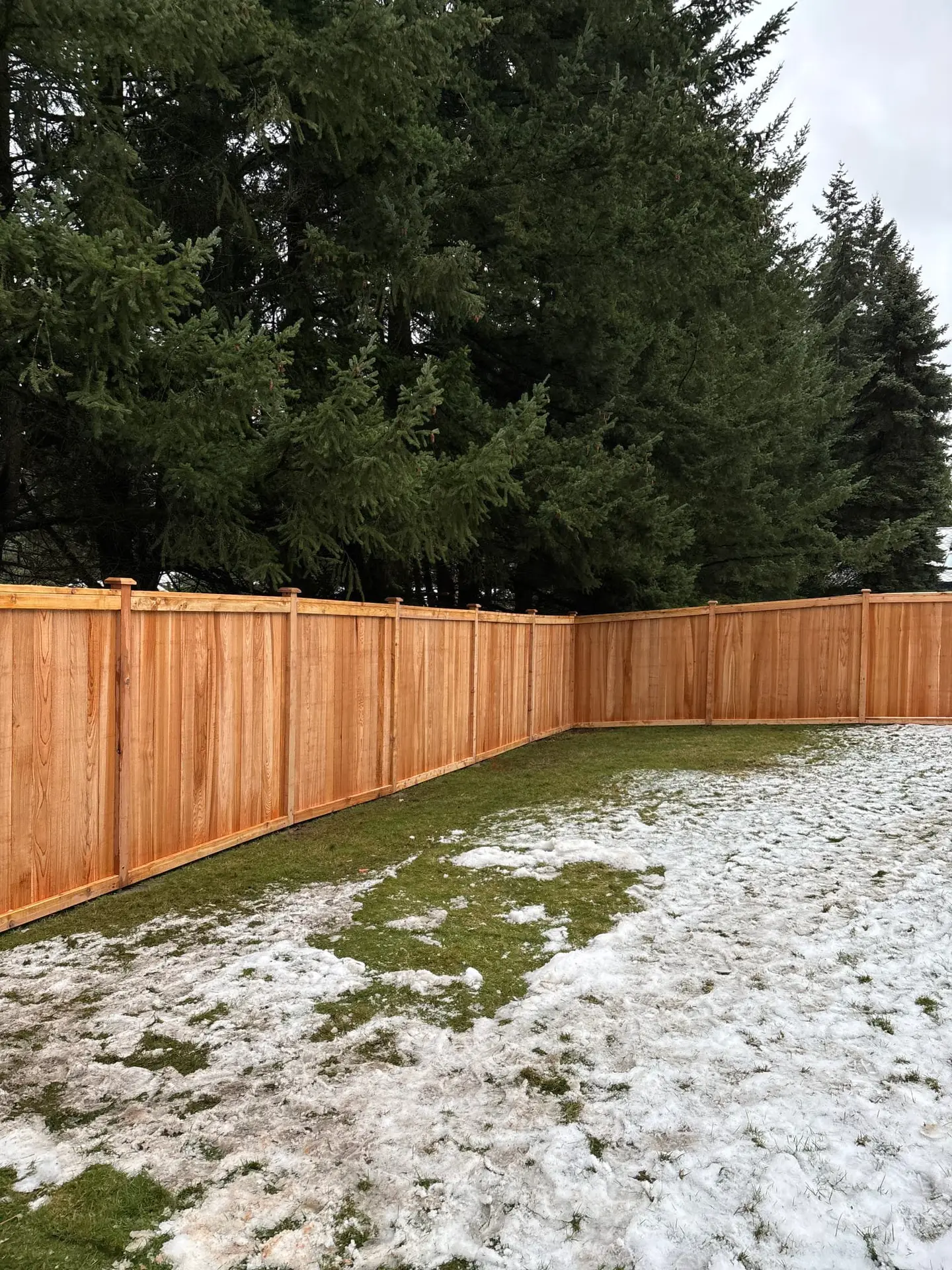
The finished or “good” side may face away from the property of the person who originally installed the fence, while posts and rails may face inward. However, this is a construction convention—not legal proof of ownership.
A double-sided fence, replacement panels, prior repairs, or work completed by a former owner can make visual clues particularly unreliable. Use the fence’s orientation only as a starting point for questions, not as the basis for removing or altering it.
Discuss the Fence With Your Neighbor
Compare the Available Information
Ask your neighbor what they know about the fence’s installation, previous repairs, and any arrangements made by former owners. Share the survey and relevant documents rather than relying on assumptions about the fence’s age or appearance.
Keep the discussion focused on specific questions:
- Who installed or paid for the fence?
- Does either owner have a written agreement?
- Is the fence entirely on one lot or across the boundary?
- Who has maintained it?
- Does either property depend on it for privacy, security, or pet containment?
Historical maintenance can provide useful context, but it does not necessarily establish legal ownership.
Put a New Agreement in Writing
If you and your neighbor agree to share costs, relocate the fence, or divide future maintenance, record the arrangement in writing before work begins. The document should identify the fence, its location, each owner’s responsibilities, access requirements, and how future repairs or replacement will be handled.
For an agreement that affects the legal boundary or ongoing property rights, consult a Texas real estate attorney about the correct wording and whether the document should be formally recorded.
What to Do If the Fence Is on Your Property

If the survey places the fence entirely within your property and no agreement gives your neighbor an ownership interest, you will generally control decisions about its maintenance or replacement. Confirm the applicable permit, easement, setback, and HOA requirements before starting work.
Notify your neighbor before removing a fence they may rely on for security, privacy, or pet containment. Advance notice also gives both sides an opportunity to resolve conflicting records before materials are removed.
If replacement is the next step, compare the available fence materials and styles, including wood, vinyl, chain link, ornamental iron, and steel panel options. You can also review the main fence installation cost factors before requesting estimates. Confirm the new layout?utm_source=chatgpt.com against the surveyed boundary and contact Texas811 before digging new post holes.
What If the Fence Crosses or Follows the Boundary?
A fence on the property line should not automatically be treated as jointly owned. First establish whether it straddles the boundary, whether both owners use it, and whether a previous agreement addresses ownership or maintenance.
If both owners recognize the fence as shared, neither should remove, relocate, or substantially modify it without discussing the work with the other. A written agreement should cover:
- the proposed work and materials;
- how costs will be divided;
- contractor access;
- responsibility for future maintenance;
- the exact location of a replacement fence.
If one owner disputes the survey, claims an encroachment, or asserts property rights based on the fence’s history, pause the project and seek professional advice. Photos, surveys, invoices, permits, and written communication may all be relevant.
Before You Repair, Remove, or Replace the Fence

Complete these checks before work begins:
- verify the property line instead of following the existing fence automatically;
- review recorded easements and deed restrictions;
- confirm municipal and HOA requirements;
- give your neighbor a clear description of the proposed work;
- document any agreement about placement, payment, and maintenance;
- avoid removing a disputed fence until ownership has been resolved.
If the project involves a new boundary fence rather than ownership of the existing structure, treat its placement as a separate planning issue. Confirm the surveyed boundary, local construction requirements, and any agreement with the adjoining owner before selecting the new fence line.
Frequently Asked Questions About Fence Ownership
How do I determine who owns a fence in Texas?
Review your deed, plat, survey, closing records, and any written fence agreement. If the boundary is uncertain, obtain a professional survey. Then compare the fence’s location with its installation and maintenance history.
Is a fence on the property line automatically shared?
No. Its location alone may not establish joint ownership. An agreement, the way both neighbors use the fence, and whether it physically straddles the boundary may also be relevant.
Does the finished side of a fence indicate ownership?
Not reliably. The finished side may suggest how the fence was originally installed, but it is not legal proof of ownership or the property line.
Can I remove a fence that is on my property?
Do not rely on appearance or approximate measurements. Confirm the boundary, review any agreements or easements, and notify the neighbor before removal. Obtain legal advice if ownership or the boundary remains disputed.
What if my neighbor disagrees with the survey?
Avoid removing or relocating the fence while the disagreement is unresolved. Ask the surveyor to explain the findings, exchange relevant records, and consider mediation or advice from a Texas real estate attorney.
What is a casual fence under Texas law?
The term may arise in adverse possession disputes. It generally describes a fence that exists for convenience rather than as a deliberate enclosure asserting control over the land. Whether a particular fence qualifies depends on its purpose, history, and the surrounding facts.
Do I need a permit to replace a fence?
Requirements depend on the municipality, fence height, location, construction type, and site conditions. Flood hazard areas, corner lots, easements, and HOA-controlled properties may have additional restrictions. Check the current rules for the property before construction.
Final Thoughts: Verify Before You Act
A fence’s appearance, age, or finished side cannot establish ownership by itself. Start with property records, confirm the boundary through a professional survey when necessary, and review any agreements affecting the fence.
Before repairing, removing, or replacing a disputed fence, discuss the evidence with your neighbor and document any new arrangement. If the disagreement involves an encroachment, adverse possession claim, or conflicting surveys, obtain advice from a qualified Texas real estate attorney.