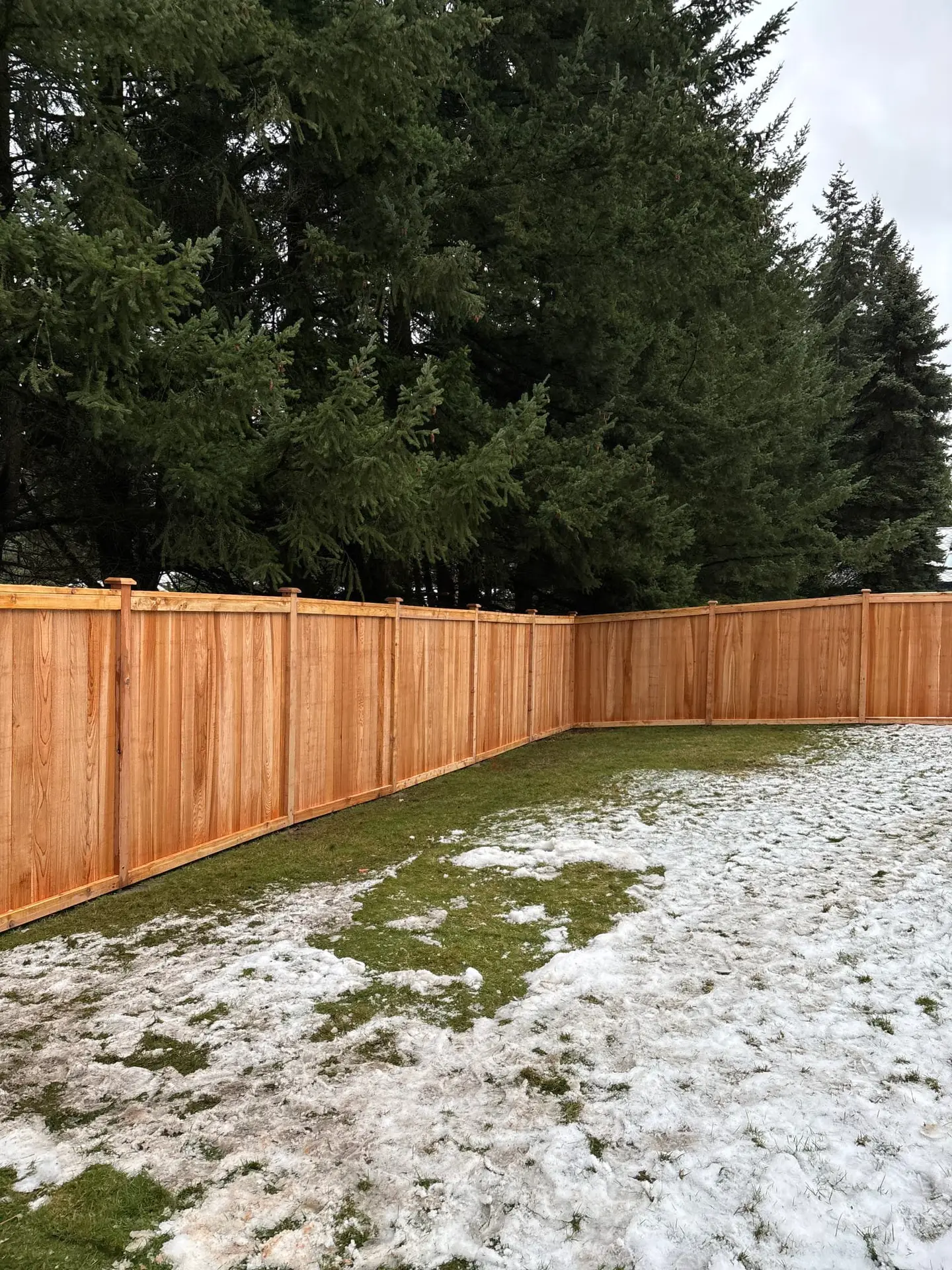
Cleaning a wood fence removes dirt, algae, mold, mildew, and other buildup that can collect on the surface over time. The right method depends on the condition of the wood and the cleaner you use; more pressure or stronger chemicals are not necessarily better.
This guide explains how to clean a wood fence step by step, when a garden hose and brush may be enough, how to use a pressure washer carefully, and what to avoid if you plan to stain or seal the wood afterward.
Why You Need to Clean Your Wood Fence

Dirt, leaves, algae, mildew, and other organic debris can collect on a wood fence and hold moisture against the surface. Cleaning removes that buildup and gives you a better view of the condition of the boards, posts, and hardware.
Cleaning is especially important before refinishing. Dirt, biological growth, and residue left on the surface can interfere with how a stain, sealer, or other finish performs.
It is also a useful opportunity to inspect the fence. Look for loose boards, cracked or deteriorated wood, leaning posts, and damaged fasteners that may need attention beyond routine cleaning.
Tools and Supplies You’ll Need
You do not need an aggressive cleaning setup for every fence. Start with the least intensive method that can remove the buildup.
- Garden hose with a spray nozzle
- Soft-bristle scrub brush or long-handled brush
- Exterior wood cleaner suitable for your fence and its existing finish
- Bucket or sprayer, if required by the cleaner
- Gloves and eye protection as specified on the product label
- Tarps or plastic sheeting to protect nearby plants and surfaces
- Rags or sponges
- Optional pressure washer for heavier buildup
- Optional sandpaper for minor surface smoothing after the wood has dried
Always read the product label and follow all directions for dilution, application, dwell time, rinsing, protective equipment, and surface compatibility. Test the product on a small, inconspicuous area first, and never mix different cleaning products unless the manufacturer specifically directs you to do so.
Step‑by‑Step Process for Cleaning a Wood Fence

1. Clear and Protect the Area
Remove anything leaning against the fence, like garden tools, decorations, or plant pots. Cover nearby plants and grass with tarps to protect them from cleaner runoff or splashes. If vines or shrubs touch your fence boards, trim them back so air and light reach the surface.
2. Rinse the Entire Fence
Start with a garden hose to remove loose dirt, leaves, and surface debris. Work from top to bottom so loosened material moves down rather than across areas you have already cleaned.
A pressure washer can be useful for heavier buildup, but wood can be damaged by excessive pressure or a concentrated spray. If you use one, start conservatively, use a wider spray pattern, and test a small area before continuing across the fence.
3. Apply the Wood Cleaner
Choose an exterior cleaner that is labeled as suitable for wood and appropriate for the type of buildup you are treating. If mold or mildew is the primary problem, use a product specifically intended for that purpose.
Prepare and apply the cleaner according to its label rather than using a universal homemade dilution. Work in manageable sections so you can complete each area according to the product instructions.
Do not combine cleaners to make a “stronger” solution.
4. Follow the Product’s Dwell-Time Instructions
Give the cleaner the amount of contact time specified on its label. There is no universal 5- or 10-minute dwell time that applies to every formula.
If the instructions say the surface should remain wet during application, work in smaller sections and prevent the product from drying before it is time to rinse.
5. Scrub With a Soft Brush
Use a scrub brush or a long-handled soft bristle brush to gently clean the wood. Brush along the grain and pay close attention to stained areas, corners, and hidden crevices. Avoid stiff or wire brushes that can mar the wood surface.
6. Rinse Thoroughly
Rinse the fence from top to bottom according to the cleaner manufacturer’s directions. Remove cleaner residue and loosened debris completely, particularly if you plan to apply a stain or sealer afterward.
A garden hose is the gentler option. If you use a pressure washer for rinsing, continue with the same conservative approach you used during the initial cleaning.
7. Let the Wood Dry Completely
If you plan to stain or seal the fence, allow the wood to dry fully first. Drying time varies with temperature, humidity, shade, airflow, the condition of the wood, and recent weather, so a universal 24- or 48-hour rule is not reliable.
Follow the drying and surface-preparation requirements of the specific finish you intend to use. If staining is your next step, see our guide on how to stain a fence for the rest of the process.
8. Optional: Address Raised Fibers or Uneven Areas
Once the fence is dry, inspect the surface again. If cleaning has left minor raised fibers or rough areas, light sanding may help prepare the wood for refinishing.
A wood brightener may also be appropriate for some restoration projects, but it should be compatible with the wood, cleaner, and finish you are using. Follow the product instructions rather than treating brightening as a required cleaning step.
What to Avoid When Cleaning a Wood Fence

Common mistakes can damage the wood or create problems when you refinish it later. Avoid:
- Using excessive pressure or a concentrated spray that can gouge or raise wood fibers
- Mixing different cleaning products
- Using a cleaner at a concentration not permitted by its label
- Leaving cleaner residue on the fence
- Allowing a product to dry on the surface when its instructions require rinsing
- Applying stain or sealer before the wood meets the finish manufacturer’s drying requirements
- Ignoring damaged boards, loose hardware, or leaning posts uncovered during cleaning
- Spraying cleaners onto nearby plants, siding, or other surfaces that should be protected
How Often Should You Clean Your Fence?
There is no single deep-cleaning schedule that works for every wood fence. Exposure to shade, moisture, vegetation, traffic, and surrounding trees can all affect how quickly buildup returns.
Clean the fence when you notice visible dirt, algae, mildew, or staining, and inspect it before applying a new finish. Fences in shaded or damp areas may need attention sooner than fences with better airflow and sun exposure.
Between deeper cleanings, remove leaves and other organic debris around the fence and address small areas of buildup before they spread.
Cleaning a Wood Fence in the Pacific Northwest
For homeowners in Seattle and the Portland metro area, moisture and shade can make algae, mildew, and organic buildup recurring maintenance issues.
A few practical considerations can make cleaning easier:
- Check shaded sections and areas near dense vegetation more closely for recurring growth.
- Keep leaves, mulch, and vegetation from collecting against the lower fence boards.
- Allow for additional drying time when conditions are cool, shaded, or humid.
- If you intend to refinish the fence, plan the cleaning around a suitable dry-weather window and the requirements of the stain or sealer you will use.
The condition of the fence and the forecast matter more than choosing one specific month for every cleaning project.
When Cleaning Reveals a Bigger Fence Problem

Cleaning can improve the surface of a fence, but it will not correct structural problems. If you uncover deteriorated or broken boards, loose hardware, leaning posts, or other significant damage, assess those issues before applying a new finish.
Cool Cat Fence provides fence installation and repair services in its service areas. The company also offers professional fence staining for eligible fences built by Cool Cat, subject to the requirements listed for that service.
If the fence has deteriorated beyond routine maintenance, request an estimate to determine whether repair or replacement is the more appropriate next step.
Frequently Asked Questions
Can I use a pressure washer on my wood fence?
Yes, but use it cautiously. There is no single PSI setting or nozzle distance that is appropriate for every wood fence. Start with the least aggressive setup, use a wider spray pattern, and test an inconspicuous area first. If the spray begins to raise fibers or mark the wood, stop and switch to a gentler method.
What cleaner is best for mold and mildew on a wood fence?
Choose an exterior wood cleaner that is specifically labeled for the type of growth you need to remove and is compatible with the wood and any existing finish. Follow the product’s dilution, application, and rinsing instructions instead of combining multiple cleaners.
How long should a wood fence dry after cleaning before staining?
There is no universal waiting period. Temperature, humidity, shade, airflow, recent rain, and the condition of the wood can all affect drying. Wait until the wood is sufficiently dry and meets the preparation requirements specified by the stain manufacturer.
Can I skip cleaning and go straight to staining or sealing?
Not if the fence has dirt, mildew, algae, loose material, or other surface contamination. Proper preparation helps the finish interact with the wood as intended. Always follow the preparation instructions for the stain or sealer you plan to apply.
What is the best time of year to clean a wood fence?
Choose mild weather with enough dry time to complete the cleaning and allow the fence to dry afterward. If you plan to stain or seal immediately after cleaning, check the forecast against the specific weather and drying requirements of that product rather than relying only on the season.
Can I use vinegar to clean a wood fence?
Vinegar is sometimes used in household cleaning, but a purpose-made exterior wood cleaner provides clearer instructions for compatibility, concentration, contact time, and rinsing. The CDC warns that you should never mix household bleach with other cleaners, as the combination can release dangerous vapors.
Final Thoughts: Clean First, Then Inspect and Protect
The safest way to clean a wood fence is to start gently: remove loose debris, use a suitable wood cleaner, scrub where necessary, rinse thoroughly, and avoid excessive pressure. If you plan to stain or seal the fence, give the wood enough time to dry and follow the finish manufacturer’s preparation requirements.
Cleaning is also a good opportunity to look beyond appearance. If you find deteriorated boards, unstable posts, or other structural problems, address them before refinishing the fence.
For homeowners considering repair, replacement, or another fence project, Cool Cat Fence can help assess the next step and provide an estimate.