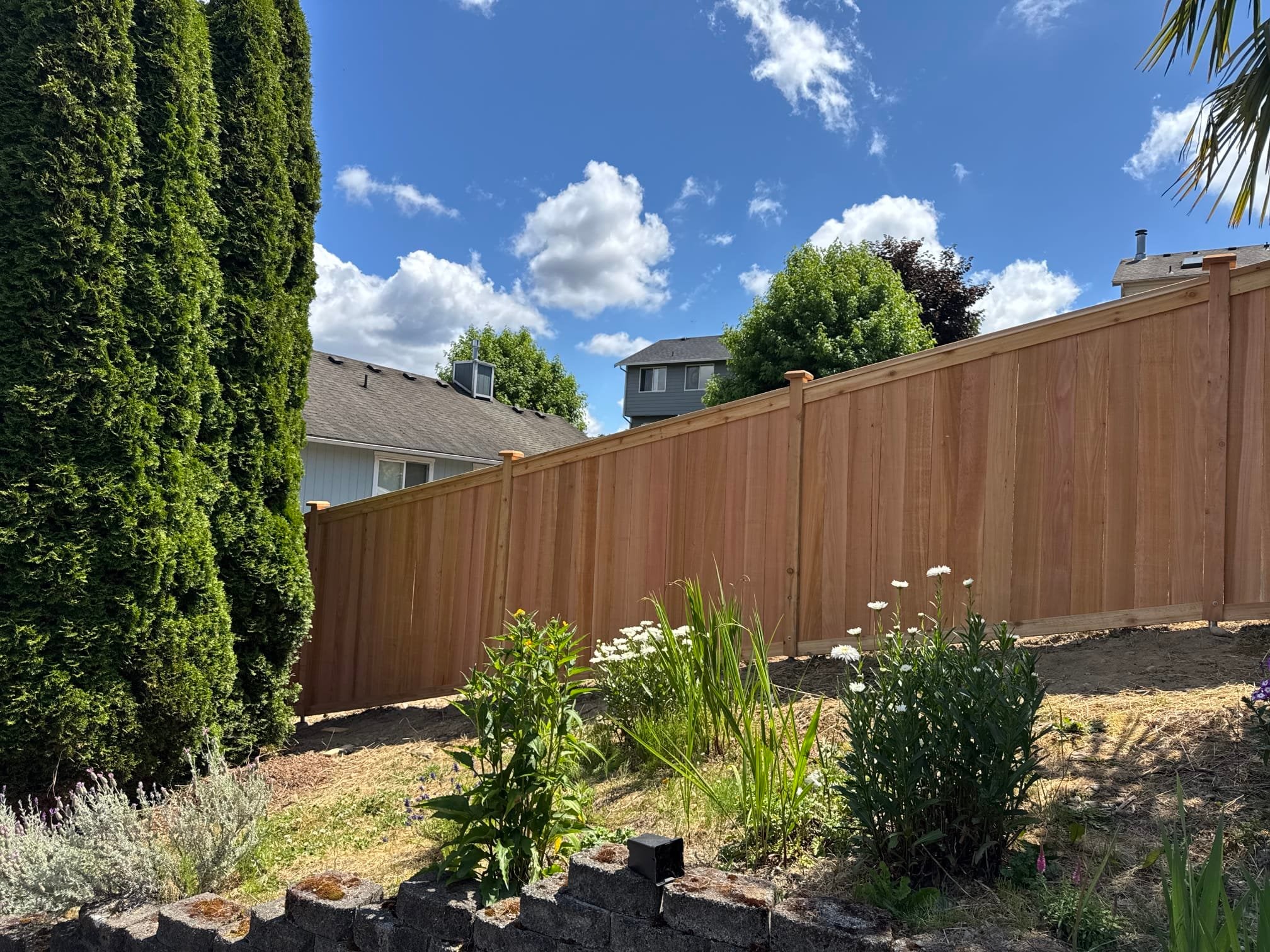
When a leaning fence starts shifting after a wet winter, storm season, or prolonged high winds in Seattle, the problem is usually below ground at the post and footing level. What looks like a minor tilt is often the first visible sign of structural failure caused by soil movement, shifting soil, or early weather damage around the base of the fence posts. Cool Cat Fence, a Seattle fence repair company specializing in structural corrections and installations, sees these calls increase every spring as homeowners discover what months of moisture and soil movement have done to their fence line.
A fence that leans isn’t just something you notice in photos — it’s a sign of structural trouble. In many cases, the fence posts themselves have loosened, decayed, shifted, or lost backing in soft, waterlogged soil. Even a well maintained fence can start to lean once the support below grade begins to fail, especially as older fence posts lose strength at the base and the structural integrity of the line begins to weaken. In Seattle’s wet climate, a leaning fence often starts because saturated soil softens the ground while moisture damage and post rot weaken the structure at the same time.1 Fence panels usually lean only because the post system is failing. The right fix depends on whether the affected post can be reset, whether an old post has to be removed, and whether drainage correction is needed to keep the entire fence stable, upright, and secure.
Why Fences Start Leaning: Structural Causes Behind the Fence Line Tilt
The panels are usually just the symptom. Most leaning fences fail first at the posts and footings. Typical causes include holes that were too shallow, concrete that was too small or already breaking down, rot at ground level, constantly wet soil, erosion, root pressure, and movement on sloping yards. In the Pacific Northwest, heavy clay soils hang onto water, which softens the earth around the fence posts and lets them shift.2 On many older fences, poor installation and improper installation are part of the story: post holes weren’t deep or wide enough, or the concrete footing was undersized for high wind areas. For a 6-foot fence, posts are commonly set 3–4 feet deep, and many installers target a footing depth in the 36–42 inch range for better support.3 A layer of gravel under the concrete gives water somewhere to go instead of letting it pool at the base and helps keep the fence upright.
The truth is, many leaning fences started failing years before you noticed anything. Posts might have been set shallow, gate posts may have gone in without proper bracing, or nobody addressed drainage along the line. Once the soil softens or the post base rots, the fence slowly drifts off plumb. By then, adjusting or bracing panels alone is just cosmetic and won’t keep the fence stable in the long term.
Is a Leaning Fence Just Cosmetic or Actually Dangerous?
A slight lean is usually an early warning, not an emergency. But once posts begin to move noticeably or rock at the base, the risk shifts from appearance to structural failure.
A badly leaning fence isn’t just an eyesore. Under wind load, it can collapse, injure people or pets, and turn into a damaged fence that falls onto a neighbour’s property or across a property line.4 If the problem was obvious and ignored, it can also raise insurance and liability questions. A quick field check goes a long way: if the leaning fence post moves when you push on it or is clearly out of plumb, you shouldn’t put off fence repair. Movement at the base is a strong sign that the post can no longer safely carry load, and nearby fence posts may already be under stress.
DIY Fence Fix vs Professional Repair for Loose Fence Posts
Knowing when to attempt repairs yourself and when to call for professional help saves both money and frustration. The stakes include not just repair effectiveness but personal safety and the risk of making problems worse.
When DIY Makes Sense for a Leaning Fence Post
When only one post is out of line, or a couple of loose fence posts have loosened, it can sometimes be worth trying a DIY repair—as long as there’s no deep rot and the footing isn’t blown apart. If the post passes a basic strength check, you can dig around it, assess the soil, bring it back to plumb, and then backfill using concrete mix or compacted gravel for support. When the post itself is in bad shape, forcing it back into place doesn’t solve much; replacing it is usually the better option. In some situations, a post hole digger is all you need to open up the hole enough to work around the base safely. The aim isn’t to take the lazy way and just push the fence straight—the aim is to fix a leaning fence in a way that keeps the line stable and the fence upright.
DIY solutions like this tend to hold up best on younger fences where the lumber and fasteners are still in good shape. Using the right essential tools — including a post hole digger, level, braces, and gear to pour concrete into the post hole — improves the odds that the leaning fence post stays stable after the concrete cures. It is also smart to check adjacent loose fence posts before assuming the problem is limited to one spot.
When Professionals Should Handle Leaning Posts
When you see several posts along the same fence line tilting, it’s a strong indication that the whole system is struggling, not just one spot. That pattern usually points to unstable soil, repeated movement at various points, or older concrete footings that have lost their hold. In these conditions, fixing one small area rarely keeps the fence straight. The other leaning posts usually continue shifting and pull the structure out of line again.
Add in symptoms like cracked footings, rot at the post base, or a post that rocks heavily, and you’re in territory where DIY attempts can easily backfire. Digging around post after post without the right support can destabilize the entire fence, and a temporary fix rarely lasts when the root cause is still in the ground. At that stage, calling in an experienced team is usually the smarter and more cost effective move. Correcting a single leaning fence post with a contractor often costs in the region of $150–$400, depending on the complexity and local rates, and most reputable companies back their work with a warranty, which gives you some peace of mind. Once several leaning posts are involved, isolated patching rarely works.
How Professionals Fix a Leaning Fence and Set a New Post
Pros start by stabilizing the leaning section before excavation begins. They brace the leaning section so it can’t shift while they dig. That bracing isn’t the repair, but without it the whole line can move as soon as you open the hole. Once things are locked in place, they dig down, expose the post base, see what’s left of the footing, and decide: reset the post or toss it and install a new post.
Then they bring the fence back into line, deal with loose rails and worn hardware, and fix the actual cause of the lean. Depending on the site, that could mean improving drainage, changing the grade, rebuilding the concrete footing, enlarging the hole, or digging deeper to pour a new base for a replacement post. If a new post is going in, it has to match the proper post height, be set in new concrete, and be properly marked and lined up before the mix cures so the fence stays straight, the line stays fence upright, and the fence repair lasts after the crew leaves.
For wooden structures, professional cedar fence installation techniques—including appropriate post spacing, adequate burial depth, and proper drainage—significantly reduce future leaning risk. Cedar’s natural resistance to rot makes it particularly suitable for wet climates when installed correctly.
Material-Specific Leaning Problems: Wood, Metal, and Hog Wire
Different fence materials exhibit distinct failure patterns when leaning occurs. Understanding these patterns helps you anticipate problems and choose appropriate repair approaches.
Wood Fence Leaning Issues
Wood fence posts fail primarily through rot at and below ground level.5 When water keeps pulling into the end grain and the bottom of the post sits in damp soil, the wood slowly loses strength — even if it’s pressure treated. Then you add normal weather on top of that: long wet stretches, then a dry spell, then wet again. The post swells and shrinks inside the footing, and over time that movement loosens its grip in the concrete.
Softwoods like pine feel this first. Cedar holds up better thanks to its natural oils, but it still needs a decent detail at the base — some elevation, drainage, and no standing water around the post. Once rot has gone far enough that the wood turns soft or crumbly, the realistic solution is replacement. You can’t repair structural fibres that have already broken down, and badly weakened fence posts rarely regain strength once decay has started.
Metal Fence Post Failures
Metal posts present different challenges. Corrosion at the ground line—where moisture, soil chemistry, and oxygen availability combine—gradually reduces metal thickness. Galvanized or powder-coated steel resists this degradation for decades under normal conditions, but scratches or damage to protective coatings accelerate localized rust.
Metal fence post deformation from impacts can also contribute to lean. Unlike wood, which compresses and rebounds somewhat, metal that bends stays bent. Additionally, the bond between metal posts and concrete can fail if the footing cracks or the metal surface corrodes enough to break adhesion.
Hog Wire and Wire Mesh Considerations
Hog wire constructions face distinct stress patterns. The wire mesh itself catches wind, debris, and vegetation weight, transferring forces to the frame rails and posts. While hog wire’s open design reduces wind load compared to solid privacy fence panels, the cumulative stress on posts and frames can cause sections to sag or pull posts out of alignment.
Reinforcing hog wire fence sections typically involves adding diagonal bracing or tension wires to distribute loads more evenly across the structure. Strengthening the frame rails and ensuring posts have adequate burial depth prevents the progressive lean that develops when frames stress inadequately anchored posts.
Comparative Material Durability
Vinyl fences, while resistant to rot and corrosion, depend entirely on their posts and footings for stability—the panels contribute nothing structural. When vinyl fence posts fail, the apparent damage appears suddenly as the entire system depends on post integrity.
Each material requires repair approaches matched to its failure mode: wood typically needs post replacement when rot appears, metal may need coating repair and concrete work, and wire systems often benefit from reinforcement before post replacement becomes necessary.
When a Leaning Fence Fails Because of Improper Installation
Replacement usually becomes the better option when multiple leaning fence sections are compromised, panels are also failing, or the fence is already near the end of its service life. At that point, repeated attempts to fix a leaning fence stop being efficient and start becoming a series of patches across the entire fence.
If the fence has already been fixed more than once and is leaning again, the underlying problem was usually never resolved. At that point, another patch is unlikely to fix a leaning fence in a durable way. That is especially true when poor installation at the original post hole, improper installation details, weak concrete, or movement near the property line keep bringing the same section out of plumb. In that situation, replacement is often the more practical way to fix the problem for good, especially if a leaning fence has already gone through multiple failed repairs.
FAQ: Fence Leaning Problems and Fix Options
What causes a fence to start leaning?
The most common causes are loose or shallow posts, rot at the post base, oversaturated soil, and poor drainage. Roots, erosion, or bad original installation can also push a privacy fence out of plumb. These factors work at the foundation level—by the time you see a leaning fence, the underground conditions have already failed.
Is a leaning fence dangerous?
A slightly leaning fence is mainly a warning sign, but a strongly tilted fence can collapse, damage property, or create a safety risk for people and pets. The more it leans, the more urgent the fence fix becomes. Sections can fall under wind load, impact, or accumulated weight.
Can I fix a leaning fence myself?
Light leaning caused by one loose post can sometimes be braced and reset by a DIYer with proper tools and technique. But if multiple posts are moving, concrete is cracked, or the fence is old, a professional fence fix is usually safer and longer-lasting. The risk of making problems worse through improper repair often exceeds potential savings.
How do professionals fix a leaning fence?
Pros typically brace the fence, dig around the failing posts, open the hole as needed, and either reset them deeper with new concrete or replace them entirely. They may also pour concrete around a new post or rebuild the footing when the original base was too weak to keep the fence secure. This approach addresses both symptoms and causes, and it is often the safest route when several fence posts are already moving.
Do I always need new posts for a leaning fence?
Not always. If the post is still structurally sound and has just shifted, it may be possible to straighten and re-set it. When rot, cracks, or severe movement are present, replacing the post is the more reliable option. A contractor can assess whether existing posts retain adequate strength.
Will a leaning fence get worse over time?
Yes. Once the ground shifts or the post base has failed, gravity and weather will usually push the fence farther out of line. The longer you wait, the harder it becomes to fix a leaning fence before one leaning fence post leads to broader failure along the entire fence.
Can poor drainage make my fence lean?
Definitely. Standing water and saturated soil can soften the ground around posts, wash out backfill, and accelerate rot. Over time, that leads directly to fence leaning and loose posts. Addressing drainage often prevents recurrence after repair.
When should I replace a leaning fence instead of fixing it?
If many posts are compromised, panels are rotting, or the fence is near the end of its life, replacement is usually more practical than repeated repairs. A contractor can tell you if the structure is worth saving—sometimes the honest answer is that repair costs approach or exceed replacement value without delivering comparable longevity.