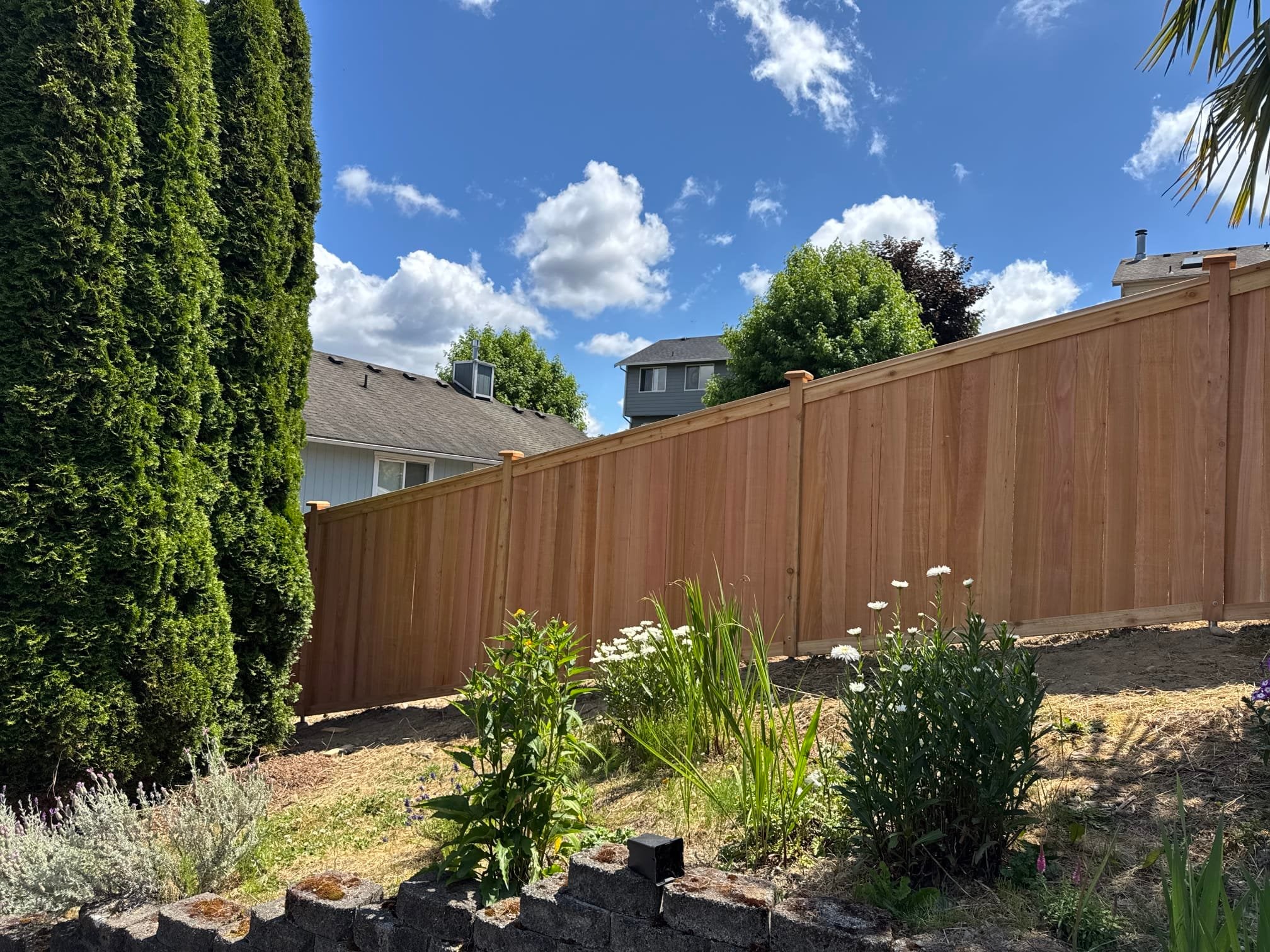
Pacific Northwest fence failure usually starts at ground level, where posts sit in wet soil for months at a time. A fence that looked fine in October starts leaning by April because of moisture, rot at the post base, or poor drainage quietly weakened it over winter.
This guide explains the main failure patterns behind wood fence problems in Western Washington, how to spot rot before it spreads, why fences lean after winter, and what actually works to extend fence life for homes and small businesses in Seattle, WA. Whether you are dealing with an old fence or planning a new fence installation project, understanding these patterns helps you avoid premature replacement and choose the right fencing services for your fencing needs. Fence installation costs vary with materials, layout, and site preparation, so preventing failures early is almost always cheaper than rebuilding a damaged line from scratch.
The 5 Failure Patterns Behind Most PNW Fence Problems
Most Pacific Northwest fence failures in residential yards and around small commercial properties fall into five predictable patterns:
- The posts sitting in wet soil for too long
On a wood fence line, darkened, softened wood at the base, moss around the post, and a spongy texture when you probe it all point to posts that have stayed in saturated soil for months. Cedar wood absorbs water quickly, and wet winters that average about 37 inches of rain in Seattle keep soil saturated long enough to accelerate decay at ground level even on projects built with good materials. 1 - Poor drainage around the base
On backyard runs or fence lines along the front of a property in Seattle, WA, wobbling sections, leaning panels, and erosion beneath posts show that water is pooling instead of draining away and undermining the fence installation in your yard. - Shallow post depth and soil movement
Gate drag, uneven rail lines, and posts that shift out of plumb are common when posts are set only 2 to 3 feet deep in clay loam soils. On longer residential fence runs and light commercial fencing, this shallow embedment lets seasonal ground movement push the installation out of alignment. - Hardware that corrodes in damp conditions
Loose hinges, rattling gates, sagging panels, and rust staining on the wood indicate that standard galvanized fasteners are breaking down in salt-laden coastal air and weakening connections long before the boards wear out. 2 - Wood too close to the ground
On older wood fence designs trimmed tight to grade, splitting rails, punky lower boards, white fungal growth, and cracking along grain lines show that capillary action is pulling moisture up into the wood and keeping it wet enough for decay to take hold even when the rest of the fence along the property looks sound.
Rot Starts Where You Do Not Look in Cedar Wood and Cedar Post Bases
To catch rot early on a typical residential fence installation project, start by checking the post base for softness. Push a screwdriver into the wood at ground level; if it penetrates more than one-quarter of an inch with little resistance, rot has already started. Then probe the lowest rail for sponginess or dark staining and scan the fence surfaces for fungus, splitting, or white webbing along the inline fence run. If one panel moves independently while the others remain rigid, or you see dark staining from tannin leaching from cedar post wood, the supports are already weakening and warrant a closer inspection.
Spring reality: problems appear after the wet season because Seattle receives over 70% of its annual rain from October to March. 3 Wood that absorbed moisture all winter reveals its damage when homeowners finally inspect their yard in April.
Why Fences Lean in Seattle and Portland (and When Fencing Contractors Can Help)
Wet soil loses holding strength around the posts that your fence installation relies on. When the ground becomes saturated, its ability to grip fence posts drops on both residential properties and small commercial projects, and winter wind loads push panels until posts start to shift.
Gates make the problem worse through leverage. Every time a gate swings, it applies torque to the hinge post. Poor bracing or undersized posts (4×4 instead of 6×6 for taller fences) compound the vulnerability, especially when that gate is the main yard or business entry.
To test overall stability, push the fence at the middle of a panel; if it shifts more than an inch horizontally, the structure is already loosening. Then check the gate and note whether it sags, rubs the ground, or fails to latch cleanly, since that behavior often points to a tired hinge post. Finally, sight down the full fence line and look for posts that are visibly out of plumb.
If you answered yes to any of these, your fence has stability issues that will likely worsen with the next wet season and may soon require professional repair services rather than quick DIY fixes.
Prevention That Actually Extends Fence Life With Your Fence Installed in the PNW
This is where homeowners can make the biggest difference. Cool Cat Fence and other experienced fencing contractors in the greater Seattle area emphasize these prevention basics:
Do this:
- Keep wood off soil using post on pipe systems (a metal pipe sleeve isolates the wood from ground contact on both residential and light commercial fencing projects)
- Manage water around posts with 3/4 inch gravel backfill at least 6 inches deep so the fence installation can shed water instead of sitting in it
- Use hot-dipped galvanized or stainless steel fasteners that resist corrosion and support long term security
- Seal and maintain on a schedule, applying penetrating oils after the spring dry out as part of regular fence installation aftercare
- Set posts to proper depth (36 to 42 inches for residential fencing in this region) so the completed project can handle wind and soil movement
Avoid this:
- Burying wood posts directly without drainage support
- Piling mulch or debris against the fence base (this traps water)
- Ignoring early lean until a storm makes it structural
- Using standard hardware that corrodes in damp conditions
Quality workmanship during fence installation matters more than most homeowners realize. In Washington, fence contractors should be licensed and insured through the Department of Labor & Industries, and reputable Seattle companies with crews who understand local soil conditions typically back their work with at least a one- to three-year workmanship warranty so early issues are fixed without another full project. In Seattle’s damp conditions, rot-resistant materials like cedar usually outperform untreated softwoods at ground level and keep replacement posts stable longer.
Material Choices and Fencing Options That Reduce Rot Risk
Different fencing options handle moisture differently. In the Seattle area most residential and commercial projects rely on wood, vinyl, chain link, and ornamental iron, so here is a comparison:
Vinyl fencing:
- Absorbs under 0.1% moisture versus cedar wood’s 20 to 30% at saturation 4
- Requires no staining or sealing, so most vinyl fences need very little ongoing maintenance.
- Offers clean lines and low maintenance for decades
- Installation quality still matters (ground movement can stress rigid panels if posts shift)
If you want to install a vinyl fence in Seattle to avoid rot and leaning posts, it can be appealing for wet climate durability. Vinyl is not immune to impact damage or UV fading over 20 years, but it eliminates the rot cycle entirely.
Chain link fence:
- Durable, budget friendly, and reliable for both residential and commercial properties, providing security without blocking visibility and not rotting like wood, which is why chain link is a common choice for securing businesses, school yards, and job sites.
- Can still lean if posts are undersized or set too shallow.
- Often comes in under $20 per linear foot installed for many residential and commercial properties.
Ornamental iron fences:
- Corrosion-resistant with proper powder coatings and known for being classic, sturdy, and ornate
- Higher upfront costs, but durable materials that last with relatively low maintenance
- Good option for property lines where both security and a more elegant, sophisticated look matter
Cedar wood fence:
- Cedar is the most common fence material in Seattle because its natural rot resistance, warmth, and aesthetic appeal give homeowners both privacy and curb appeal
- Requires ongoing maintenance in wet climates
- Can last 20 to 30 years with proper elevation and care
The PNW Fence Maintenance
Regular maintenance, including cleaning and staining, can significantly extend a fence’s lifespan. Each spring, clean moss, vines, and debris within about twelve inches of the fence bases so moisture does not stay trapped against the wood. Keep gravel drainage paths around posts open and at least 4 to 6 inches deep so water can move away instead of pooling. As you walk the line, spot-check roughly 10% of the posts and rails for softness and replace any part where a probe sinks more than 1 inch into the wood. Tighten hardware, hinges, and brackets, then reseal or restain the fence once humidity drops below sixty percent. If you see a minor lean under two inches, brace those sections with diagonal supports before fall winds return, and finish by checking gate operation and adjusting hinges.
In Seattle residential zones, fences are typically limited to about six feet along side and rear yards and four feet in front yards, and fences eight feet high or lower usually do not require a permit unless they include masonry или concrete parts over six feet. Within those limits, this routine maintenance across King and Snohomish Counties keeps many fences from progressing to full replacement.
If you spot problems beyond simple fixes, consider getting a free estimate or on-site estimate before spring scheduling fills with repair services requests, and use the company’s online form or phone number instead of waiting for the next storm to make things worse. Most reputable fencing companies in Seattle offer free estimates and can complete typical fence installations in two to five days, depending on the project’s size, materials, and site conditions.
When Prevention Is Too Late and It Is Time to Call a Fence Company
It usually makes sense to think about full replacement once several warning signs appear together. If multiple posts are soft at the base, especially when more than twenty percent of the total show decay, localized repairs will not hold for long. A fence that leans again quickly after minor fixes or bracing, sections that feel unstable in wind and shift more than two inches, or gates that cannot be squared even after hinge adjustments all point in the same direction. When projected repair costs approach half or more of the price of a new fence, replacement becomes the more rational long-term option.
When rot is widespread across long runs, repairs turn into a repeating cycle. Getting an evaluation from professional fencing contractors or a trusted local fence company that builds fences in your area every week helps you decide whether to protect your existing investment or start fresh on a new fence installation project. Look for clear communication, positive reviews, and crews known for doing a fantastic job instead of choosing purely by the lowest bid.
FAQ: Fence Repair, Fence Styles, and How to Choose the Best Fencing Company
What causes Pacific Northwest fence failure most often?
Most failures start at the post base. In wet PNW soil, wood posts absorb moisture and rot at ground level, which leads to leaning sections and loose gates. Post on pipe systems reduces soil contact and slows rot in rainy climates. Proper drainage and corrosion-resistant hardware also play important roles in fence longevity across Seattle, Portland, and surrounding counties.
What are the clearest signs you need fence repair Seattle homeowners should not ignore?
Look for leaning posts, soft or rotted wood at the ground line, sagging gates, loose hinges, and sections that no longer sit square. These early-warning issues often worsen after a wet season. Moss growth at post bases and fence sections that move independently in the wind are additional signs that repairs are needed soon.
Why does my fence start leaning after winter in Seattle or Portland?
A fence often leans when the ground shifts or when posts weaken from rot at the base. Wet seasons amplify both problems, especially if drainage around posts is poor or the post foundation is not solid. Wind loads during winter storms push against weakened structures, and gate leverage can twist frames over time.
Seattle fence repair vs replacement: when is repair not worth it anymore?
Replacement tends to make more sense when multiple sections are failing, rot is widespread, or repair costs start approaching the cost of a new fence. If posts are failing across runs over 50 feet, repairs become a repeating cycle. Most fence companies in Washington State can provide assessments to help with this decision.
How can fence contractors Seattle homeowners hire prevent rot from the start?
Prevention focuses on keeping wood out of constant wet soil exposure and controlling moisture around the base. Post on pipe installation reduces rot risk where fences usually fail first. In-house crews with experience in the greater Seattle area conditions understand the importance of proper depth, drainage, and durable materials for long-term stability.
Does chain link fence installation help avoid rot and leaning in the Pacific Northwest?
Chain link will not rot like wood, but it can still lean if posts are not set deep enough for saturated ground and seasonal movement. Local installers emphasize post sizing (minimum 3-inch diameter) and depth (4 feet minimum) as the key to keeping chain link straight over time in wet PNW conditions.
What should I ask Portland fence builders about rot prevention and fence stability?
Ask how they handle post depth for wet soil, drainage around posts, hardware corrosion resistance, and whether they recommend upgrades like post-on-pipe that reduce rot risk. Questions about warranties, quality craftsmanship standards, and their experience with residential and commercial fencing in wet climates help identify contractors who understand regional challenges.