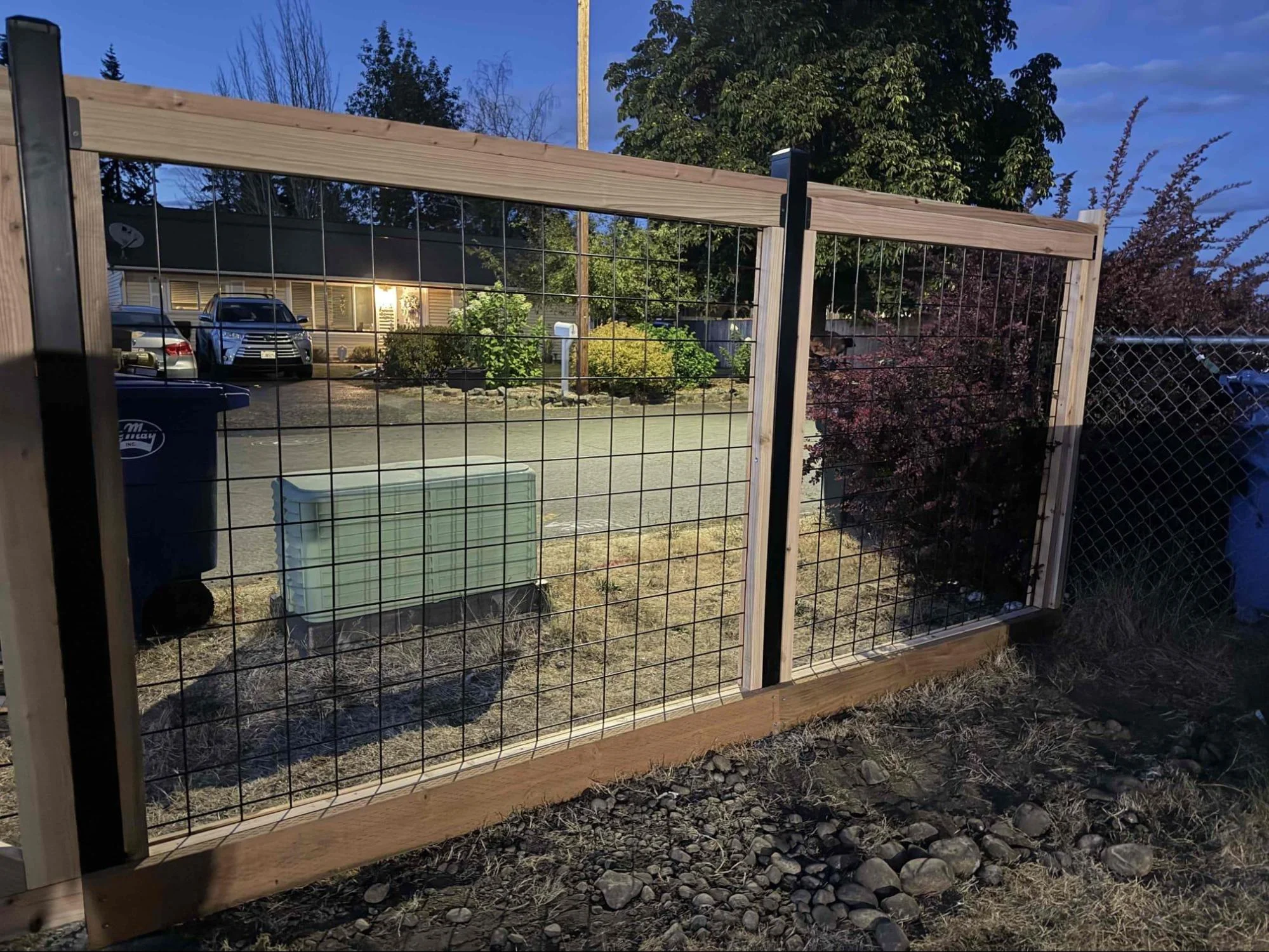
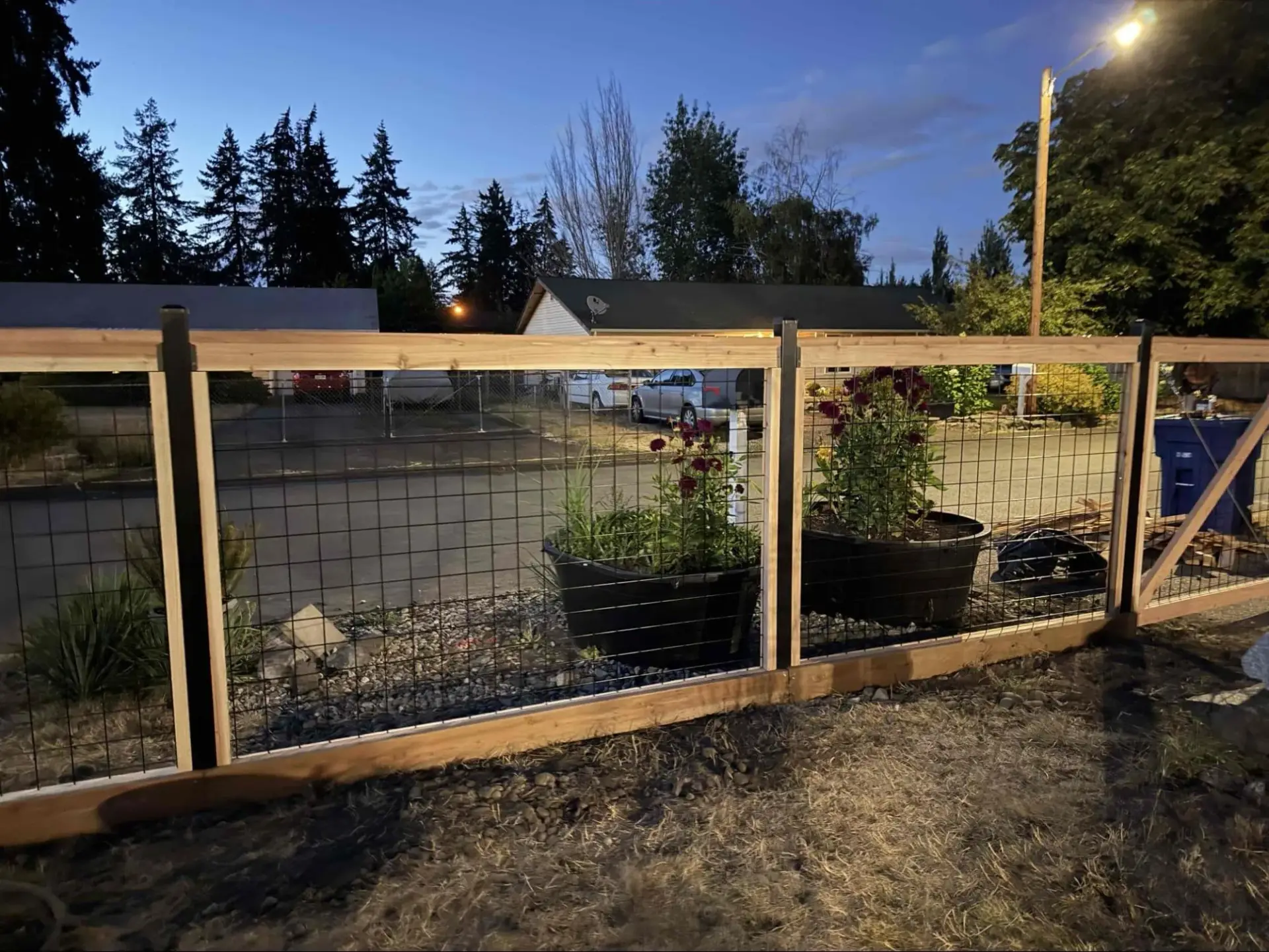
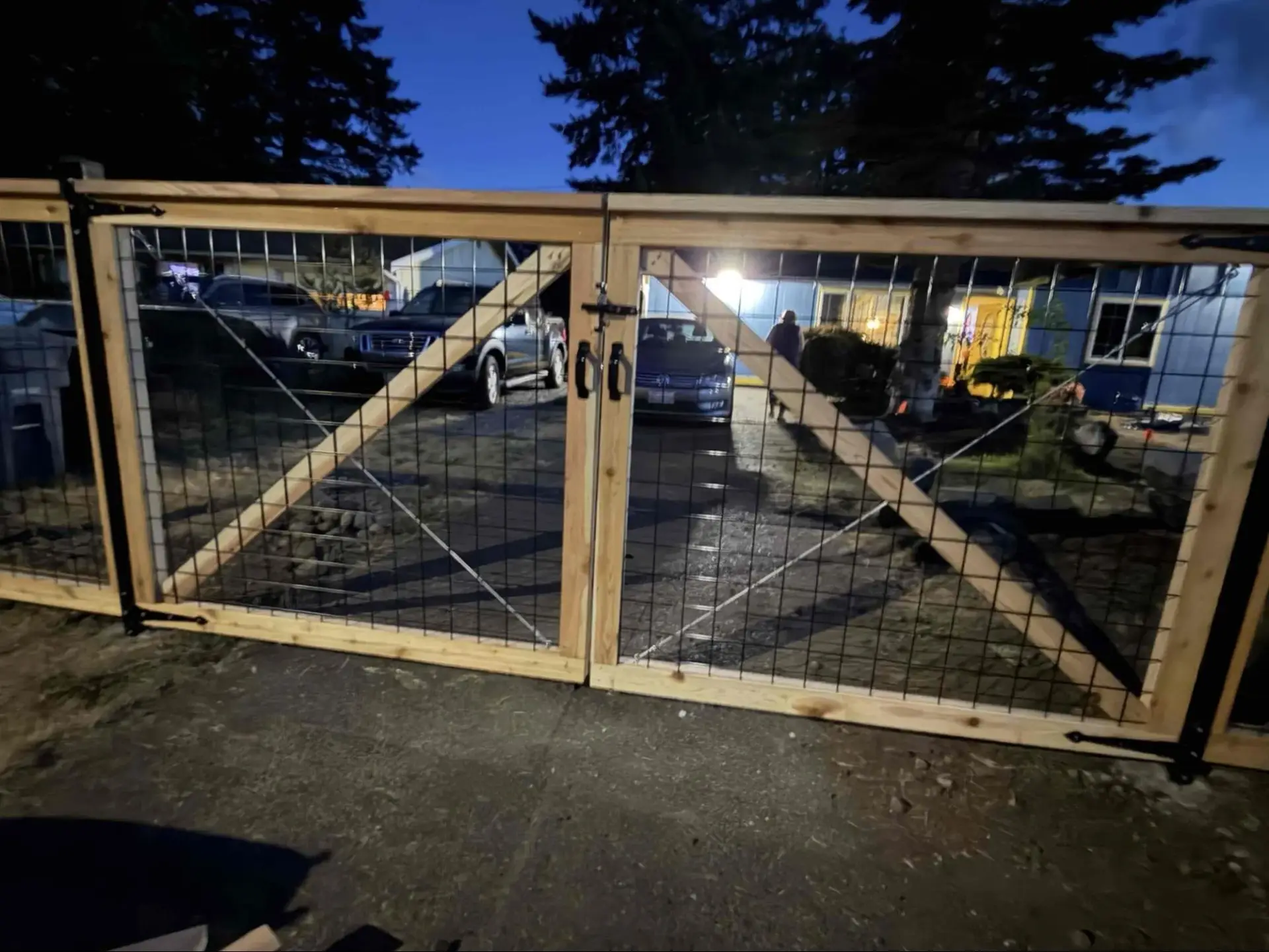
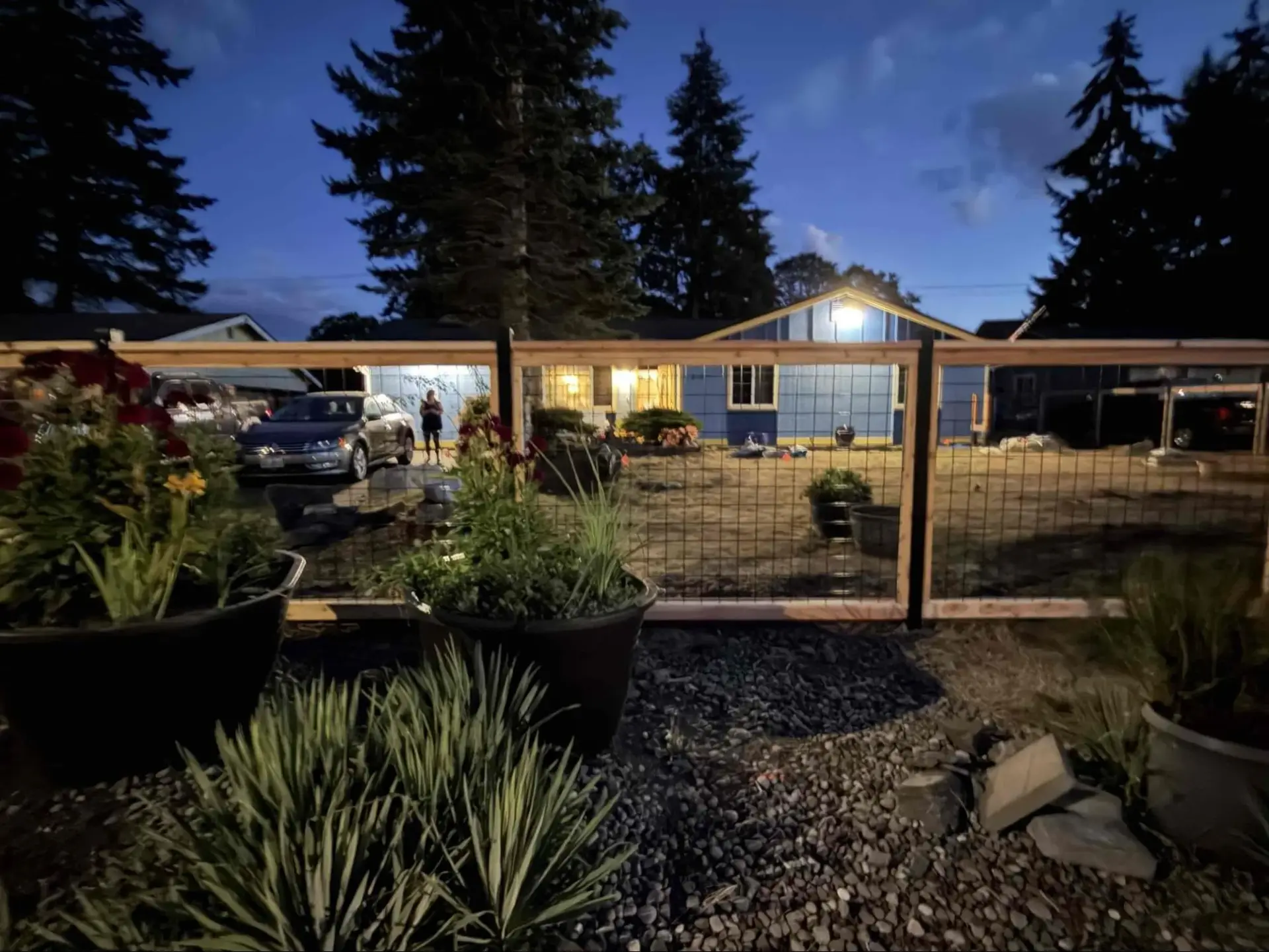
We installed a 5-foot hog wire fence at a residential property in Tacoma, WA, combining black wire mesh, cedar framing, and black metal posts. The fence follows multiple yard boundaries while keeping the home and landscaping visible through the open panels. Our team also installed a 12-foot double gate, a 3-foot single swing gate, and pressure-treated bottom boards along the fence.
Project Snapshot
|
Detail |
Project Information |
|
Location |
Tacoma, WA |
|
Project Type |
Hog wire fence installation |
|
Fence Height |
5 ft |
|
Framing |
Cedar 2×4 |
|
Posts |
Black 3×3 metal posts |
|
Mesh |
6-gauge black hog wire with 4-inch × 4-inch openings |
|
Gate Hardware |
Stainless-steel turnbuckles |
|
Gates |
12-ft double gate and 3-ft single swing gate |
|
Bottom Board |
Pressure-treated 2×6 |
Hog Wire Panels with Cedar Frames and Metal Posts
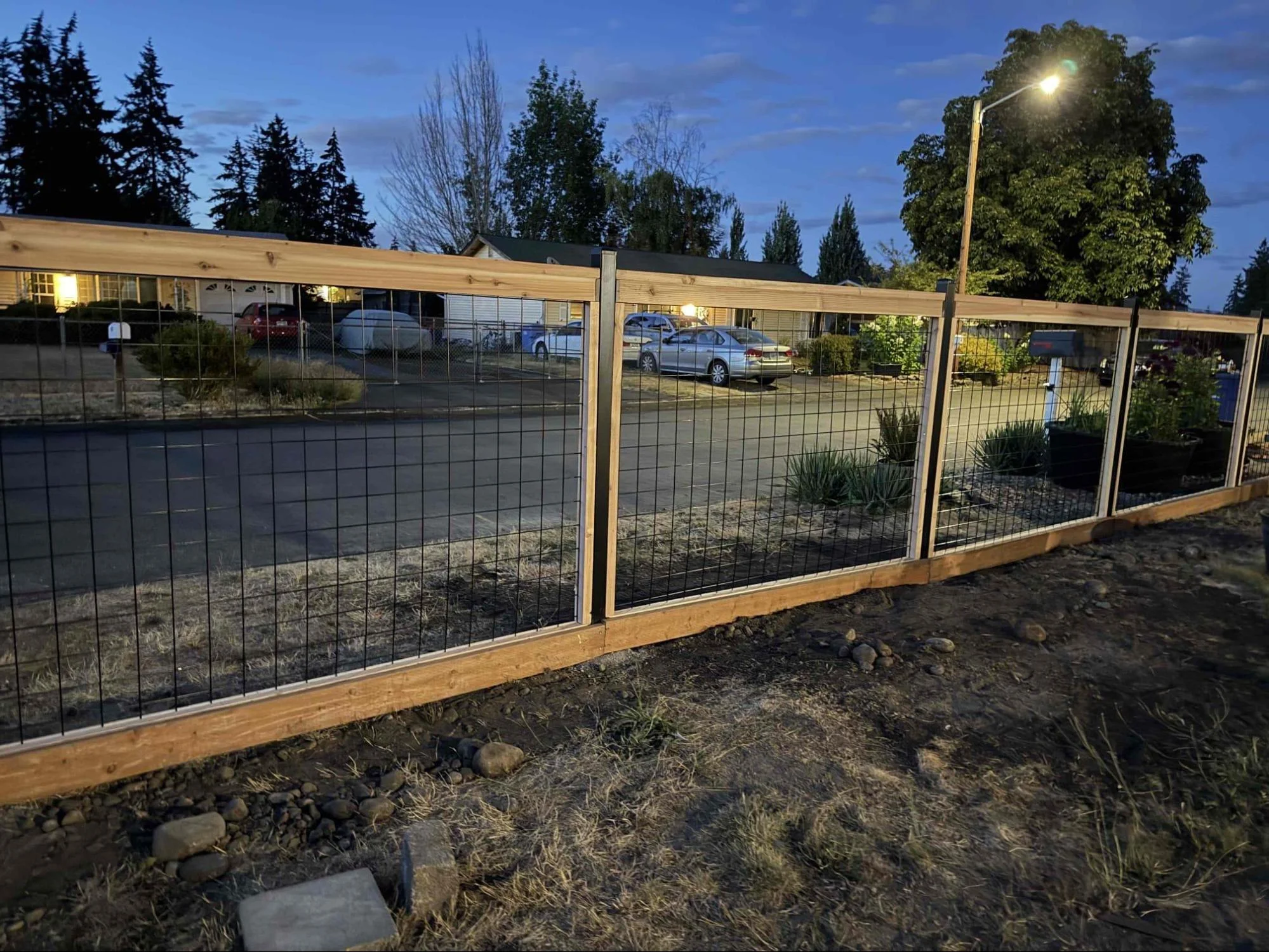
For this Tacoma project, the hog wire fencing was built with black wire panels supported by square metal fence posts. The 4-inch mesh spacing keeps the yard and garden beds visible, while cedar 2×4s provide a natural wood frame around each panel.
For homeowners considering a similar installation, post spacing is another factor in planning the fence layout. Post spacing for hog wire fences ranges from 6 to 8 feet.
We installed pressure-treated 2×6 bottom boards near the ground along the fence. According to the project notes, these boards were intended to help limit soil buildup and reduce the risk of rot around the cedar framing.
Hog wire panels resist rot and warping in damp climates. Hog wire fencing requires regular checks for rust and stability. Proper installation is essential for ensuring longevity in wet conditions.
For a closer look at the benefits, maintenance requirements, and limitations of this design, read our guide to the pros and cons of a hog wire fence.
Gates and Access
We installed a 12-foot double hog wire gate at the driveway opening and a separate 3-foot single swing gate for walk-through access. Each gate’s width suits its access point, while both match the cedar-and-black-wire design of the surrounding fence panels. Diagonal wood bracing provides frame stability, and stainless-steel turnbuckles were added to both gates to help prevent sagging.
Homeowners planning a similar project can explore Cool Cat Fence’s Tacoma fence installation services to learn more about local installation options.
Completed Fence Panels and Gates
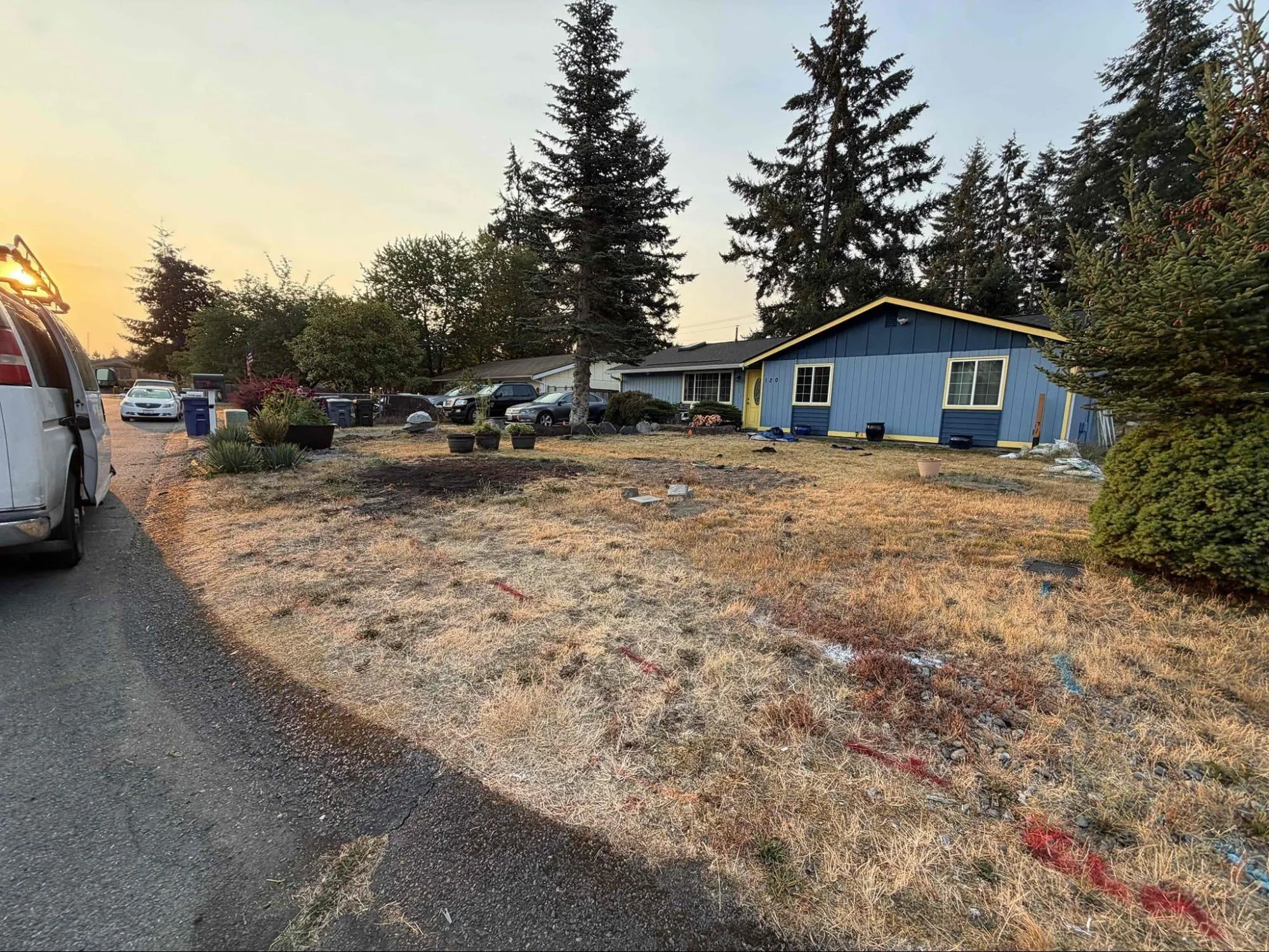
Before installation, the photographed section of the yard was open. In the completed installation, cedar-framed hog panels follow the fence line alongside the landscaped areas, defining the property boundary while keeping the home and planting beds visible through the mesh. Black post caps and matching gates give the finished sections a consistent appearance.
For another example of this mixed-material approach, see our cedar and hog wire fence installation in Renton, which combined open wire panels with full-panel cedar fencing.
FAQs
What fence design was installed?
The project used a 5-foot cedar-framed hog wire fence with black mesh and black metal posts.
What size wire mesh was used?
The material documentation lists 6-gauge black mesh with 4-inch by 4-inch openings.
Did the project include gates?
Yes. It included one 12-foot double gate and one 3-foot single swing gate.
Were wood or metal fence posts used?
The installed design used black square metal posts together with cedar framing.
Planning a similar hog wire fence in Tacoma, WA? Request an estimate from Cool Cat Fence to discuss your fence line, preferred materials, gate widths, and project cost.