Planning a 100-foot vinyl fence in 2027? Published national benchmarks suggest an installed budget of approximately $3,000–$6,000, with taller or premium designs potentially costing more.
This guide explains how height, style, gates, removal work, and site conditions affect that calculation. The figures are published budgeting references, not confirmed 2027 averages or Cool Cat Fence prices. For Seattle, Portland, and nearby service areas, request a current estimate for your selected fence and complete installation scope.
Published Cost Benchmarks for a 100-Foot Vinyl Fence

HomeGuide’s vinyl fence cost guide lists a national installed range of $30–$60 per linear foot. Its published style-specific ranges produce the following budgets for 100 feet:
| Vinyl fence type | Published installed cost per linear foot | Calculated budget for 100 feet |
|---|---|---|
| 3–4 ft vinyl picket fence | $30–$45 | $3,000–$4,500 |
| 6 ft vinyl privacy fence | $40–$60 | $4,000–$6,000 |
| 8 ft vinyl privacy fence | $60–$85 | $6,000–$8,500 |
Source: HomeGuide. Totals are calculated by multiplying each published per-foot range by 100. These are national references for 2027 planning, not local quotes or forecasts of 2027 prices.
The general $3,000–$6,000 benchmark does not cover every configuration. An eight-foot privacy fence, premium finish, or more demanding installation can exceed it.
Confirm whether gates, removal, disposal, site preparation, and any permit-related work are included. Ask how gate openings are counted within the 100-foot layout so costs are not overlooked or counted twice.
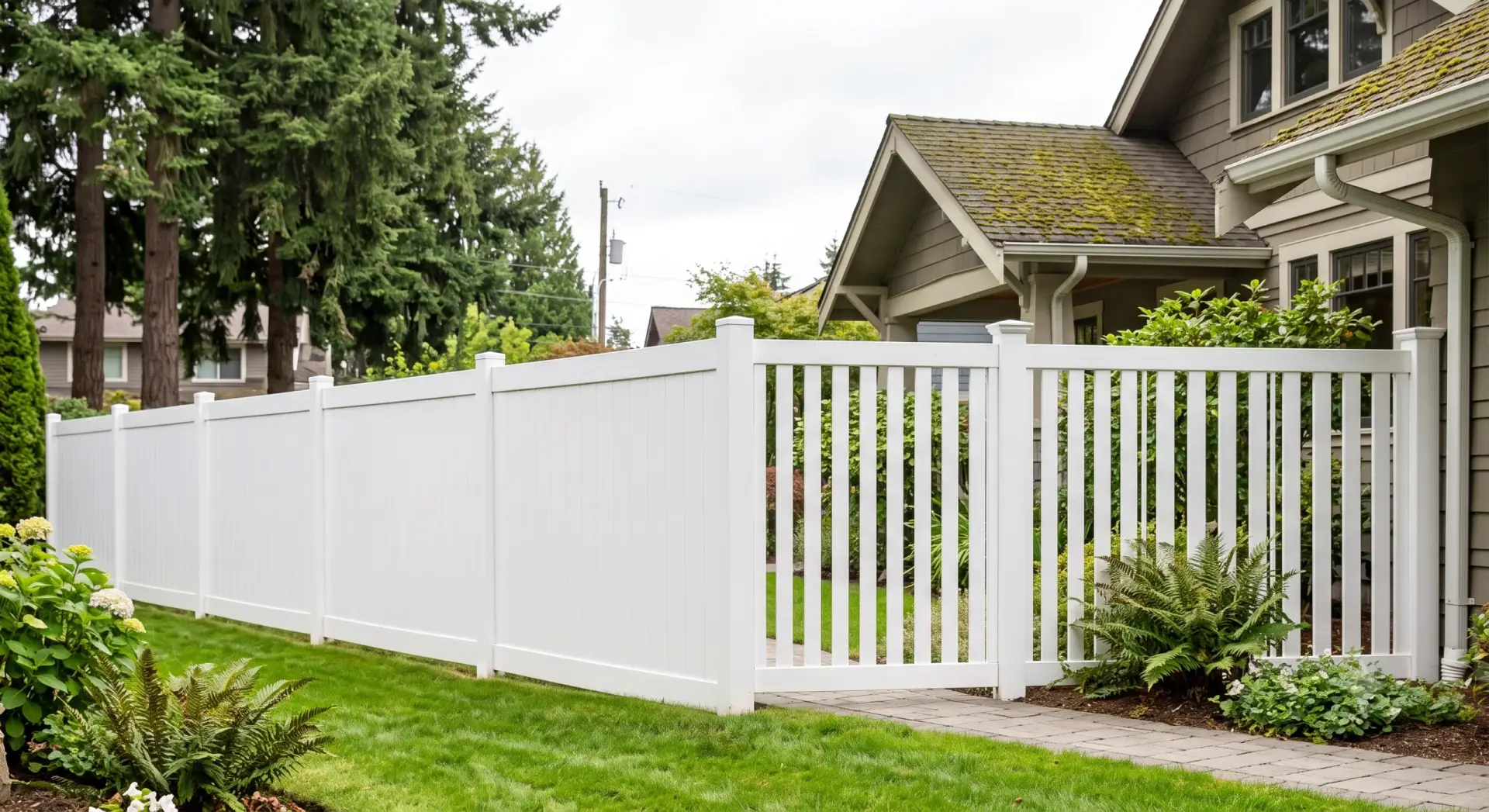
If you are still comparing styles and specifications, review the available vinyl fence installation options before requesting estimates.
What Affects the Cost of a 100-Foot Vinyl Fence?

Two 100-foot fences can have very different final prices. The main variables are the fence design, materials, installation requirements, and conditions on the property.
Fence Height and Style
A taller privacy fence generally requires more material than a shorter picket fence. Decorative tops, custom colors, textured finishes, and other design upgrades can also increase material and installation costs.
Vinyl Materials
Vinyl fencing is made from polyvinyl chloride (PVC), so quotes described as “PVC fencing” and “vinyl fencing” may refer to the same material category. Products still differ in panel construction, thickness, reinforcement, finish, and hardware. A basic white fence and a reinforced or decorative system should not be expected to carry the same price simply because the fence length is identical.
Ask each contractor to identify the manufacturer and product line, explain any required reinforcement, and provide the applicable warranty. Compare those specifications rather than relying on labels such as “premium vinyl” or assuming that every panel offers the same performance.
Labor and Site Access
Installation labor includes laying out the fence line, excavating and setting posts, fitting panels to the grade, and installing and adjusting gates. Slopes, rocky soil, roots, and restricted backyard access can increase the work required even when the fence length remains 100 feet.
Ask whether the quoted price covers materials only or the complete installation. A panel price does not necessarily include posts, caps, reinforcement, concrete, hardware, delivery, or labor. If the contractor separates materials and labor, check that their combined total covers the same scope as any competing installed-price quote.
For a detailed breakdown of labor and installation expenses, see our vinyl fence installation cost guide.
Gates, Corners, and Custom Features
Single and double gates, additional corners, decorative post caps, and other custom elements can increase the total cost. A pedestrian gate and a wider double gate require different components and installation work, so request pricing for the opening width and design you need.
Confirm whether the gate price includes supporting posts, reinforcement, hinges, latches, and installation. Ask how gate openings are counted within the quoted 100-foot layout and whether gates are included in the total or charged separately. This makes it easier to compare proposals without overlooking or double-counting gate costs.
Two layouts with the same total length may require different numbers of end, corner, and gate posts. Ask the contractor to identify these components and any required reinforcement in the proposal. Post spacing must follow the selected vinyl system’s installation instructions; reducing the number of posts is not an appropriate way to lower the price unless the system permits that layout.
Existing Fence Removal and Local Requirements
Replacing a fence may involve removing old panels, posts, concrete footings, and other materials before installation can begin. Ask whether the quote includes excavation, hauling, disposal fees, and cleanup, and clarify whether any existing components will remain.
Have the proposal explain how unexpected buried concrete, difficult excavation, or other concealed conditions would be priced and approved before additional work proceeds.
Local requirements also matter. According to Seattle SDCI fence guidance, a construction permit generally is not required for a fence 8 feet high or less when it does not contain masonry or concrete elements over 6 feet. In Portland, city fence permit guidance states that wood and similar fences over 7 feet require a building permit. Zoning, setbacks, property conditions, and special circumstances can still affect an individual project, so requirements should be checked before installation.
Long-Term Maintenance
Vinyl does not require staining or painting and is resistant to rot, which makes routine maintenance relatively simple. In most cases, periodic cleaning with soap and water is sufficient. Long-term costs still depend on product quality, installation, exposure, and whether individual components require repair or replacement.
Real Project: 168-Foot Vinyl Privacy Fence in Normandy Park, WA
Cool Cat Fence replaced a deteriorating picket fence with 168 linear feet of 6-foot-tall white vinyl privacy fencing in Normandy Park, WA. The project included removing the old fence, preparing the fence line, and installing new vinyl panels, posts, and post caps. The installation was completed in eight days.
Although this project was longer than the 100-foot fence discussed in this guide, it illustrates how fence removal, material selection, and site preparation affect the overall scope of an installation. The project’s actual cost was not published, so it should not be used as a pricing benchmark.
See the complete vinyl privacy fence installation project in Normandy Park for additional photos and installation details.
How Different 100-Foot Vinyl Fence Layouts Affect the Quote

These illustrative layouts show how the scope of a 100-foot vinyl fence project can change. They are planning scenarios, not completed Cool Cat Fence projects or local price quotes.
Scenario 1: 6-Foot Privacy Fence with a Gate and Removal
A 100-foot layout with a 6-foot privacy fence, one 4-foot-wide pedestrian gate, and an existing wood fence to remove requires more than panels and posts. Ask the quote to identify gate components, removal of old posts and footings, disposal, and installation. Confirm which items are included in the fence-run price and which are charged separately.
Scenario 2: 4-Foot Picket Fence with Decorative Post Caps
For a 100-foot picket fence on an accessible, level site, compare the standard system with the same layout using decorative post caps. Keeping the height, product line, and installation scope consistent helps show the actual cost of the decorative upgrade.
Scenario 3: 8-Foot Privacy Fence on a Sloped Lot
An 8-foot privacy fence with double gates needs a quote that accounts for the selected system, changes in grade, gate clearance, and access for installation. Confirm whether the proposed height is allowed and what approvals are needed. Ask the installer to explain how the panels and posts will follow the slope rather than assuming the entire fence line must be leveled.
Vinyl vs. Wood, Chain Link, and Metal Fencing
Cost is only one part of choosing a fence. Maintenance, privacy, appearance, and the conditions around the property also matter. If chain link is another option you are considering, our guide to chain link fence cost per foot explains its pricing factors and sample budgets.
| Material | Cost Considerations | Maintenance | Privacy |
|---|---|---|---|
| Vinyl | Often costs more upfront than basic wood or chain link | Low; no staining or painting | High with solid privacy panels |
| Wood | Varies considerably by species and design | May require staining, sealing, or repairs | High with privacy designs |
| Chain link | Typically one of the lower-cost options | Relatively low | Limited without privacy slats |
| Ornamental metal | Price varies by material and design | Depends on material and coating | Usually limited |
Vinyl can make sense for homeowners who prioritize privacy and minimal routine maintenance. However, it is not automatically the most cost-effective material for every property, so upfront price, expected upkeep, design, and installation requirements should be compared together.
How to Estimate Your Vinyl Fence Project

A cost-per-foot figure is useful for initial budgeting, but a more realistic estimate should account for the entire project. For a 100-foot layout, multiply the applicable installed rate by the length covered by that rate, then add separately quoted items such as gates, removal, or additional site work. Do not add labor again if the rate already includes installation.
An online estimate is a starting point. Its usefulness depends on the specifications, local rates, and site conditions it accounts for; it does not establish what every contractor should charge.
- Measure the fence line. Record the approximate linear footage and number of corners.
- Choose the height and style. A short picket fence and a full privacy fence require different amounts of material.
- Count the gates and add-ons. Include pedestrian gates, double gates, decorative features, and custom finishes.
- Consider site work. Note slopes, difficult access, existing fence removal, roots, and other obstacles.
- Check local requirements. Fence height, location, and property conditions can affect what is allowed.
- Compare complete quotes. Check whether materials, labor, removal, disposal, gates, and any permit-related work are included.
You can use Cool Cat Fence’s Instant Estimate as a starting point, then confirm the details of the project before relying on the final price.
Questions to Ask Before Accepting a Vinyl Fence Quote
Before choosing an installer, ask:
- Which manufacturer, product line, color, and reinforcement are included?
- Does the price cover the same fence length, height, gate openings, and layout as the other quotes?
- Are delivery, removal, disposal, taxes, and any permit-related charges included?
- What assumptions have been made about soil, slope, and access?
- How will unexpected work or changes be priced and approved?
- What do the product and workmanship warranties cover, and what exclusions apply?
Request written clarification where proposals differ. A lower total may reflect a different product or a smaller scope of work rather than a lower price for the same installation.
Frequently Asked Questions About Vinyl Fence Cost
How Much Does a 100-Foot Vinyl Privacy Fence Cost?
A 100-foot, 6-foot-tall vinyl privacy fence has an estimated installed cost of $4,000–$6,000 based on HomeGuide’s published national pricing benchmarks. Taller fences, premium finishes, gates, and challenging site conditions can increase the total. For an accurate estimate, compare quotes that include the same materials, labor, and installation requirements.
What is the cheapest type of vinyl fence?
Open styles that use less material, such as ranch-style or basic picket fencing, generally cost less than full privacy panels. The least expensive option will depend on the product line, height, and local installation costs.
Does a vinyl fence improve curb appeal?
A well-designed and properly installed vinyl fence can improve the appearance of a property. Whether that translates into a measurable increase in property value depends on the home, neighborhood, market, and fence itself.
How long does a vinyl fence last?
A properly installed vinyl fence can remain serviceable for decades, but there is no universal lifespan. Material quality, installation, climate, exposure, maintenance, and the manufacturer’s warranty should all be considered.
Is a vinyl fence worth the cost?
It can be a good option for homeowners who want privacy without regular staining or painting. Whether vinyl offers better value than wood, chain link, or metal depends on the initial quote, desired appearance, maintenance expectations, and expected ownership period.
Can I install a vinyl fence myself?
DIY installation is possible, but accurate layout, post placement, depth, grading, and gate alignment are important. Before digging, contact 811 to request utility marking and follow your state’s notification and waiting requirements. Confirm applicable local requirements before starting installation.
Are vinyl fences suitable for pets and children?
They can be, but suitability depends on fence height, spacing, gate design, latches, and the specific use of the enclosed area. The fencing material alone does not make an enclosure safe for every situation.
Get an Estimate for Your 100-Foot Vinyl Fence
For 2027 planning, HomeGuide’s published national benchmark produces an illustrative budget of $3,000–$6,000 for 100 feet of installed vinyl fencing. Taller privacy fences and premium designs can cost more. Confirm current local pricing before scheduling installation.
Your actual price will depend on fence height and style, gates, materials, removal work, terrain, access, and local requirements. Contact Cool Cat Fence to discuss your layout and request a property-specific estimate.
Cool Cat Fence serves homeowners in Seattle, Portland, and surrounding communities with residential fence installation and project-specific estimates.