A Practical Guide for Homeowners Planning a Fence Project in Seattle, Portland, and Nearby Communities
If you’re planning a new fence, one of the first questions is also one of the easiest to get wrong: can you build a fence on the property line? The answer depends on where the boundary actually is, what your city allows, whether your neighbor agrees, and whether the fence sits fully on your property or directly on a shared line.
At Cool Cat Fence, we help homeowners across Seattle, Tukwila, Portland, Bellevue, Tacoma, Olympia, Vancouver, WA, Salem, Tualatin, Everett, and nearby communities plan fences with fewer surprises. This guide explains what to check before installing a fence near a property line, including local fence rules, neighbor communication, survey concerns, setbacks, and common mistakes that can turn a simple project into a dispute.
Understanding the Property Line and Fence Ownership

What Is a Property Line?
A property line is the legal boundary that separates your land from a neighboring lot, public right-of-way, alley, sidewalk, easement, or shared access area. For fence construction, that line matters because even a small placement error can affect ownership, maintenance, access, and neighbor relations.
Many homeowners assume the old fence is already on the correct line. That is not always true, especially in older Seattle neighborhoods, sloped Portland lots, corner properties, and yards where previous owners installed fences without a recent survey. Before you replace or move a fence, confirm the boundary instead of relying on landscaping, old posts, verbal agreements, or “that’s where it has always been.”
Why the Boundary Line Matters in Fence Construction
A fence built on or near a boundary line affects more than one property. If the fence is fully inside your lot, you usually have more control over the project, although local height limits, easements, utility access, HOA rules, and city requirements may still apply. If the fence sits directly on the shared line, it is much safer to get written agreement from the adjacent property owner before posts go in.
This is especially important for side yards, garden areas, and narrow access paths where a few inches can change the outcome. If your project involves planting beds, utility corridors, or digging near an existing fence line, review basic garden fence planning before you dig before finalizing the layout.
Can You Legally Build a Fence on the Property Line?

General Guidelines and Legal Ownership
In many residential situations, a fence can be built on or very close to the property line only when the location is clear and both neighbors understand what is being built. If the fence will sit directly on the shared boundary, a written agreement is the safest approach because it can clarify cost sharing, ownership, maintenance, access for repairs, and what happens if the fence is replaced later.
If there is no agreement, the safer option is usually to build the fence fully inside your own property line, leaving enough room for installation and future maintenance. A contractor can help plan the fence layout, but a contractor cannot settle a legal boundary dispute. If the line is unclear, start with a licensed surveyor and, when needed, a real estate attorney.
Local Laws, State Regulations, and Zoning Rules
How Local Ordinances and Zoning Rules Apply
Fence rules are local, so Seattle and Portland should not be treated as if they follow one identical standard. Before you build, check the city, county, HOA, and any easements recorded on the property.
| Location | 2026 planning note | What homeowners should check |
|---|---|---|
| Seattle | SDCI notes that a fence 8 feet high or lower usually does not need a permit if it has no masonry or concrete elements over 6 feet and is not in a flood-prone area. However, residential height rules still apply, including the common 6-foot limit with limited architectural features above it. | Height, front/street-side placement, slopes, retaining walls, environmentally critical areas, flood-prone areas, and whether the fence affects access. |
| Portland | A building permit is generally required for wood fences taller than 7 feet, masonry/concrete fences taller than 4 feet, woven wire or chain link fences taller than 8 feet, and pool barriers.1 | Zoning setbacks, overlay zones, plan districts, right-of-way limits, height, and special site conditions. |
| Nearby cities | Bellevue, Tacoma, Olympia, Everett, Vancouver, WA, Salem, Tualatin, Tukwila, and other service areas may have their own rules. | Local code, HOA rules, corner-lot visibility, easements, utilities, and neighborhood restrictions. |
The key point is simple: do not assume that a fence allowed in one city will automatically be allowed in another. A backyard fence in Portland, a street-side fence in Seattle, and a corner-lot fence in Bellevue can all have different review issues.
How State Laws Can Affect Your Fence Project
State law can also affect fence projects, especially when a fence sits on a shared boundary or one neighbor asks another to contribute to the cost. Washington and Oregon both have partition fence statutes, but those laws do not replace city fence rules, private agreements, recorded easements, or the need to verify the actual property line.
In Washington, partition fence rules may affect reimbursement or responsibility when a boundary fence is used to enclose adjoining land, especially after proper notice. In Oregon, ORS Chapter 96 addresses line and partition fences, including cost sharing when a qualifying fence serves as a partition fence for adjoining enclosed property. These rules are fact-specific, so homeowners should avoid assuming that a neighbor must automatically pay half of a residential fence just because the fence benefits both yards.
For most homeowners in Seattle, Portland, and nearby cities, the practical approach is this: confirm the boundary, check local code, communicate with the neighbor, document any shared agreement in writing, and get legal advice if the boundary or payment responsibility is disputed.
Why a Land Survey is Essential

Avoiding Encroachment and Legal Disputes
One of the smartest steps before building close to a property line is hiring a licensed land surveyor. A survey can confirm where the boundary sits, identify existing markers, and reduce the chance that a new fence ends up on a neighbor’s land, in an easement, or too close to a public right-of-way.
If a fence crosses the boundary without permission, the issue can become expensive quickly. The neighbor may ask for removal, the city may decline to settle the private dispute, and the homeowner may need legal advice to resolve the placement problem.2 Even a small encroachment can matter if the fence affects access, maintenance, sale of the home, or future improvements.
Survey costs vary widely. For many residential fence projects, homeowners should treat a boundary survey as a planning expense that may range from several hundred dollars to several thousand dollars depending on lot size, terrain, records, access, and complexity. Sloped lots, older properties, missing markers, dense landscaping, or unclear legal descriptions can increase the cost.
Fence Built Without Permission: What Can Happen
If a fence is built on a shared property line without agreement, or if it crosses onto a neighbor’s land, the owner may be asked to move, modify, or remove it. The dispute may also delay a home sale, create tension with neighbors, or require a survey and legal review.
Adverse possession is sometimes mentioned in fence disputes, but it is not something homeowners should rely on or summarize casually. The rules vary by state and depend on specific facts over time. For a local residential fence project, the better strategy is to prevent the problem before installation: verify the line, document neighbor approval when needed, and keep the fence within the correct boundary.
Best Practices for Building on the Property Line

Communication With Neighbors
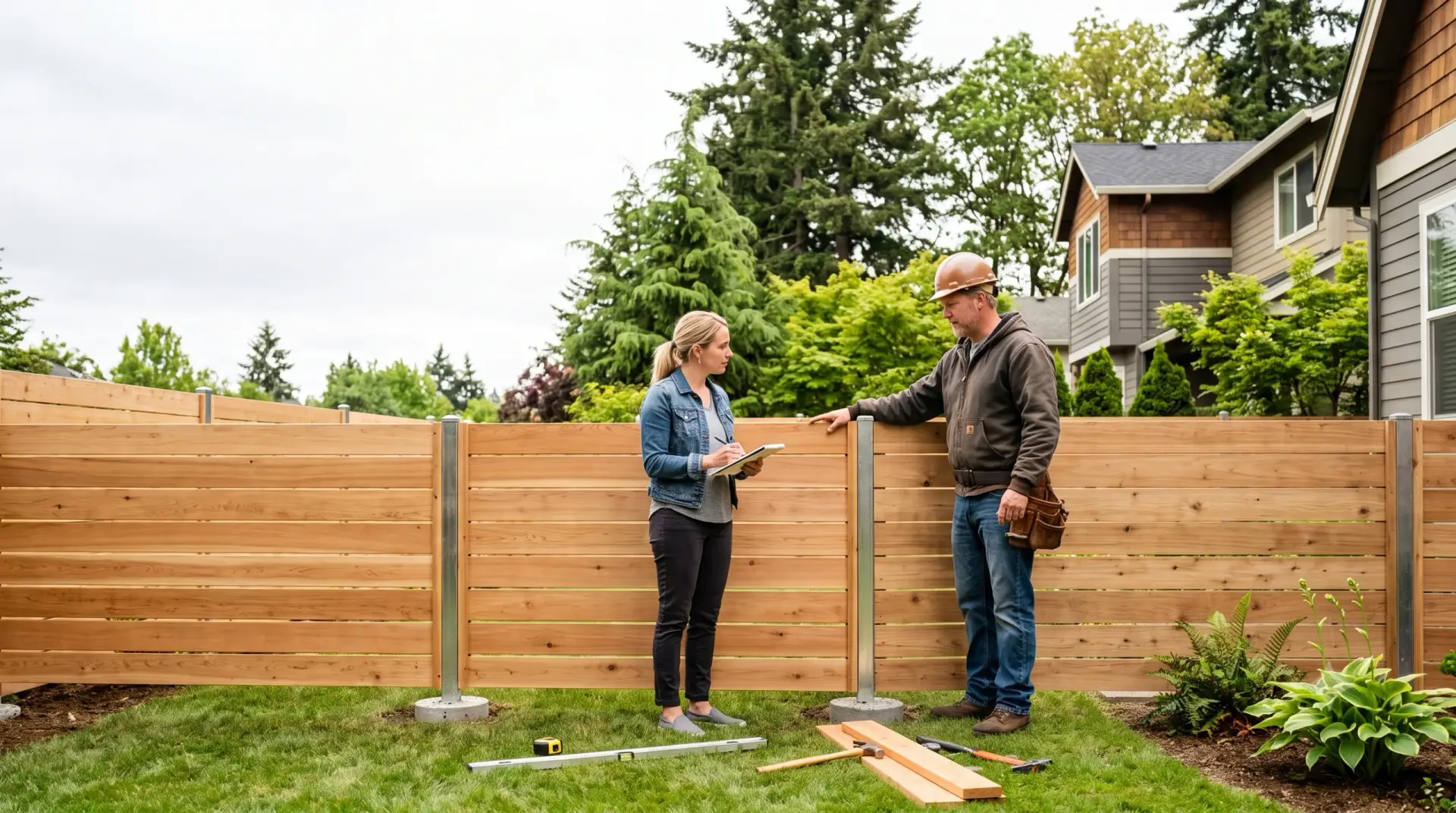
Start with a direct conversation before the old fence comes down. Let your neighbor know what you plan to build, where the fence will sit, how tall it will be, and whether the project affects shared access, landscaping, pets, retaining walls, gates, or garden areas.
If the fence will be on the shared boundary, put the agreement in writing. The agreement should describe the fence location, height, material, style, cost sharing if any, access for repairs, and who handles future maintenance. This is especially useful in dense Seattle neighborhoods, Portland side yards, and older properties where the existing fence may not match the surveyed line.
Cost Sharing and Maintenance Responsibilities
Cost sharing depends on state law, local context, and the agreement between the property owners. Even when a fence benefits both properties, homeowners should not assume that a 50/50 split automatically applies to every residential fence project.
Some neighbors split materials, labor, gates, removal, and cleanup. Others agree that one homeowner will pay for a higher-end style while the neighbor contributes only to a basic boundary fence. Whatever the arrangement, keep written records, estimates, payment details, and any maintenance agreement. That documentation is much easier to rely on later than a casual conversation.
Fence Height, Styles, and Setbacks
Choosing the Right Fence Height
Fence height rules vary by city, zone, yard location, and site condition. Seattle, Portland, Bellevue, Tacoma, Vancouver, Salem, and other nearby cities may treat backyard fences, front-yard fences, corner lots, alley-adjacent fences, and fences near slopes or retaining walls differently.
Choosing the right height also depends on the purpose of the fence. A 6-foot privacy fence may make sense for a backyard. A shorter fence may work better near a front yard, sidewalk, driveway, or street corner where visibility matters. Before choosing height, confirm whether your fence location triggers city review, HOA approval, setback limits, or special restrictions.
Fence Styles and Materials
Certain fence styles work better near property lines because they balance privacy, access, maintenance, and neighborhood appearance. Common options include:
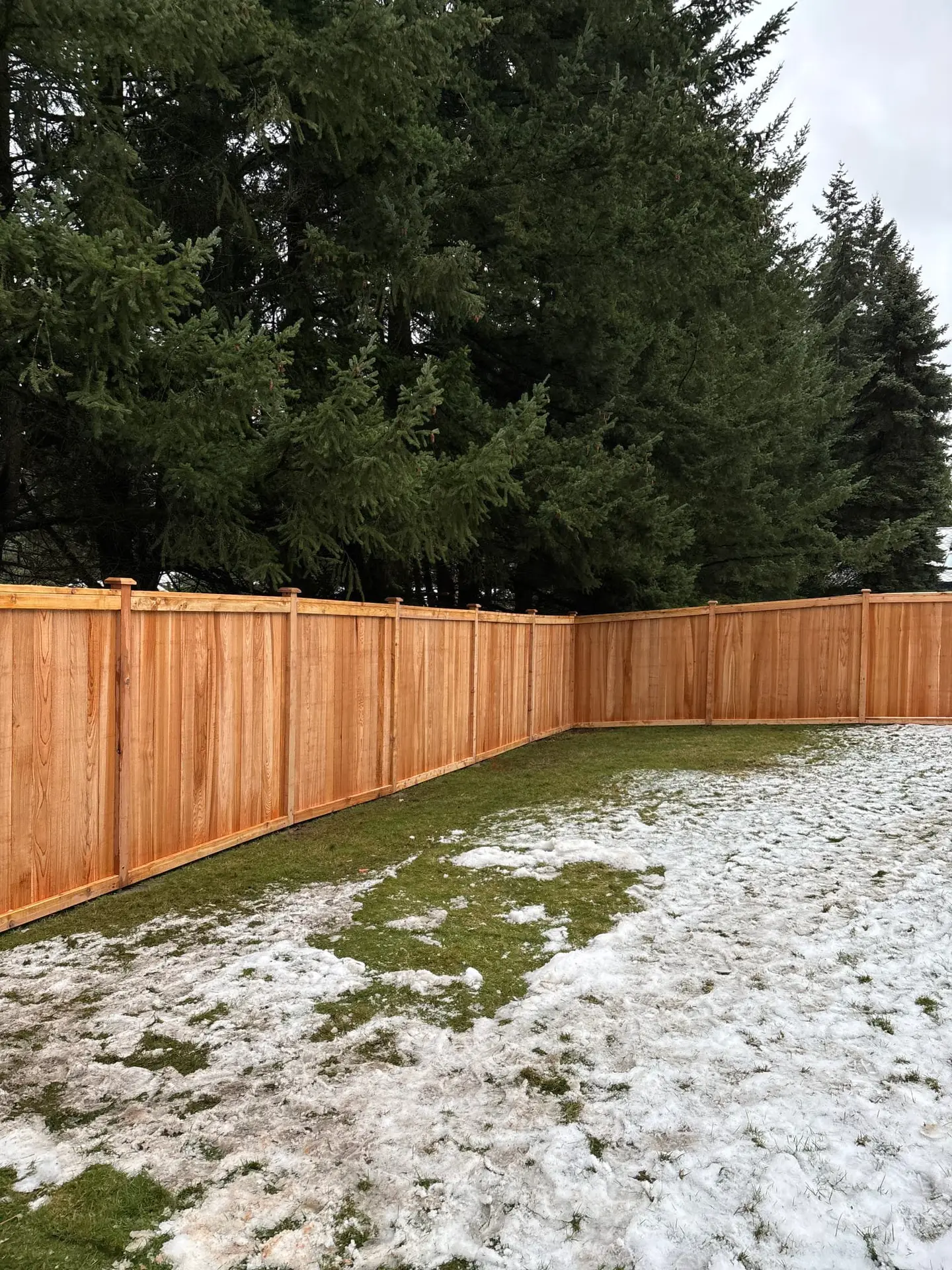
- Wood privacy fences for screening, warmth, and a traditional Pacific Northwest look
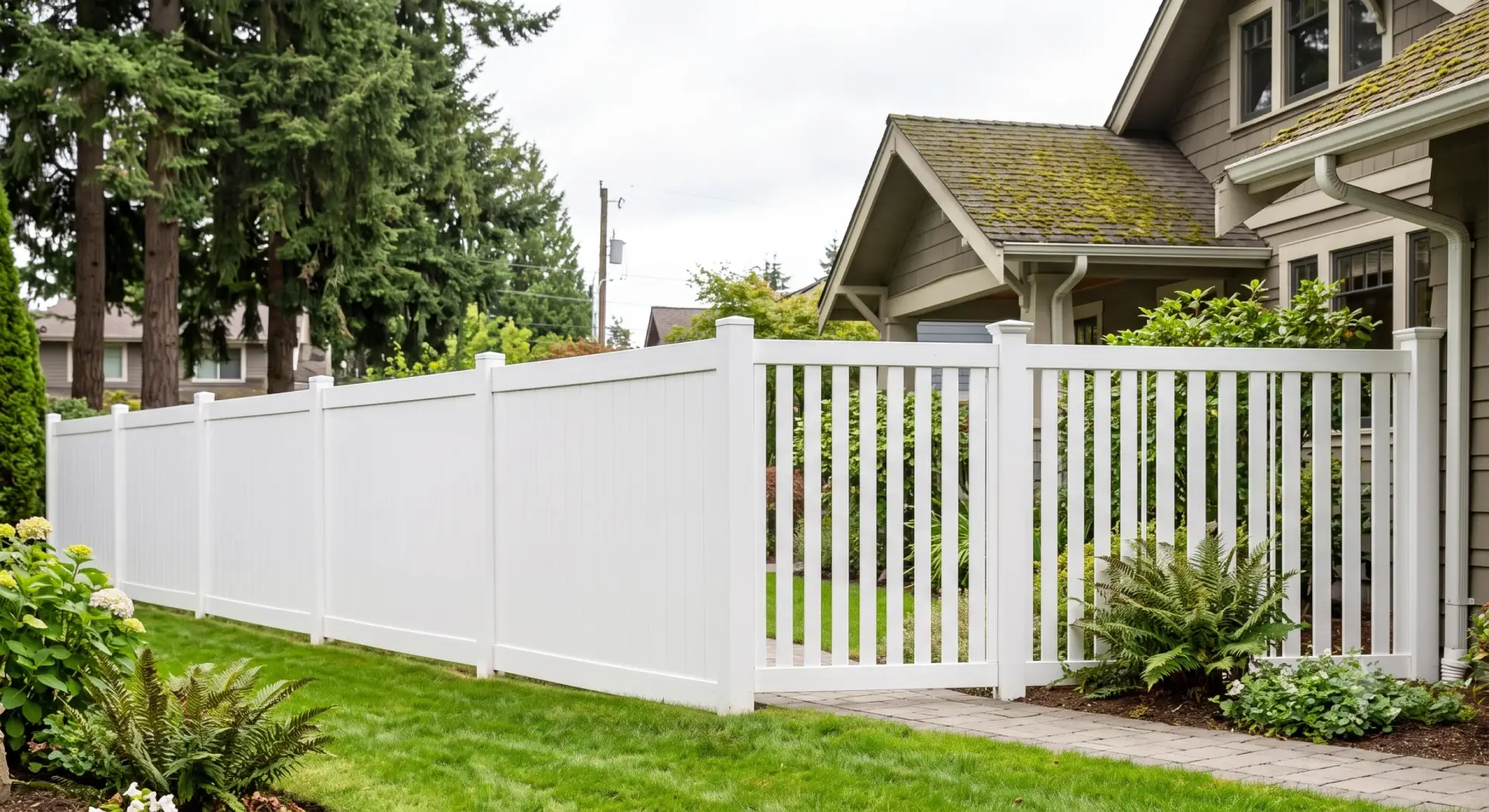
- Vinyl fences for low maintenance and clean privacy lines
- Chain link fences for practical boundaries, pets, and visibility
- Ornamental iron fences for security and curb appeal without blocking views
- ColorMAX® steel panel fences for a modern privacy-focused look
- Hog wire fences for gardens, views, and lighter visual impact
The best fence material depends on your site, budget, maintenance expectations, and how close the fence sits to the property line. If you are considering vinyl for a wet climate or a low-maintenance backyard, it also helps to understand how long a vinyl fence can last before comparing it with wood, chain link, or metal options.
Real-World Fence Planning: What Can Go Right or Wrong
Dispute Example: Fence Too Close to the Line
A homeowner replaces an old fence without confirming the surveyed boundary. After installation, the neighbor discovers that several posts sit over the line. Now the project may require a survey, legal advice, removal work, and a rebuilt section. The fence itself may be well built, but the location creates the problem.
Better Outcome: Shared Fence Planning Before Installation
Two neighbors agree to replace a deteriorating chain link fence with a new wood privacy fence. Before work begins, they confirm the boundary, discuss the fence height and style, decide how costs will be handled, and put the maintenance agreement in writing. The result is cleaner, calmer, and easier for both sides.
For homeowners comparing styles and layouts, reviewing recent fence projects can also make conversations with neighbors easier because everyone can see what the finished fence may look like before installation starts.
Frequently Asked Fence Laws and Property Line Disputes Questions
Can I build a fence on the property line without my neighbor’s consent?
It is not a good idea. If the fence will sit directly on a shared property line, get written agreement first. If there is no agreement, the safer approach is to keep the fence fully inside your own property and confirm the layout with a survey when the line is unclear.
How close to the property line can I build a fence?
That depends on your city, property layout, easements, setbacks, and whether the fence affects a sidewalk, alley, right-of-way, slope, driveway, or corner visibility. Do not rely on a universal distance. Check local rules before installation.
Who pays for a boundary fence?
Sometimes neighbors share the cost, especially when both benefit from the fence. However, cost sharing depends on the agreement, local facts, and applicable state law. Put any payment agreement in writing before work starts.
Do I need a survey before replacing an old fence?
Not always, but it is strongly recommended when the fence is near the boundary, the old fence may be misplaced, the neighbor disagrees, or the property has unclear markers. A survey is often a more manageable planning cost than dealing with a placement dispute after the fence is already built.
Can I attach items to my neighbor’s fence?
If the fence is fully on your neighbor’s property, you should not paint it, attach planters, add lattice, fasten wire, or modify it without permission. If the fence is shared, agree on changes in writing.
Can a fence be built in an easement?
Sometimes, but it can be risky. Utility, drainage, access, and maintenance easements may limit what can be built or allow removal if access is needed. Always check records before placing a fence in an easement area.
Final Thoughts: Build It Right From the Start
Building a fence on or near the property line is possible, but it should not be rushed. Confirm the boundary, check local rules, talk with your neighbor, review easements, and document any shared agreement before installation begins. A little planning upfront can prevent a much more expensive problem later.
Cool Cat Fence helps homeowners plan and install fences across Seattle, Portland, and nearby Washington and Oregon communities. Our in-house team can help you compare materials, plan a practical layout, and build a fence that fits your property, your privacy goals, and your neighborhood. Contact us to start planning your fence project with more clarity and fewer surprises.