How long does stain need to dry before rain? There isn’t one safe drying time for every product. Depending on the stain formula, weather conditions, and wood surface, the required rain-free window can range from several hours to a full day or longer.
Whether you’re staining a deck or staining a wood fence, check the product label for its specific drying and rain-ready requirements before you start. This guide explains how stain type, temperature, humidity, and unexpected rain can affect the result.
Why Drying Time Matters

Exterior wood stain needs time to penetrate or form its protective finish, depending on the product. If rain arrives before the stain is ready for moisture exposure, the result can include water spots, streaks, uneven color, or areas where the finish does not perform as intended.
Horizontal surfaces such as deck boards are particularly vulnerable because water can sit on the surface instead of running off immediately. The safest approach is to plan around the rain-free window specified by the stain manufacturer rather than assuming that a surface that feels dry is already rain-ready.
Drying Time by Stain Type: Why the Product Matters
Stain type can give you a general idea of how quickly a finish may dry, but it cannot tell you the exact rain-safe time. Products within the same category can have very different application, recoat, rain-resistance, and cure requirements.
Oil-Based Stains
Oil-based stains generally take longer to dry than faster-drying water-based formulas. Temperature, humidity, wood condition, application thickness, and the individual product can all extend the drying period.
Do not use “dry to the touch” as your only test. Check the label for the required time before rain, recoating, foot traffic, or normal use.
Water-Based Stains
Water-based stains often become dry to the touch sooner, but that does not automatically mean they are ready for rain. Some products require a substantial rain-free window even though their stated surface drying time is much shorter.
For this reason, distinguish between:
- dry-to-touch time;
- recoat time;
- rain-ready time;
- time before foot traffic or furniture;
- full cure time.
These are not interchangeable.
Quick-Dry and Weather-Resistant Stains
Some exterior stains are formulated to resist rain within only a few hours, while other products require considerably longer. If the forecast gives you only a narrow dry window, choose a product whose manufacturer specifically allows application under those conditions.
How Weather Affects Stain Drying Time

The drying time listed on a product assumes certain application conditions. Real outdoor conditions can make the process faster or slower.
- Temperature: Cool conditions can slow drying, while excessive heat or a hot surface can make application difficult. Follow the product’s specified application temperature range.
- Humidity: High humidity generally slows evaporation and can extend drying time.
- Direct sunlight: Some manufacturers advise avoiding direct sun or hot surfaces because the stain can dry too quickly during application.
- Airflow: Moving air can help moisture evaporate, while sheltered or heavily shaded areas may remain damp longer.
- Wood moisture: The surface needs to be sufficiently dry before staining. After rain or cleaning, this may take a day or longer depending on the wood and conditions.
Check the forecast before staining, but also check the wood itself and the product instructions. A dry afternoon does not necessarily mean that damp wood from the previous day is ready for stain.
Deck vs. Fence Stain Drying Time
Decks and fences face moisture differently, but you should not use the type of structure alone to determine the drying time.
Decks
Deck boards are horizontal, so rain can pool on the surface. Decks also have to withstand foot traffic and furniture, creating additional reasons to wait until the stain reaches the appropriate stage of drying or curing.
Follow separate manufacturer requirements for rain exposure and return to normal use. They may not be the same.
Fences
Vertical fence boards generally shed rain more readily than a deck surface, although rails, caps, and horizontal sections can still collect moisture.
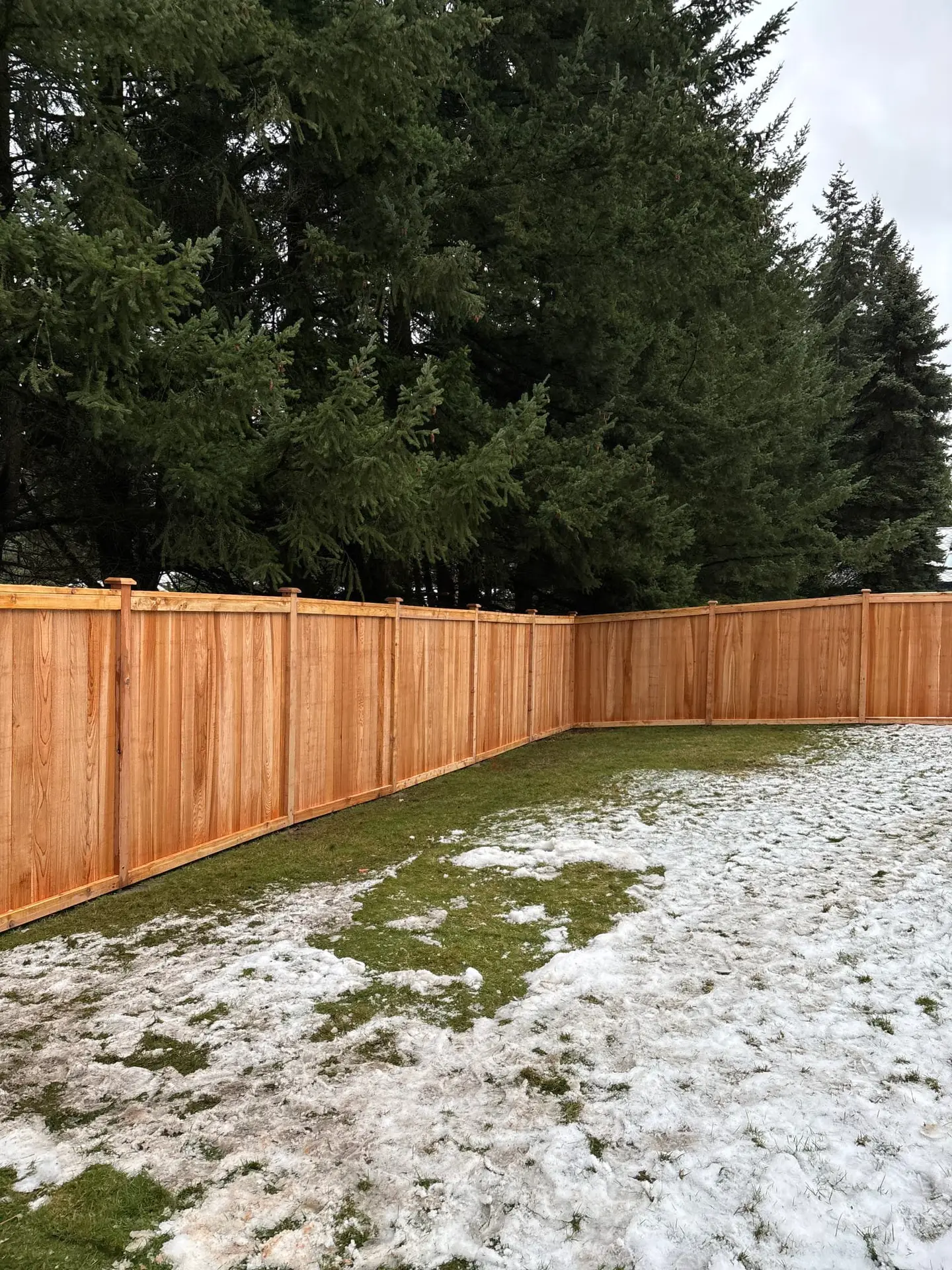
If you are staining a cedar wood fence, do not automatically shorten the drying period simply because the boards are vertical. The stain formula, wood moisture, temperature, and humidity still determine how much dry weather is required.
What to Do if It Rains Too Soon

If rain reaches freshly stained wood before the product is rain-ready, wait until the surface is completely dry before deciding what to do next.
Then:
- Inspect the finish. Look for water spots, streaking, uneven color, washed-out areas, or tackiness.
- Check the product instructions. Different stains require different repair methods.
- Test a small affected area first. Do not immediately sand or apply another coat across the entire surface.
- Recoat only when appropriate. If another coat is recommended, follow the manufacturer’s preparation and recoat instructions.
- Get product-specific advice for major damage. Widespread discoloration or finish failure may require more preparation than a simple touch-up.
Most importantly, do not apply more stain while the wood is still wet. Give the surface time to dry so you can see what damage, if any, actually occurred.
Can You Speed Up Drying Time?
You cannot safely force an exterior stain to cure faster than the product allows, but good application conditions can help prevent unnecessary delays.
- Start with dry, properly cleaned and prepared wood.
- Apply the stain at the recommended coverage rate.
- Avoid excessive application or puddling.
- Choose a product with a shorter rain-ready time if the forecast is unpredictable.
- Work within the manufacturer’s specified temperature and weather conditions.
If the stain requires a second coat, follow its stated recoat time. Some products can be recoated within hours, while others require more time, so a universal 24- or 48-hour rule does not apply.
Best Practices Before Staining a Deck or Fence

- Prepare the wood properly. Remove dirt, mildew, and other contaminants before staining.
- Let wet wood dry. After rain or cleaning, make sure the wood meets the stain manufacturer’s moisture requirements before application.
- Check the forecast. Choose a weather window that meets the specific product’s application and rain-ready requirements.
- Check wood moisture when required. A moisture meter can provide a more reliable measurement than appearance alone.
- Avoid over-application. Applying more stain than recommended can interfere with proper drying.
- Consider overnight moisture. Rain is not the only concern; dew can also affect a finish that is not yet ready for moisture exposure.
Frequently Asked Questions
How long does stain need to dry before rain?
It depends on the specific stain. Some exterior stains can resist rain within a few hours, while other products require 24 hours, 48 hours, or another specified rain-free period. Always use the rain-ready time on the product label rather than relying only on its dry-to-touch time.
Will light rain ruin a freshly stained deck?
It can. If the stain has not reached its stated rain-resistant stage, even light rain may leave spots, streaking, or uneven color. If the product is already rain-ready, the risk is much lower.
Can I apply a second coat the next day?
Possibly, but the correct recoat time depends on the product. Some stains allow another coat within several hours, while others have different requirements. Follow the manufacturer’s instructions rather than automatically waiting until the next day.
What if it rains a few hours after I stain?
Let the surface dry completely and then inspect it for discoloration, streaks, tackiness, or washed-out areas. Before sanding or recoating, check the stain manufacturer’s repair recommendations.
Do fences dry faster than decks?
Fence boards often shed water more easily because they are vertical, while deck boards can hold standing water. However, that does not automatically make a fence stain rain-ready sooner. Product specifications and actual weather conditions should determine the drying time.
How Long Should Stain Dry Before Rain? Key Takeaways
There is no universal drying time that works for every deck or fence stain. The important number is the manufacturer’s required rain-free period for the exact product you are applying—not simply when the surface feels dry.
Before staining:
- start with properly prepared, dry wood;
- check both rain and overnight moisture in the forecast;
- follow the specified application temperature range;
- distinguish between dry-to-touch, recoat, rain-ready, and full-cure times;
- allow additional drying time when conditions are cool or humid.
For homeowners who prefer professional help with a wood fence, Cool Cat Fence offers fence staining using Wood Defender stains during its staining season. You can also contact Cool Cat Fence to discuss your fencing project and current service availability.
Careful timing now can help you avoid having to repair an uneven finish after the next rain.