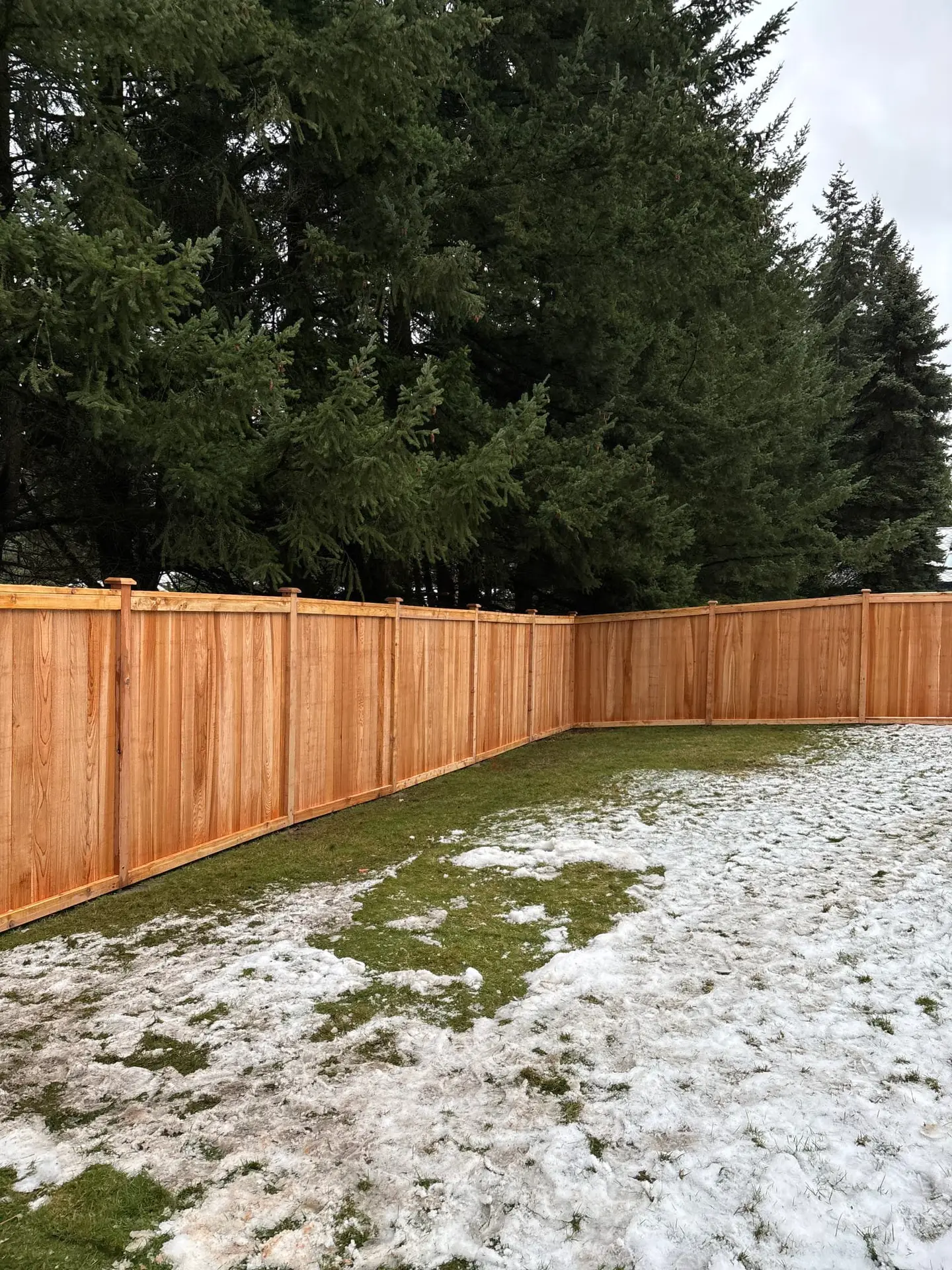
Building a fence on uneven ground presents a core challenge that many homeowners underestimate. When terrain varies across your yard, a standard fence layout simply will not conform to the ground’s contour. This leaves visible gaps at the base that compromise privacy, allow pets to escape, and diminish your property’s security across the entire property. Cool Cat Fence helps homeowners navigate these challenges with proper planning and installation methods.
Gaps appear under fences because posts set at uniform depths can leave the bottom rail elevated in lower sections. On slopes, drainage dips, and grade transitions, those openings can range from a few inches to nearly a foot. In Seattle, fence repairs often involve more than the visible gap because constant moisture and clay-heavy soil affect how the entire line performs over time. https://www.ncei.noaa.gov/products/land-based-station/us-climate-normals That weakens both the appearance and the function of a backyard fence, especially when the goal is a privacy fence that clearly defines usable garden space.
This guide covers installation methods, terrain assessment, and material selection for homeowners with sloped or irregular backyards. It explains how to achieve a clean fence line without visible gaps, which fencing options work best on difficult terrain, how to identify problem areas before installation, and when professional help makes more sense than DIY.
Professional fencing options for building an uneven fence
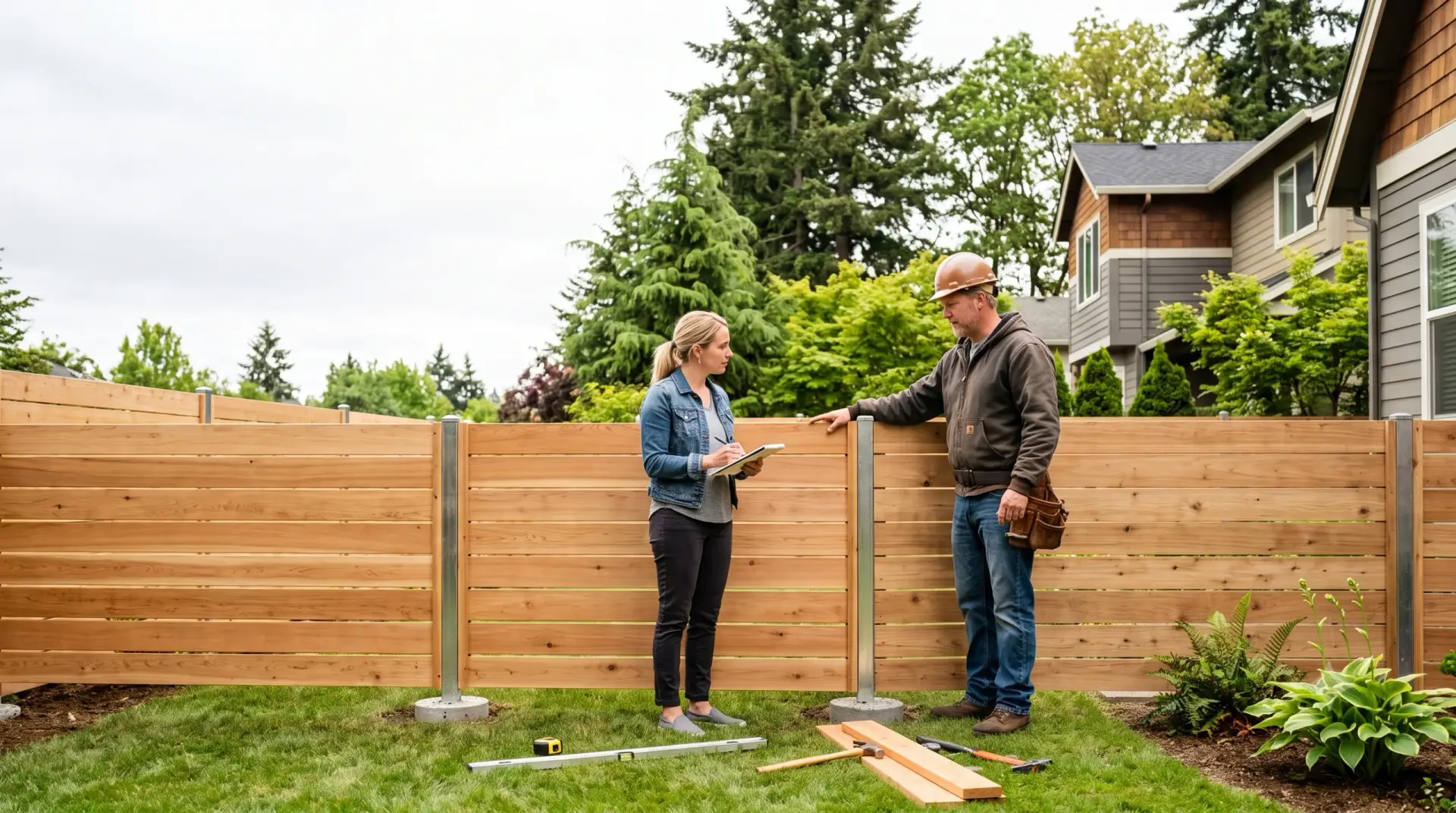
Professional installers approach uneven ground with careful layout planning. They use string lines and batter boards to map terrain changes, often checking grade variation every two to six feet. That process helps identify low spots, root obstructions, drainage issues, and other site conditions before any posts go into the ground. It also shows where concrete footings will provide the most stable support.
Three primary techniques dominate professional installations: racking, stepping, and bottom infill solutions. Each method suits specific yard conditions for gap-free results.
Racked fence installation
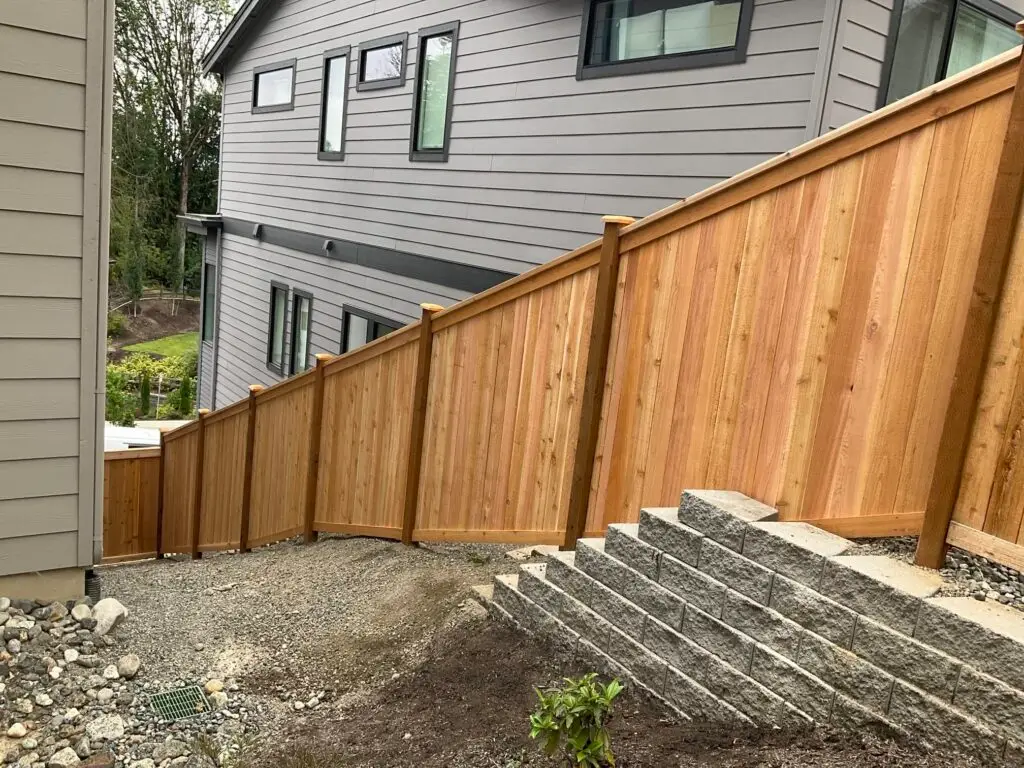
A racked fence angles its rails to follow the slope, which helps eliminate gaps by keeping the panel closer to the ground. Posts stay aligned while the panels adjust to match the grade. Rackable systems in vinyl, aluminum, chain link, and custom wood or cedar work best on gentle to moderate slopes. They also create a cleaner top and bottom line, which gives the fence a more finished look. For a six-foot fence, long-term stability usually depends on proper post depth and solid concrete footings.
Stepped fencing
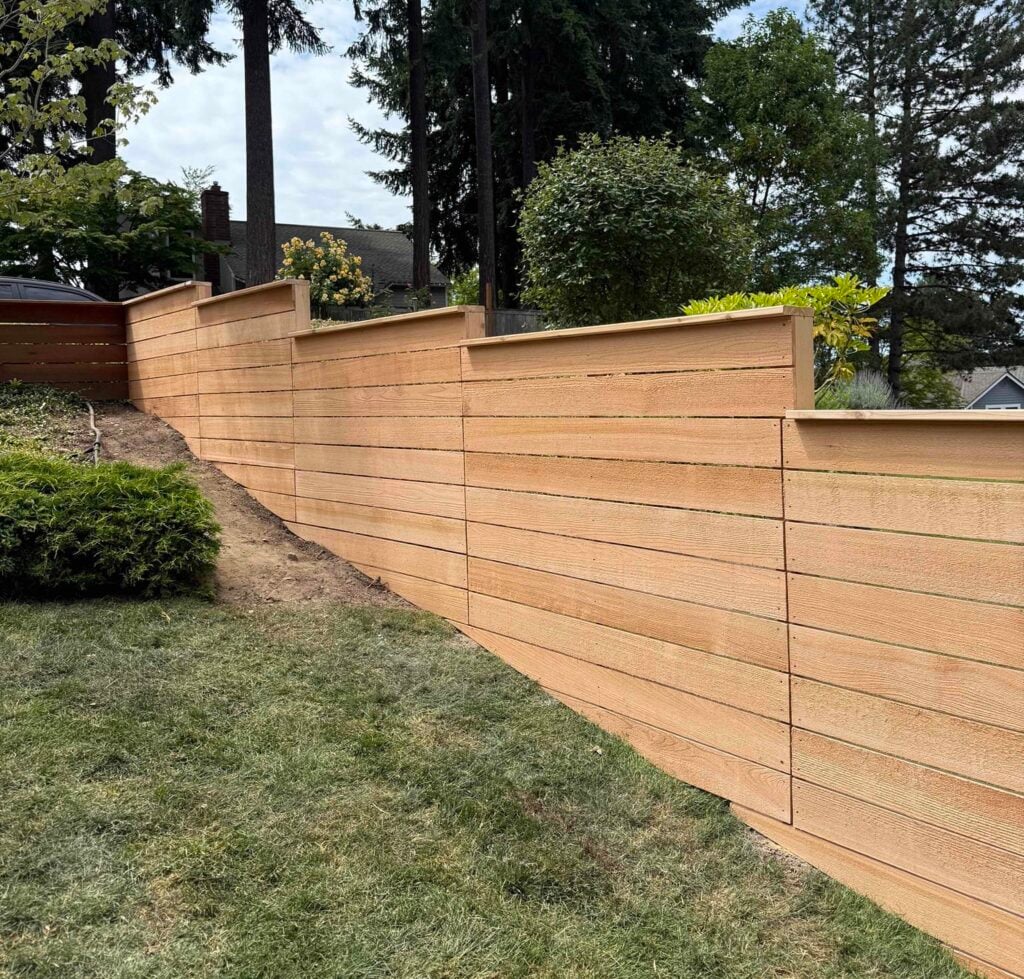
Stepped fencing keeps each panel perfectly level and horizontal like stairs. Posts are set vertically at varying heights to match terrain shifts, creating a stepped top line or, in some layouts, a subtle curved top effect across the run. This approach suits steeper slopes or pre-built wood panels, including picket fences and some of the more popular styles used for backyard privacy fence projects. However, stepping inevitably produces triangular gaps at the base on rises over six inches per panel. These openings require additional solutions for complete privacy or pet containment around a garden or playground.
Bottom infill solutions
Kick boards, mesh, gravel berms, or short retaining walls close gaps in either method. For pet containment, solid infill reduces openings to under four inches. These solutions enhance security without altering the main fence structure, and lattice or trim details can sometimes improve how the lower section ties into the rest of the fence. In wet Seattle conditions, adding gravel around post bases also helps manage drainage and reduce the chance of future leaning.
Yard Condition | Best Installation Method | Why It Works |
|---|---|---|
Gentle slope | Racking | Panels follow the grade smoothly |
Steep slope | Stepping | Maintains straight panel alignment |
Uneven dips | Mixed layout | Adjusts for irregular terrain |
Pet containment | Kick board or infill | Reduces openings under the fence |
Modern design focus | Horizontal fencing | Requires careful layout on slopes |
Understanding the terrain helps determine which combination of methods will produce the most stable, gap-free result and make better use of the yard.
How to identify problem areas before your fencing project
Before starting any fencing project, survey your property lines for common terrain issues. Drainage dips where water pools can erode soil and destabilize posts. Grade transitions from fill dirt or cuts create abrupt elevation changes that demand careful panel adjustment across the land and affect how the fence meets the surrounding landscape.
Tree roots often interfere with post placement, requiring six to twelve inches of clearance or strategic repositioning. Hard clay or rocky soil complicates digging and may need specialized equipment for proper post depth. Test subtle low spots with a four-foot level and string line along your planned fence line. Identifying these issues early is essential if you want the finished fence and gate layout to work cleanly without costly corrections later. It also makes it easier to decide where a gravel base will improve drainage around post bases. https://wpcdn.web.wsu.edu/extension/uploads/sites/57/2020/04/Soil-Compaction.pdf
Fencing options that handle uneven terrain better
Certain fence styles adapt to challenging land more effectively than others. Chain link fences excel as economical options that slope easily, allowing light through while providing security. Split rail offers rustic adaptability with rails that adjust to dips naturally. Picket fences and privacy fence designs in composite materials resist warping on slopes with rackable panels. For many homeowners, these remain a popular choice when balancing cost, light, and long-term performance on uneven land, especially when the fence should frame the yard without becoming the only focal point.
Horizontal fencing for tricky yards distributes weight evenly and racks smoothly for contemporary aesthetics on irregular ground. Ornamental wrought iron and aluminum use lightweight, adjustable brackets for minimal maintenance on varied grades. Aluminum fences also offer strong security and a clean, stylish look that works with many landscape designs. Cedar and redwood wood panels provide classic durability, natural beauty, and a classic look when properly installed. Cedar remains a strong option when homeowners want more warmth and a natural transition into the surrounding landscape, especially near greenery or trailing plants. Avoid rigid masonry or non-rackable designs on steep terrain due to cracking risks.
Vinyl fence and metal fences on sloped yards
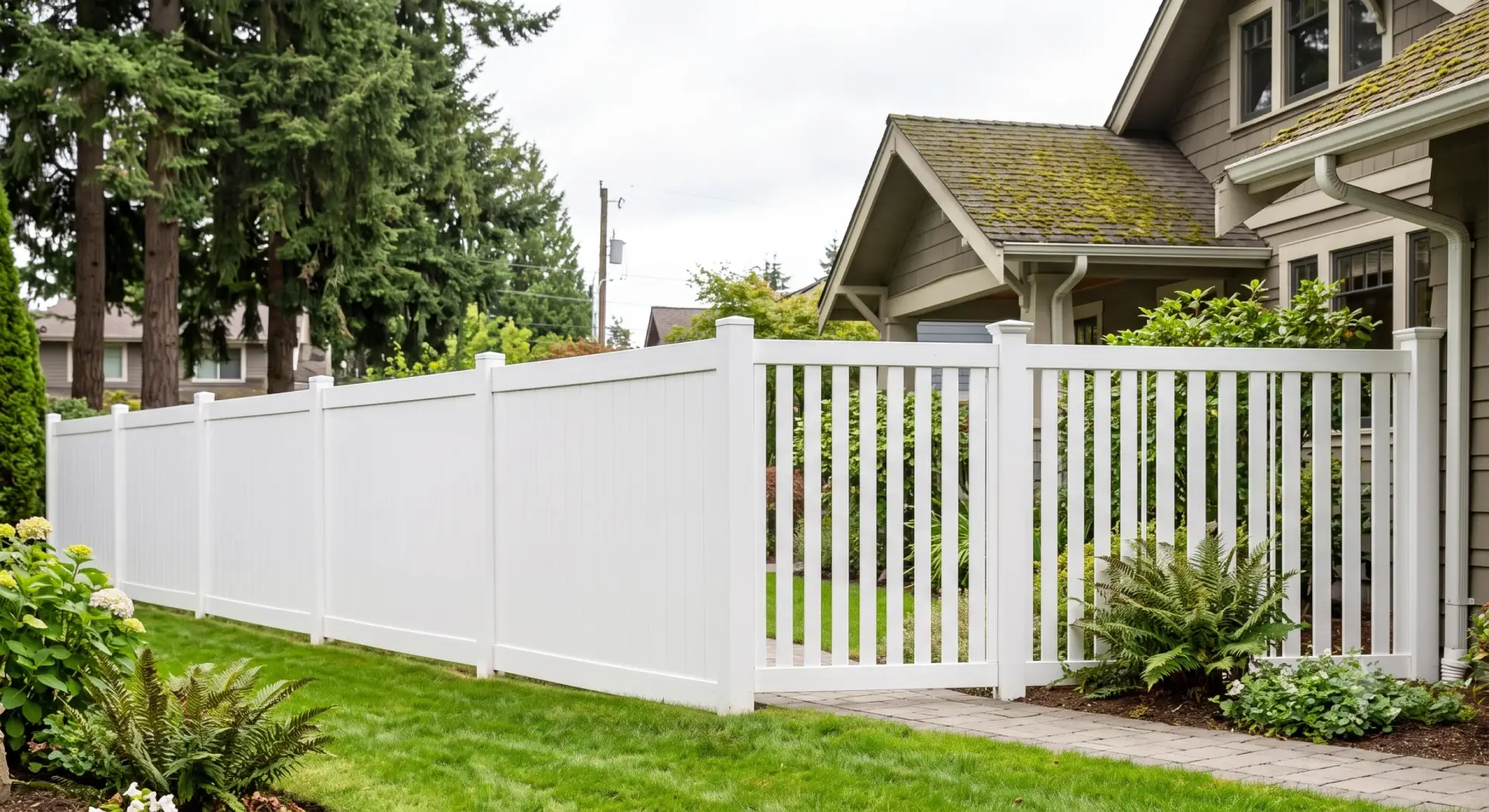
A vinyl fence leverages rackable panel systems where interconnected rails pivot at hinges or slots. These materials can typically handle up to one inch per foot of slope while keeping pickets upright for a clean appearance and a more elegant style. Vinyl’s composition flexes without splintering, making it ideal for wet climates and green landscapes where low maintenance matters. It also keeps its appearance for decades with occasional washing and does not require painting or staining.
For vinyl fence installation in Seattle, UV-resistant, minimal maintenance panels can be racked over roots or dips with aluminum-reinforced posts. Metal options such as vinyl-coated chain link or galvanized steel can handle similar slope adjustments and offer strong long-term durability. They still require precise post spacing, especially near a gate or transition point where alignment matters as much as appearance.
Choosing the right fence: DIY vs professional installation on uneven ground
DIY installations on uneven ground often fail from mismeasured slopes using inadequate tools. Inconsistent post heights lead to wobbly rails, and visible gaps result from exceeding material racking limits. Amateurs commonly skip gravel drainage in footings, risking frost uplift, and overlook local regulations for proper barriers, especially around a gate, garden edge, or other functional space. Errors also become more obvious near gate openings where alignment and swing clearance matter. When a post is only slightly leaning, digging around the base, straightening it, and adding gravel or concrete can sometimes correct the problem before a larger rebuild is needed.
Professional installers use laser levels, hydraulic augers, and field adjustments to identify problem areas and build a more stable line. DIY can save money upfront, but the cost of rework adds up quickly when gaps appear or posts begin to shift. On yards with drainage problems, steep grades, or multiple terrain transitions, professional installation usually delivers better long-term results.
Choosing the right fence for your outdoor space
Successful fence installation on uneven ground requires matching the right method to your specific terrain. Start by surveying your yard for grade changes, drainage issues, and obstructions. Consider racking for gentle slopes, stepping for steeper areas, and infill solutions where gaps would otherwise appear. The goal is to create a fence line that works with the yard instead of fighting it.
Choose materials that suit your slope and design goals. Consult with professionals for complex terrain to protect your investment and ensure proper installation. Research permit requirements in your area before beginning work, and plan gate placement carefully on sloped sections so the fence fits the property, supports the landscape, and leaves enough room for nearby plants, pergola features, or other design elements. https://www.seattle.gov/sdci/permits/common-projects/fences That matters even more when you are installing cedar or wood sections that need cleaner alignment from panel to gate. A well-planned fence also helps mark property boundaries clearly and can reduce future disputes.
FAQ: Fence Leaning Problems and Fix Options
Can you build a fence on uneven ground?
Yes, fences can be built on uneven ground using racking or stepping techniques that adapt panels to follow the slope while maintaining structural stability.
How do you avoid gaps under a fence on a slope?
Racking panels to follow the terrain closely eliminates most gaps, while kick boards, lattice, or infill materials can seal openings in stepped installations.
What is the difference between racking and stepping a fence?
Racking tilts rails to match the slope for a continuous bottom line, while stepping keeps panels level in a stair pattern that creates triangular gaps at the base.
Which fencing options work best for uneven backyards?
Rackable vinyl, chain link, horizontal slat designs, and aluminum panels adapt most effectively to irregular terrain without compromising the fence line, especially when homeowners want a privacy fence with a clean style. A full privacy fence can also block unwanted views, reduce some outside noise, and create a calmer space for relaxing or entertaining.
Do I need special posts for a fence on a slope?
Standard reinforced posts work on slopes when set at proper varying depths with concrete footings, though spacing may need adjustment for stability.
Can a vinyl fence or chain link fence work on uneven terrain?
Both vinyl and metal fences feature rackable panel systems that handle moderate slopes effectively while maintaining elegant appearance, durable performance, and a refined style around each gate opening. Cedar or wood may also work well, but those materials usually need tighter layout control on changing grades.
Should I level my yard before installing backyard fences?
Leveling is optional and often costly. Racking and stepping techniques adapt to existing terrain without requiring extensive grading work.
Is a DIY fence on uneven ground a good idea?
DIY on uneven ground risks visible gaps and instability from measurement errors. Professional installation typically delivers more reliable results on challenging terrain.