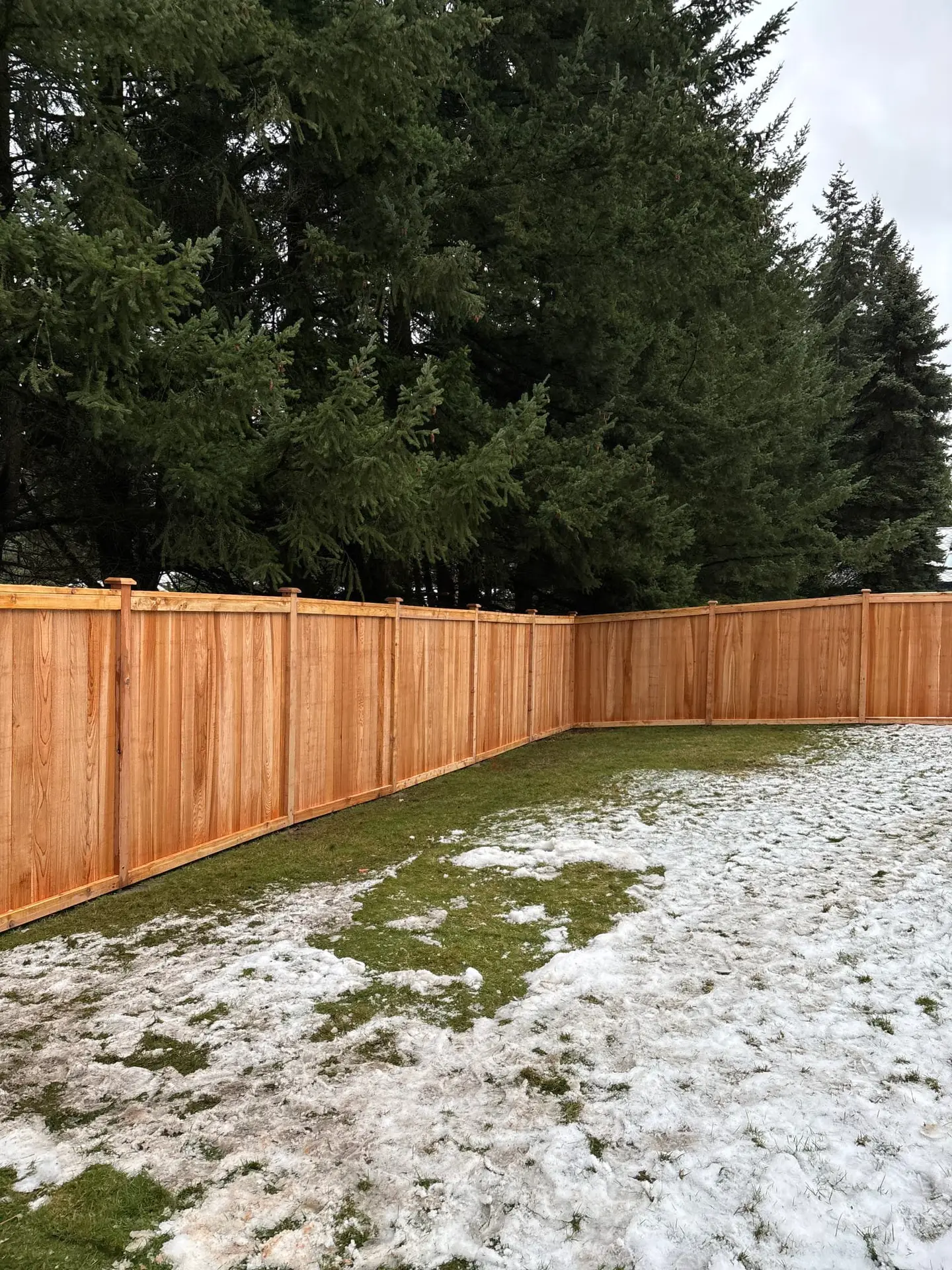
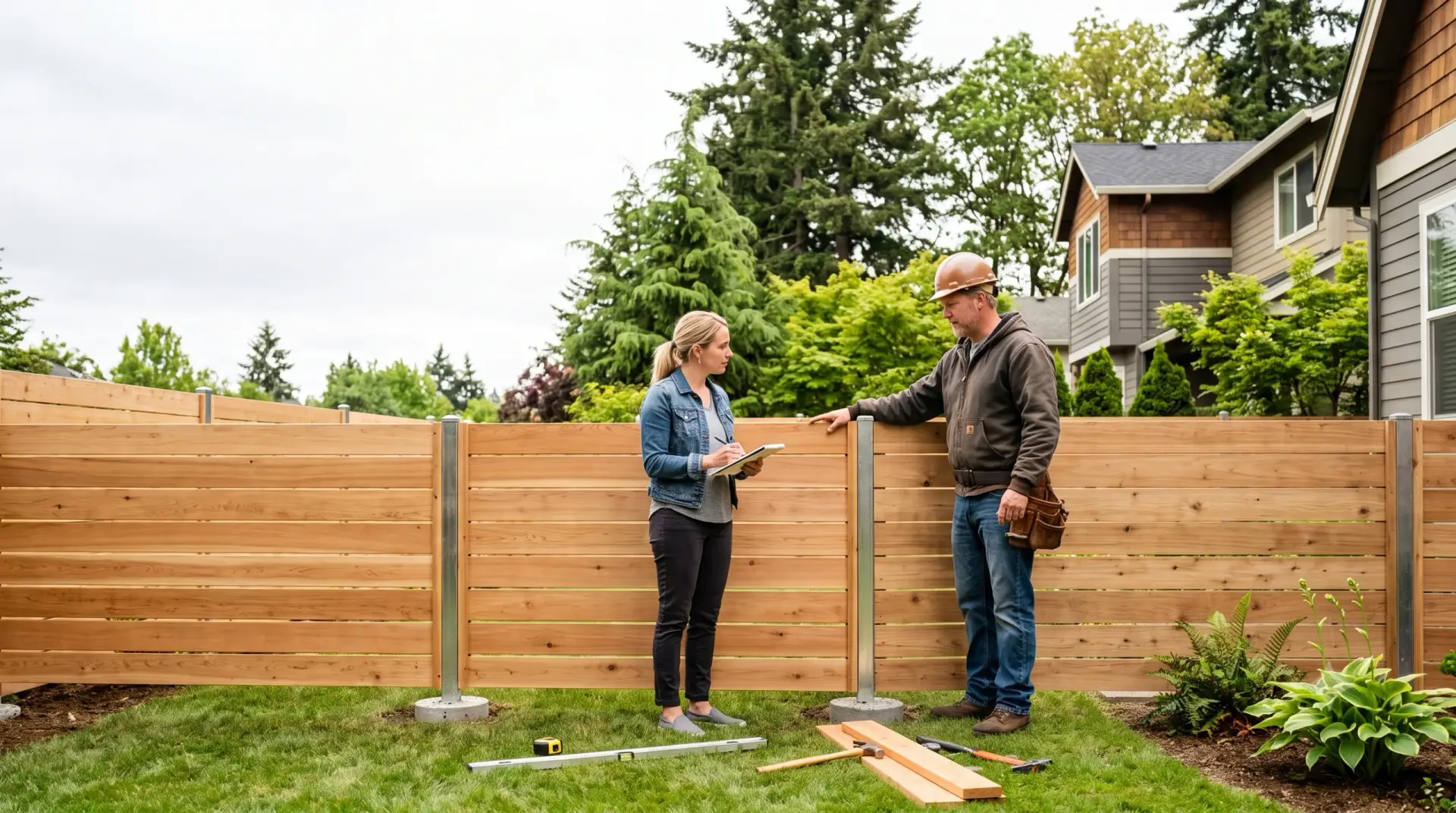
A horizontal wood fence does more than change the edge of a yard. It changes how the whole space reads. The same backyard can feel calmer, wider, cleaner, and more intentional once the lines of the fence start pulling the eye across the property instead of straight up. At Cool Cat Fence, that is often the real reason homeowners move toward horizontal design. They are not just replacing a boundary. They are trying to change the feel of the space they actually live in.
That shift matters because a privacy fence is never only about privacy. A privacy fence affects light, flow, sightlines, gate placement, and how enclosed the yard feels from morning to night. It can also affect security, especially when gates, fence height, and sightlines are planned together instead of treated separately.1 A horizontal layout tends to feel more architectural than basic wood pickets or stock fence panels, which is why it appeals to homeowners who want stronger modern aesthetics without losing warmth.
Why a Horizontal Wood Fence Feels So Different
A horizontal fence changes visual rhythm. Vertical fencing breaks the eye into repeated narrow sections. Horizontal boards stretch the view outward. In smaller yards, that can make the space feel less boxed in. In wider properties, it can make the layout feel cleaner and more unified.
That is one reason cedar remains such a common material for this style. Cedar gives a horizontal design warmth and texture that many homeowners want in a privacy-focused yard. Pine and pressure-treated options can also work, especially when budget matters, but the final look depends on material quality, board spacing, how the posts are set, and how carefully the fence is installed. In this region, moisture exposure and spring ground movement can also affect long-term durability, especially if early rot starts near the base of the posts.
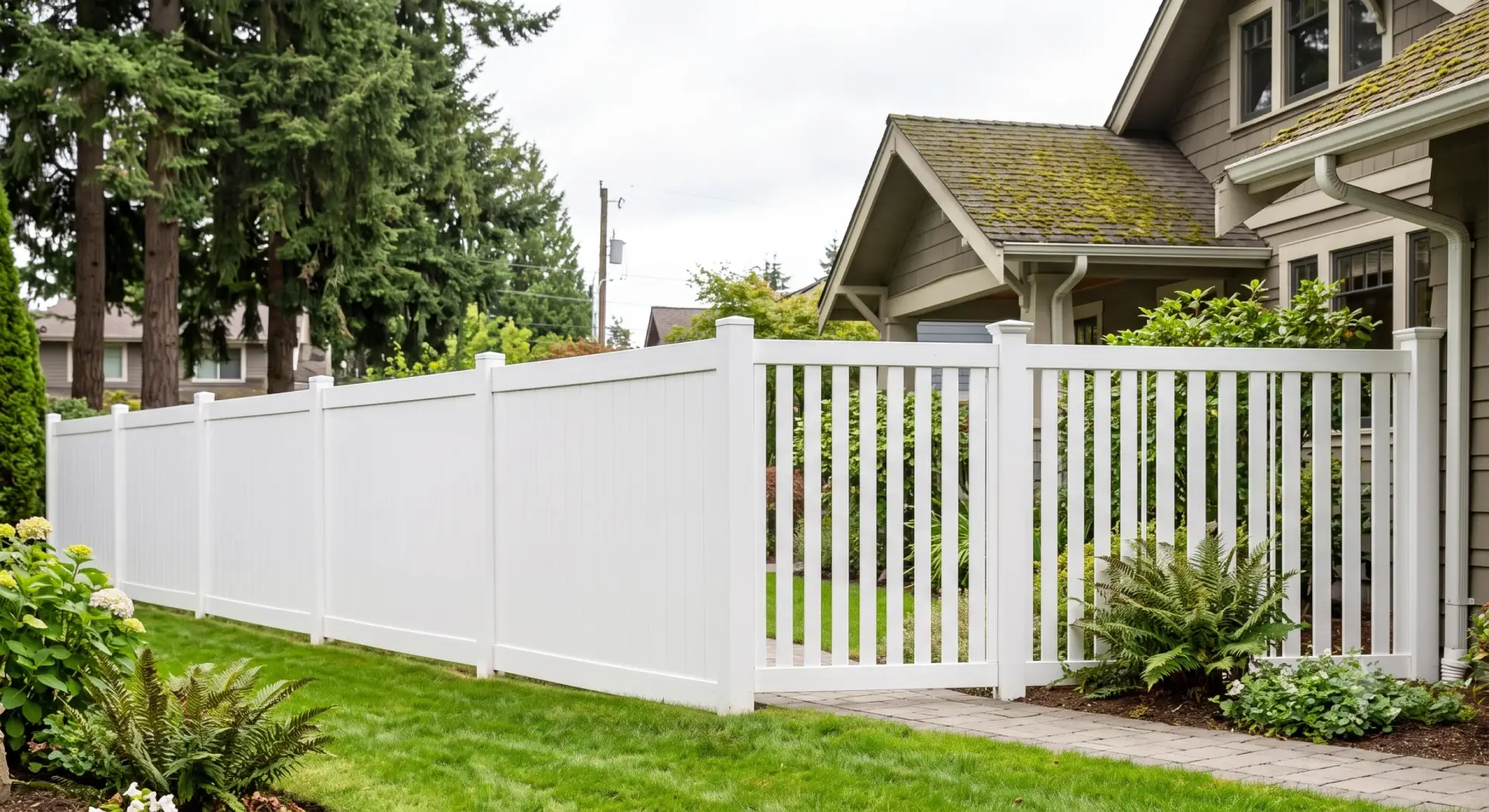
This is also where horizontal design separates itself from vinyl fences, composite fences, or aluminum fencing. Those other materials each have a place, and some homeowners like vinyl, composite, or aluminum for lower upkeep and wider material availability. But wood often feels more natural around patios, planting beds, and residential landscapes. A horizontal cedar fence can feel custom in a way many factory-made alternatives do not, especially when aluminum or composite options feel too manufactured for the rest of the yard.
Privacy Fence Changes, but So Does the Whole Backyard
Homeowners usually start with privacy, but what they notice later is how much the fence reshapes everyday use. A well-designed horizontal privacy fence can make a seating area feel more settled, a side yard feel more intentional, and a previously bare edge feel like part of the home instead of leftover space.
That is especially true when the design is handled as part of the entire yard, not as an isolated install. Board spacing, top line, height, gates, and the availability of clear access paths all affect whether the fence feels balanced. The wrong layout can make a fence feel heavy. The right one can create privacy without making the backyard feel shut down, and it can add a stronger sense of security without making the space feel defensive.
That is also why homeowners searching phrases like how much does a 6-foot privacy fence cost per foot are often asking the right question for the wrong reason. They want a number, but what they are really trying to understand is whether a 6 foot privacy fence will give them the right feel, not just a workable boundary. In real pricing terms, a 6-foot privacy fence often falls in the $3,150 to $4,950 range, while a typical 150- to 200-foot backyard privacy fence can run from about $3,000 to $8,000, depending on material, layout, and site demands.2
Before looking at the full pricing picture, it helps to see the most common cost ranges in one place.
Cost factor | Typical range |
6-foot privacy fence installation | $3,150 to $4,950 |
Backyard privacy fence project (150 to 200 feet) | $3,000 to $8,000 |
Privacy fence cost per foot (wood or vinyl, professionally installed) | $25 to $60 per foot |
Professional installation share of the total budget | 40% to 60% |
Labor share of total project cost | 30% to 50% |
Permit, site prep, and terrain impact | 10% to 25% added cost |
Professional installation cost | $8 to $25 per foot |
Privacy Fence Cost and Installation Costs Depend on More Than Boards
The phrase privacy fence cost sounds simple, but the number always depends on several factors. Material matters. Labor matters. So do permits, terrain, layout complexity, and whether the project includes demolition or custom gate work. For professionally installed wood or vinyl, privacy fence cost often falls in the $25 to $60 per foot range, and horizontal layouts usually sit toward the higher end because the lines are less forgiving. Boards need to read straight. Spacing needs to stay clean. Posts matter more because the eye follows every run.
That is why installation costs are usually tied to precision, not just footage. In many projects, labor makes up roughly 30 to 50 percent of the total project cost, and professional installation alone can account for about 40 to 60 percent of the budget, or roughly $8 to $25 per foot, depending on complexity and region.3 If a homeowner compares a horizontal fence to cheaper vinyl fences or standard panel systems, the horizontal option can look more expensive at first. In many cases, it is. But the reason is not hype. It is the amount of detail required to make the style look right once it is fully installed.
The same applies to labor costs. A horizontal privacy fence usually asks more from the crew than a simpler pattern. The work has to stay visually consistent across the full run, especially when gates, corners, or changes in elevation enter the picture.
Professional Installation and Labor Costs Matter More With Horizontal Design
Some fence styles hide small flaws better than others. Horizontal design does not. That is why professional installation matters so much here. If post spacing is off, if the top line wanders, or if board runs do not stay clean, the fence will show those mistakes immediately.
This is one area where homeowners can lose money trying to force a DIY build into a highly visible finish. A DIY fence can absolutely work in some situations, and it may save roughly 30 to 50 percent on labor, but a horizontal layout leaves little room for casual measuring, uneven reveals, or improvised adjustments. The cleaner the desired result, the more important the tools, layout planning, and installation skills become. Small layout errors can lead to visible mistakes, and those mistakes are harder to hide once every board line starts pulling the eye across the yard. Proper post setting and level board runs matter here more than many homeowners expect.
That is also why horizontal wood fence installation tends to work best when the project is treated as a custom build rather than a quick assembly job. This style lives or dies on detail.
Hidden Costs and Site Conditions Show Up Fast on Real Properties
A lot of the real budget pressure comes from the parts homeowners do not see in the first estimate. Hidden costs can include existing fence removal, disposal fees, custom gates, hardware upgrades, permit fees, difficult access, and extra labor when the crew has to work around slopes, landscaping, or awkward property lines. In many jobs, permits, site prep, and terrain can add another 10 to 25 percent to the total cost before the fence itself is even finished.
Site preparation matters too. Digging post holes in easy soil is one thing. Digging through rocky soil, roots, or compacted ground is another. The installation process for a horizontal wood fence usually starts with site preparation, clearing, layout work, and leveling the area as much as the property allows. Post holes then have to be dug, and posts have to be set in concrete to create the stability this style depends on. If the yard has uneven terrain, installation time rises. If the location has permit rules or neighborhood requirements, those details can affect the timeline, design, and fees. They can also add delays that lead to extra coordination, extra trips, or extra materials homeowners did not expect at the start.
That is why the total project cost rarely matches a casual online search. Even the question of cost by linear foot has limits. A rate per linear foot can help frame the conversation, but it does not tell the whole story about the real site conditions. One more foot of slope, one more foot of awkward access, or one more foot of gate adjustment can change the math faster than people expect.
Material Choice Changes the Feel as Much as the Budget
Material selection is not just about saving money. It changes the character of the finished fence. Cedar often gives a horizontal privacy fence its strongest natural look. In Pacific Northwest conditions, Western Red Cedar is especially valued because it naturally resists rot, decay, and insects, and it is generally less prone to warping than softer, less stable options. Pressure-treated pine can lower costs and still create a solid result when detailed well. Composite can appeal to homeowners who want lower-maintenance materials, while vinyl may suit properties where consistent color and reduced upkeep matter more than the warmer look of wood.
Still, the reason many homeowners come back to cedar is simple. It feels right in a backyard. It works with planting, patios, and softer residential settings. It also tends to support the curb appeal and overall style homeowners are usually after when they choose a horizontal design in the first place.
Fence Height, Gates, and Layout Affect the Whole Experience
A horizontal privacy fence is not just a wall. It is part of the movement through the property. Gates need to land where people actually use them. Height needs to provide privacy without overwhelming the yard. The overall run needs to feel like it belongs to the house and the landscape.
That is why fence height and gate placement matter as much as board material. A taller fence can increase privacy, but it can also increase cost, labor, and permit complexity. A smaller yard may benefit from a carefully detailed 6-foot fence rather than something heavier. In some yards, a top detail like lattice can soften the look. In others, a fully clean horizontal line feels better. Most residential fence installations take about 2 to 4 days, but that timing shifts quickly when gates, slopes, or access problems complicate the layout.
The real point is that style should follow use. Homeowners who treat horizontal fencing as a complete spatial decision usually get a better result than those who treat it as just another product.
Good Design Also Has to Survive Real Conditions and Hidden Costs
A fence that looks good in summer should still make sense after weather, wear, and seasonal changes. That is where material choice and local judgment matter. In some areas, fire-smart fencing ideas may affect what materials and details make sense near the house or landscape edge. In others, storm exposure matters more, which is why understanding fence repair vs replacement after a storm can be useful long before damage happens.
This does not mean every horizontal fence needs special features. It means design is never separate from conditions. The best-looking fence is still part of a real property with real risks, real maintenance needs, and real use over the years.
Why a 6 Foot Horizontal Wood Fence Changes the Space Completely
The biggest effect of a horizontal wood fence is not that it looks trendy. It is that it changes how the yard functions emotionally and visually. A previously open or disconnected area starts to feel contained in a good way. Privacy feels calmer. The space feels more finished. Even simple outdoor routines, like opening a gate, sitting near a planting bed, or letting kids move through the yard, can feel more deliberate once the edges are resolved.
That is why homeowners often describe the result as bigger, cleaner, or more polished, even when the square footage did not change at all. The fence changed the frame, and the frame changed the experience.
FAQ
Is a horizontal wood fence more expensive than a standard privacy fence?
Often, yes. Horizontal design usually involves more custom work, tighter detailing, and higher labor costs.
Why does horizontal fencing change the feel of a backyard?
It pulls the eye across the space, which can make the yard feel wider, cleaner, and more intentional.
How much does a 6-foot privacy fence cost per foot?
It depends on materials, labor, permits, gates, and site conditions. A simple per-foot number rarely captures the full project.
Is cedar better than pressure-treated pine for a horizontal fence?
Cedar often gives a more refined look, while pressure-treated pine can be a more budget-friendly option. The best choice depends on style, budget, and maintenance preferences.
Do horizontal fences require professional installation?
In many cases, yes. This style is less forgiving, so professional installation usually makes a visible difference.
What hidden costs affect horizontal fence pricing?
Common hidden costs include existing fence removal, permit fees, gate upgrades, difficult digging, and uneven terrain.
Are vinyl or composite fences a better alternative?
Sometimes, depending on maintenance goals and style preferences. But many homeowners still prefer wood for warmth and a more natural backyard feel.
Does fence height affect total cost?
Yes. Height affects materials, labor, permits, and the overall visual impact of the fence.