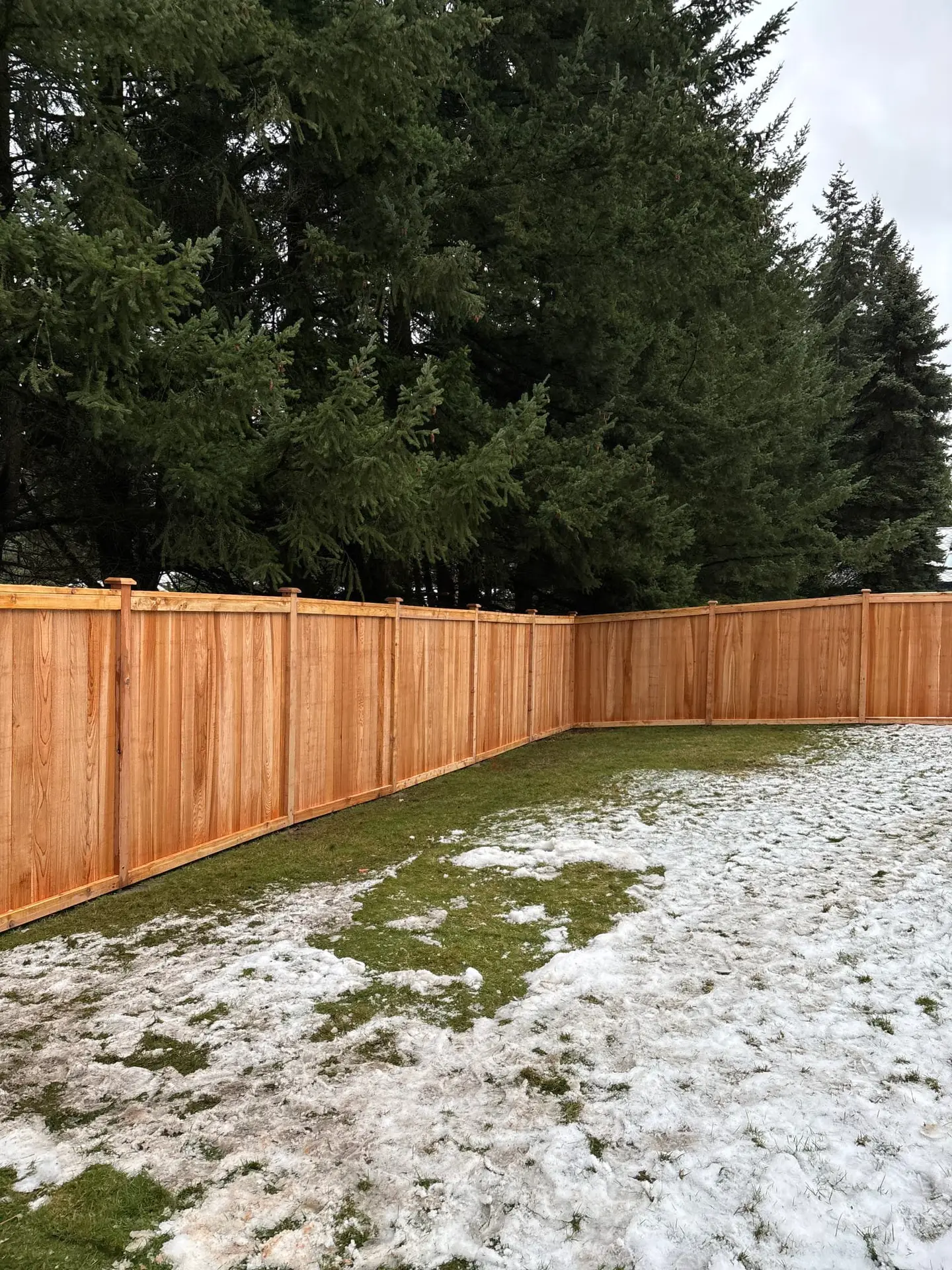
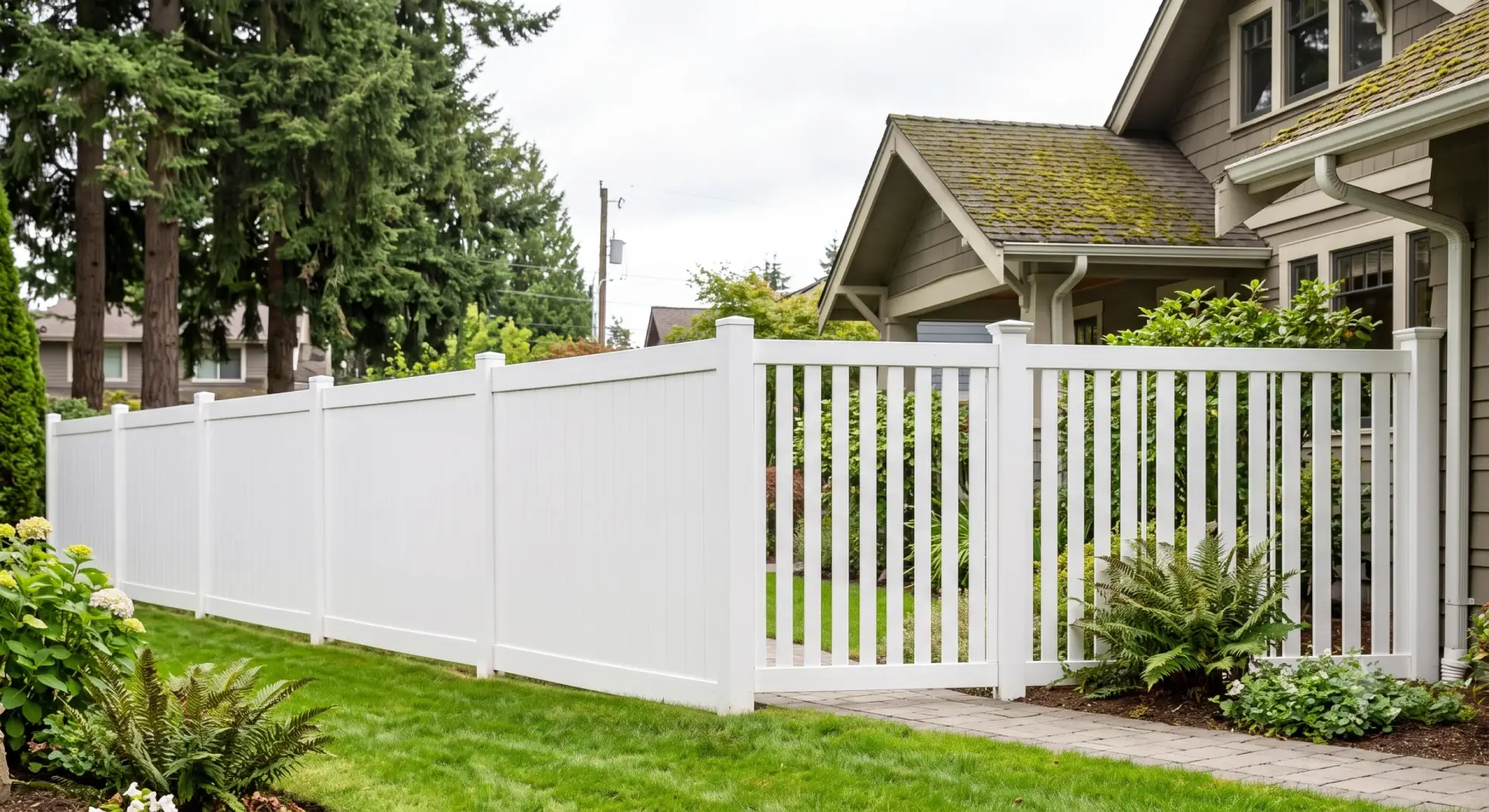
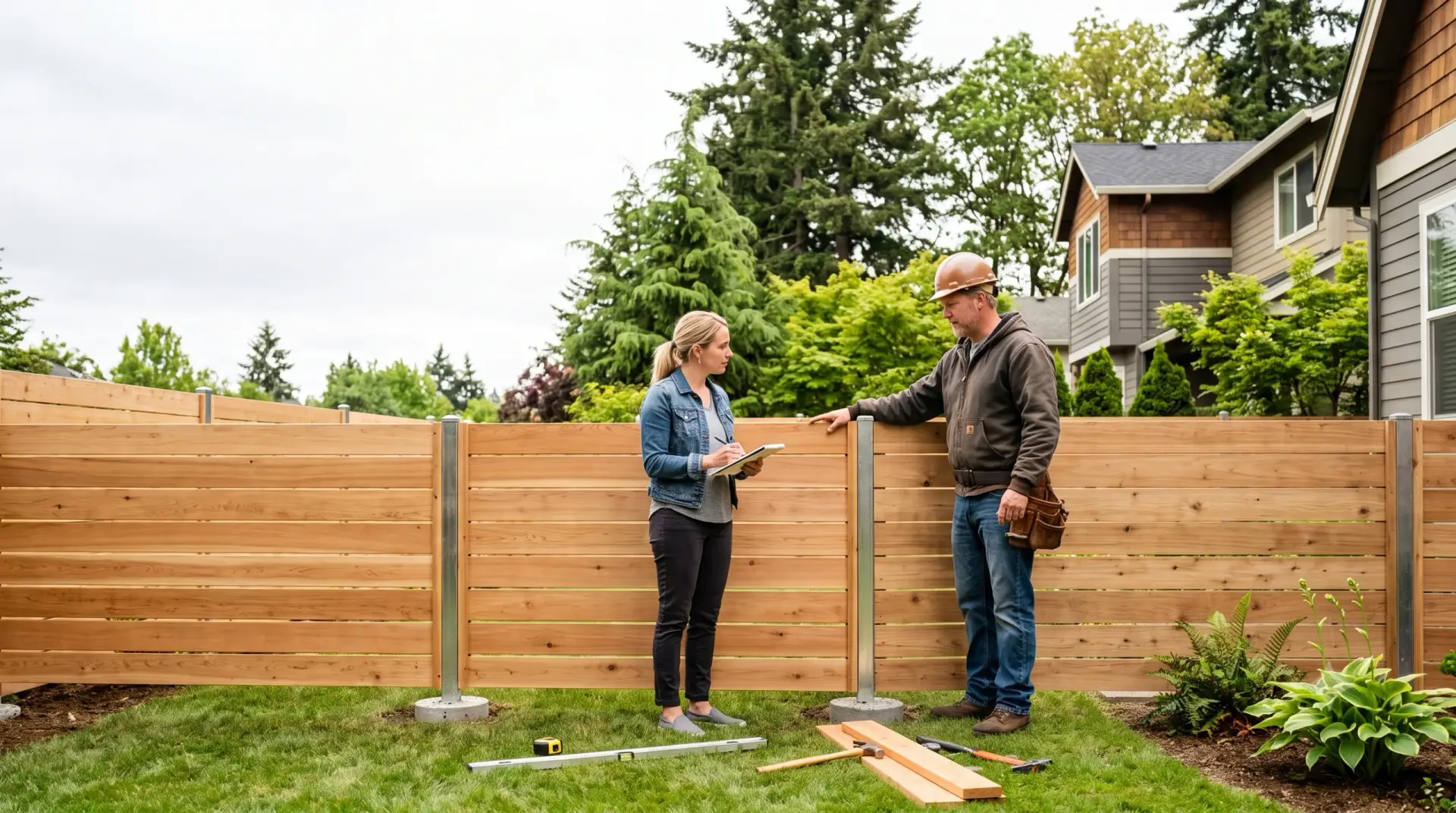
A fence can look tired for a lot of reasons. Sometimes it is just dirt from a wet season. A gray wood fence can mean several different things. It may have mildew on the shaded side. It may have old stain fading unevenly across the boards. Or it may be showing early signs of failure, even if the problem looks cosmetic at first.
That is why a fencing company should not automatically recommend stain after one quick look. Staining sounds like the natural fix for gray wood, but the wood has to be worth staining first.
At Cool Cat Fence, we look at the whole fence before talking about stain, paint, cleaner, or repair. In Seattle, that matters. Persistent rain means homeowners need a proactive plan to keep wood dry and stable, not just a quick stain after the fence starts looking gray.1 Rain, shade, trees, damp soil, and low airflow can make a fence age in strange ways. One side may stay wet longer than the other. The bottom boards may collect moisture. A gate may start dragging before the panels look bad. The surface tells part of the story, but the structure tells the rest.
A Fencing Company Starts with the Fence, Not the Color
The color of a wood fence can be misleading. Gray wood is not always damaged wood. Dark streaks are not always rot. A faded surface does not always mean the fence needs a new coat right away.
The first question is simpler: is the fence still solid?
A contractor should check the structure before talking about stain. That means looking at the posts, rails, boards, corners, and gates. If everything is straight, tight, and firm, staining can be a smart next step. If a post shifts under pressure or the gate post has moved enough to misalign the latch, the fence needs more than a cosmetic update.
This is understandably annoying for homeowners. They want the fence to look better, but stain only helps when the fence is still stable enough to justify it. They may have already picked out a wood stain. They may be ready to spend a weekend on the project. But if the wood is soft near the ground or moisture is trapped behind plants, stain can become a cosmetic cover for a problem that keeps growing.
A good fence plan starts with the boring checks. That is usually where the expensive mistakes are avoided.
Fence Cleaning Can Reveal the Real Condition of a Cedar Fence
Fence cleaning is easy to treat like a quick step. The boards look dirty, so the instinct is to spray them down, wait a short while, and move on to stain. The problem is that cleaning does more than remove surface dirt. It helps reveal the fence’s real condition.
Dirt, pollen, mildew, and worn finish can make wood look worse than it is. Once the fence is washed carefully, some boards may look close to new again. Others may reveal cracks, soft areas, loose boards, or places where the old stain has failed in patches.
For mild buildup, basic tools may be enough: a garden hose, a bucket, warm water with mild dish soap or detergent, and a soft brush. A wood cleaner can help when mildew or deeper grime has worked into the grain, especially if the goal is to get rid of buildup without damaging the boards.2 A 50/50 mix of white vinegar and water can also help with mildew and algae, and it is usually safer for wood than harsher chemical cleaners. Bleach should be used with caution. Oxygen bleach is usually less aggressive on wood than chlorine bleach, and every cleaner should be rinsed away completely before staining.
A practical cleaning process looks like this:
- Rinse the fence with a hose or low-pressure spray.
- Apply cleaner as directed and follow the product instructions closely.
- Scrub the lower boards, corners, and mildew spots by hand.
- Rinse until the water runs clear and no excess residue is left, because leftover cleaner can interfere with future staining or sealing.
- Wait until the wood is fully dry before staining.
The drying stage is easy to underestimate. Wood can look dry on the surface and still hold moisture deeper inside. After cleaning, a wood fence may need 24 to 48 hours to dry completely before stain or sealant goes on, depending on weather conditions.
When a Pressure Washer Helps and When It Hurts
A pressure washer can be useful, but it is not magic. It can remove dirt, mildew, and surface buildup, and it can wipe away the layer that makes a fence look worse than it is. It cannot fix rot. It cannot tighten loose rails. It cannot restore wood that has already started to break down.
Used too aggressively, a pressure washer can also create new problems. Too much pressure can raise the grain, leave wand marks, or make the surface rough, so wood fences should be cleaned with a low-pressure setting rather than a harsh blast. Once that happens, stain may settle unevenly and make the damage more visible.
That does not mean pressure washing is always wrong. It just needs a careful hand. The nozzle matters. The distance from the fence matters. The pressure setting matters. The goal is to wash the fence, not carve into the wood.
After pressure washing, the fence needs time. That can be frustrating, especially when the weather looks good and the weekend is open. But wood needs to dry before stain goes on. In a sunny, breezy yard, that may happen sooner. In a shaded Seattle backyard under trees, it may take longer.
A quick paper towel check can help. Press a clean paper towel against the wood. If it picks up moisture, wait. If the wood feels cool and damp, wait. It is a small test, not a perfect measurement, but it can keep a homeowner from staining too early.
Wood Stain Is Not One-Size-Fits-All
Wood stain works best when the basics are right: clean boards, dry wood, and a fence that is still structurally sound. It can help seal the surface and reduce weather exposure, but only when the wood is already in good condition. After that, the type of stain starts to matter.
Oil-based stain often needs more drying time and can leave a deeper, richer finish. Water-based stain tends to dry faster, but it is not instant. Weather, shade, airflow, humidity, coat thickness, UV rays, and the condition of the wood all affect how long the process takes.
That is why “how long does stain take to dry?” is a good question with a less simple answer. A fence sitting in full sun is not dealing with the same conditions as one shaded under trees after rain. A thin coat and a heavy coat dry differently. Clean, open wood also takes stain differently than wood with old finish still blocking the surface.
Stain or prep factor | Typical range | Notes |
Water-based stain dry time | About 1 to 4 hours | Can take longer in high humidity or poor airflow |
Oil-based stain dry to touch | About 8 to 12 hours | Depends on temperature, humidity, and coat thickness |
Oil-based stain before full use or topcoat | About 24 to 72 hours | Damp conditions can extend the wait |
Exterior wood drying after rain or washing | About 2 to 3 days | Shade, airflow, and wood moisture all matter |
A good rule is to slow down before staining. Read the label, check the weather, and give the fence extra time if it sits in shade or the air still feels damp. Do not add polyurethane or another topcoat unless the product is made for exterior fence use and fits the stain system. Rushing stain usually causes more trouble than patience would have.
Repair Comes First When the Fence Is Moving
A fence that moves should not be treated as a surface problem. It needs repair first. This is one of those details that seems obvious until a homeowner pays for stain and still has the same loose fence afterward.
Stain cannot hold a rail in place. It cannot fix a dragging gate. It cannot restore strength to a post that is soft near the ground. It also cannot fill deep cracks in failing boards or replace proper repair materials. It can make the fence look better briefly, but it cannot fix what is failing.
A fencing company should slow down and look for the things that point to repair:
- soft wood near the ground;
- rails pulling away from posts;
- gates that drag, sag, or stop latching;
- boards with deep cracks or peeling finish;
- mildew returning quickly after cleaning;
- plants or trees pressing moisture against the fence.
Not every problem means the whole fence needs to be replaced. Sometimes one post needs attention. Sometimes a few boards need to be swapped. Sometimes the fence just needs vegetation trimmed back so air can move through the area and stop moisture trapped behind plants from sitting against the wood. The point is to fix the weak part before covering the surface.
Seattle Weather Makes Timing More Important
In Seattle, fence maintenance is mostly a moisture conversation. Rain is part of it, but shade, airflow, and even occasional snow matter just as much when wood already dries slowly.
A fence under trees may stay damp long after the sidewalk looks dry. A fence behind shrubs may hold moisture because the plants block air. A lower board close to soil may absorb water from below. A north-facing section may dry much more slowly than the side that gets afternoon sun, which is often one of the first things homeowners notice after a wet season.
That is why dry weather is not just a nice bonus. It is part of the process. Stain needs the right conditions to absorb and dry properly. Low humidity helps. Mild temperature helps. Air movement helps. Wet wood, heavy shade, and a rushed schedule do not.
This is also why spring maintenance should be planned carefully. After a long wet season, a fence may need cleaning first, then a real drying window, then stain. Trying to compress that process into one damp weekend is usually where the finish starts to fail.
When a New Fence Design Makes More Sense
Some fences are worth cleaning and staining. Some are worth repairing first. Others are far enough along that it makes more sense to talk about a new, more durable chain link fence installation for real backyards.
That does not mean every old fence should be replaced. A weathered surface can still have years left if the posts are stable and the rails are solid. But if several sections lean, gates no longer work, panels are warped, and the layout no longer fits the yard or creates problems for neighbors, stain may not be the best use of the budget.
This is where design enters the conversation. Some homeowners start looking at horizontal fence options when they want the yard to feel cleaner and more current. Others compare modern low-cost fence designs because they need a practical upgrade without overbuilding.
A good recommendation should be honest. If stain makes sense, say that. If repair should come first, say that. If the fence is too far gone for surface work to be worth it, say that too. Homeowners do not need a contractor to turn the visit into a sales pitch. They need a clear read on what the fence can realistically support.
More Tips for Homeowners Before Calling
You do not need to diagnose the fence completely before making the call. A short walk around the yard can still help.
Open and close each gate. Push gently on a few posts. Look at the lower boards after rain, especially where water tends to sit. Check shaded corners for mildew. Move plants away from the fence and feel whether the wood behind them is damp. Try a paper towel on any questionable area. Then look at the bigger pattern: is the fence mainly dirty, or does the wood itself feel weak?
Those checks make the estimate more grounded. They also help avoid guesswork. A fence may need cleaner, stain, sealant, repair, or replacement. If the issue feels bigger than a quick cleaning or a small repair, asking for a free estimate can make the next project clearer before money goes into the wrong fix. The right answer should come from the fence’s condition, not just from the way it looks at first glance.
Final Thoughts
Fence cleaning, stain, and repair all have their place. Getting the sequence right is the part that protects the homeowner from wasted work.
Clean first when dirt and mildew are covering the surface. Do not stain while the wood is still damp. Repair first when posts, rails, or gates are moving. Think about replacement only when the structure or layout no longer makes practical sense.
A fence does not need to look perfect to be worth saving. It needs to be clean enough, dry enough, and stable enough for the next step to make sense. Even a bit of extra checking before stain can prevent wasted work later. Once that is clear, the decision becomes much easier.
A good fencing company should approach the job with that kind of judgment: not a fast answer, but a real look at the fence, the weather, and the yard around it.
FAQ
How long does stain take to dry?
It depends. Product type, humidity, temperature, airflow, and coat thickness all change the drying time. Water-based stain can dry faster, sometimes within a few hours, while oil-based stain often needs longer.
Should I clean my fence before staining?
Yes. Fence cleaning removes buildup that can affect the finish, including dirt, mildew, pollen, and old residue.
Can I use a pressure washer on a wood fence?
Yes, but it should be used with control. Too much pressure can damage the grain, leave wand marks, and make the finished stain look patchy.
Is oil-based stain better than water-based stain?
Not always. Oil-based stain can create a deeper finish and usually dries more slowly. Water-based stain may dry faster, but the right stain depends on the wood and the conditions.
Can I stain a wet fence?
No. Wet wood can stop stain from soaking in the way it should. That can lead to uneven color, peeling, and poor protection.
When does a fence need repair before stain?
Repair first when the fence shows movement or weakness. Moving posts, loose rails, dragging gates, soft boards, and damp lower areas should not be covered with stain.
Does Seattle weather affect fence staining?
Yes. Seattle weather can make staining more sensitive. Rain, shade, humidity, and limited airflow can slow drying and make timing more important.
Can bleach be used for fence cleaning?
It depends on the bleach and the fence. Oxygen bleach is usually gentler on wood than chlorine bleach. Any cleaner should be rinsed fully before stain or sealant is added.