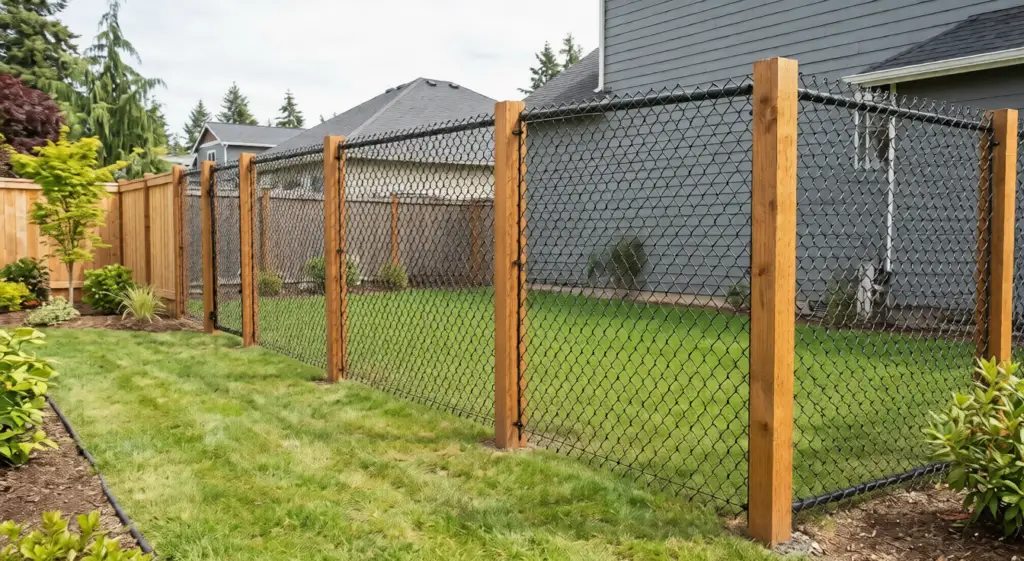
A wood post and chain fence is not usually the first thing homeowners picture when they start saving wood fence ideas. Most people picture cedar panels, horizontal boards, vinyl privacy panels, or a basic chain link fence. Those options are familiar, but some backyards need something in between.
At Cool Cat Fence, we often see this with Seattle yards that need structure without feeling boxed in. A full wood fence may feel too heavy. A plain chain link fence may feel too utilitarian. A wood post and chain fence can land right in the middle: warmer than standard chain link, more open than full wood, and practical enough for pets, gardens, side yards, and everyday backyard use.
The key is making sure the fence is planned as a real system. Posts, gates, rails, concrete, chain link fabric, hardware, slope, and moisture all matter. Seattle’s climate also demands materials that can handle moisture, shade, and seasonal movement without rapid warping or decay. If one part is treated casually, the whole fence can lean or look tired long before it should.
Why a Wood Post and Chain Link Fence Works for Real Backyards
A wood post and chain fence helps homeowners define the yard without closing everything off. The wood posts add visual weight and a more natural style. The chain link keeps the fence open, which helps in smaller backyards, garden spaces, pet areas, and uneven corners.
That openness is often the reason homeowners like this fence once they see it in a real yard. It can keep a dog inside, separate a garden area, or mark the property line without making the backyard feel smaller. In a close Seattle community where houses sit near each other, that balance can matter more than people expect.
A full wood fence can be beautiful, but it blocks views, traps shade, and can make a narrow side yard feel tighter. A chain link fence does the opposite, but it may not have the aesthetic appeal homeowners want near a patio, deck, or landscaped area. A hybrid fence gives some warmth without losing visibility.
This type of fence often works well for:
- backyards where full privacy is not necessary;
- pet areas that still need visibility;
- garden spaces where light and airflow matter;
- long side runs where full wood panels may feel too heavy;
- homeowners who want practical fencing without a plain chainlink look.
It is not the most decorative fence option, and it does not need to be. Its value is that it solves real yard problems without overbuilding.
Wood Fence Ideas Do Not Always Need Full Panels
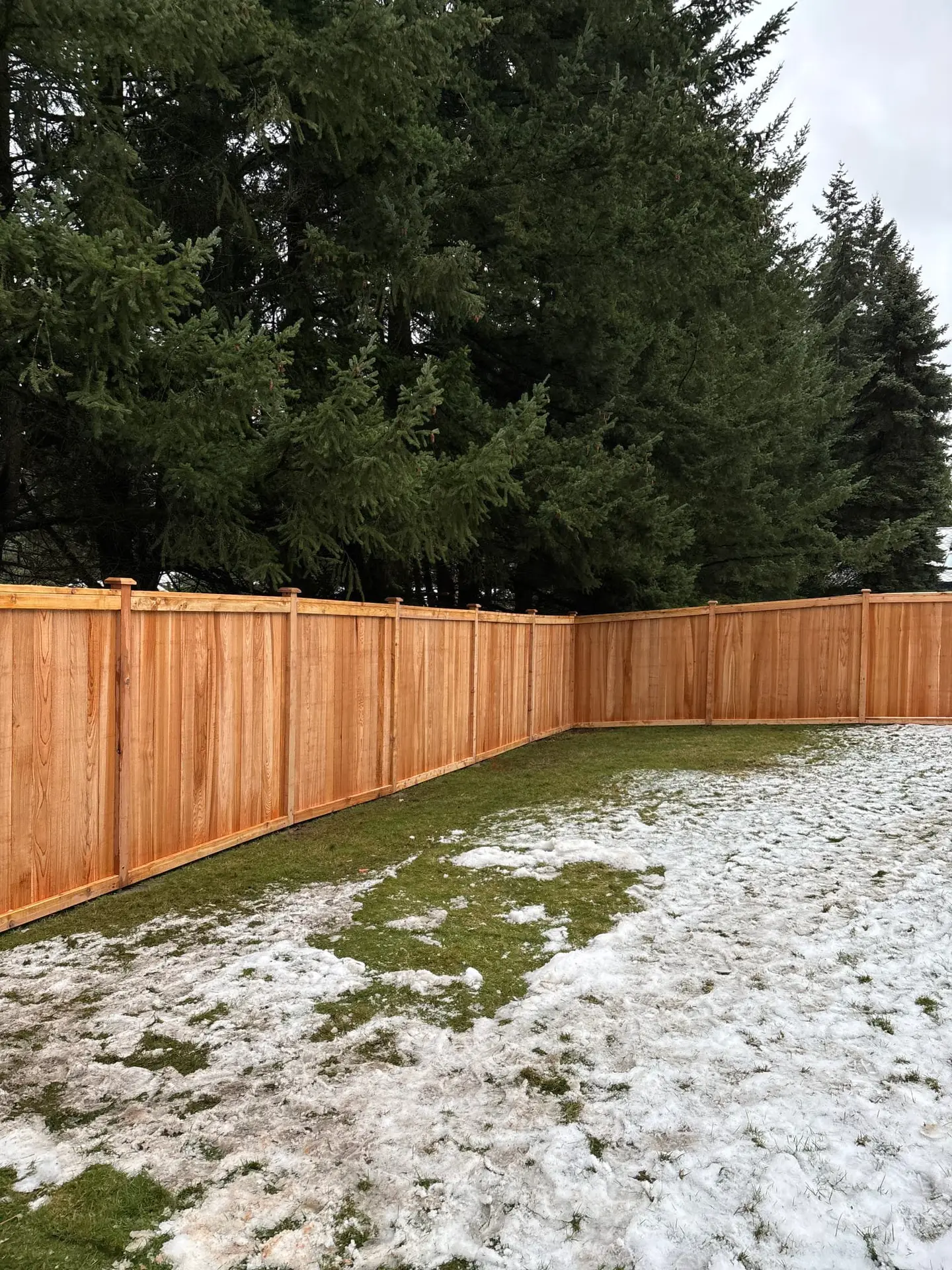
Most wood fence ideas focus on panels, trim, cedar boards, rails, and privacy layouts. Vertical plank cedar privacy fences are durable, long-lasting options suited for the Pacific Northwest climate. Horizontal slat fences are also popular in urban areas because horizontal cedar planks create a sleek, modern look and can make smaller lots appear wider. Those ideas are useful, but wood does not have to cover the whole fence to make a difference. Sometimes, the posts do enough visual work on their own.
Wood posts can connect the fence to other parts of the property. If the backyard already has a cedar deck, raised beds, wood steps, beams, or natural landscaping, the posts help the fence feel like it belongs there. Hog wire and wood panels can also combine rustic charm with durability, especially for perimeter fencing that still allows views while keeping pets secure. Cedar combined with hog wire creates a rustic, airy feel that works well around gardens. The chain link section keeps the structure lighter and more efficient.
This matters in Seattle, where many yards have layers: a patio, a slope, a planting bed, or a narrow walkway behind the house. A full wood fence can feel heavy in those conditions. A wood post and chain fence can create the boundary without fighting the rest of the yard.
The style can also be adjusted. Some homeowners prefer simple wood posts and galvanized chain link. Others want darker chain link, cleaner hardware, and a more modern finish. Painting or staining a wood fence can significantly enhance its aesthetic appeal by allowing the finish to match the home. High-quality stains can also improve appearance while helping protect the wood from weathering and UV damage.1 Different colors and finishes can create a rustic look, a modern aesthetic, or a softer transition into the overall landscape design. The best materials depend on the house, budget, landscaping, expected finish quality, and how visible the fence will be from the street or patio.
How Wood Posts Affect Strength, Cost, and Maintenance
Wood posts are not only a design choice. They hold the fence line, support tension, help secure gates, and keep the structure from drifting out of shape.
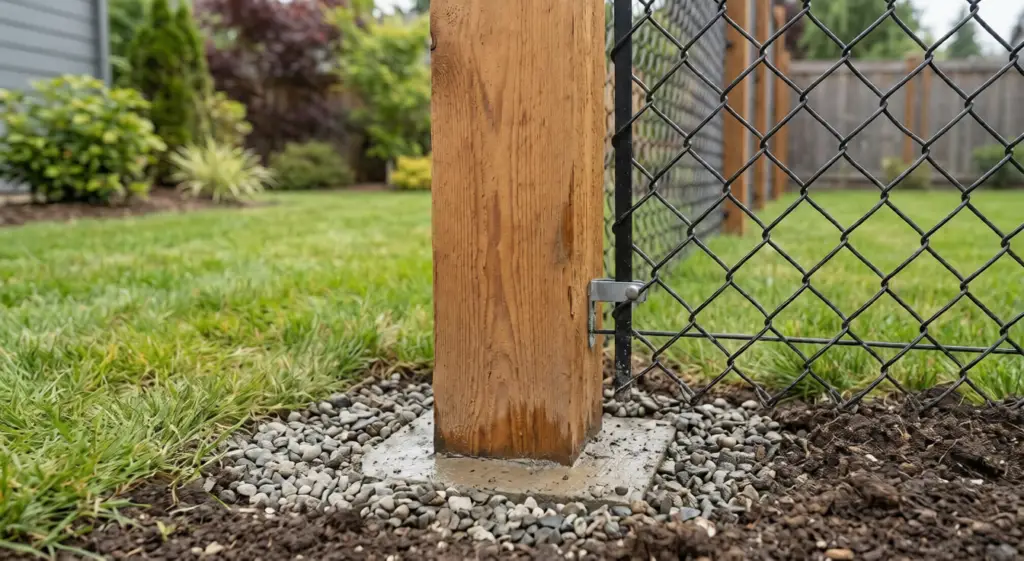
In Seattle, the post is also where moisture becomes a real concern. Wet ground, shade, vegetation, and poor airflow can keep the bottom of a post damp. That is why a good contractor looks closely at the site before deciding how to install the posts.
Cedar is often used for fencing because it has natural resistance to decay and insects. Pressure-treated pine can be a cost-effective option when it is installed correctly and maintained.2 Redwood may be used in some projects, although price and availability can affect whether it makes sense. The right wood depends on the job, not just the look.
Concrete placement matters too. A post set poorly in concrete can trap moisture or shift when the ground moves. Post-on-pipe installation can help keep wood posts out of direct contact with wet soil, while elevating fences slightly off the ground can reduce moisture trapping and rot. A post set with better drainage and a careful layout has a much better chance of staying straight for many years.
A wood post and chain fence has less wood surface than a full wood fence, but the posts still need attention. So do the wires, rails, gates, hardware, and chain link sections.
Chain Link Function With Better Aesthetic Appeal
A chain link fence has a practical reputation for a reason. It is open, useful, and often more efficient than full privacy fencing. It works well for pets, side yards, utility areas, long runs, and places where visibility matters.
The issue is appearance. Some homeowners do not want a fully metal fence around a backyard where they spend time. Wood posts soften that look, break up the run, and make the fence feel more connected to the landscape.
That is where chain link fence installation in Seattle has to be planned with real conditions in mind. A fence on flat, dry ground is one thing; a fence on a damp slope with roots, old concrete, or tight access is another. The contractor has to think about post depth, corners, gate placement, line tension, and how the fence will sit against the ground.
Chain link still needs to be tightened properly. The wires should not sag. The fabric should not bow between posts. Gates should not pull the line out of shape, and there should not be a visible gap where pets could push through or where the fence loses its clean line. A hybrid fence can look relaxed, but the installation itself should not be casual.
Wood Fence Cost, Chain Link Cost, and the Real Price per Linear Foot
Wood fence cost is not only about the wood. Chain link cost is not only about the mesh. A wood post and chain fence combines both, so the total cost depends on wood posts, chain link fabric, rails or pipe, gates, concrete, hardware, labor, access, and site preparation.
Cost or rule factor | Verified figure |
Wood fence installation | $11 to $34 per linear foot on average |
Six-foot wood privacy fence | $25 to $50 per linear foot |
Chain link fence installation | $8 to $40 per linear foot |
Seattle fence permit threshold | No permit generally needed for fences 8 feet high or lower, with limits on masonry or concrete over 6 feet |
These numbers give a starting range, not a finished estimate. A straight fence with easy access is different from a sloped backyard with multiple gates, old fence removal, rocky soil, and awkward corners.
The total cost can also change because of details homeowners may not notice at first. A larger gate needs stronger support. A long fence line may need careful tensioning. A damp site may need better post planning. A decorative finish, upgraded chain link, or extra safety hardware can raise material costs. Permits may also matter depending on height, location, and design.
Price per linear foot helps, but it never explains the whole job.
Gates, Corners, and Hardware Are Where Fence Installation Problems Usually Start
When a fence starts failing early, the problem often begins around moving parts. Gates get used every day. Corners carry pressure. Hardware loosens when the fence is under strain.
A gate post has to be stronger than a regular line post because it handles movement. If the post shifts, the latch stops lining up. If the gate is too heavy or the hardware is too light, the gate can drag or feel loose.
Corners matter because chain link needs tension. When that pressure pulls against a weak corner, the fence can lean or lose its shape. That is why corners, rails, wires, and posts need to work together.
Before installation, a contractor should think through:
- how often each gate will be used;
- whether a mower, trash bin, or wheelbarrow needs access;
- where the ground slopes near the gate;
- which tools and hardware are needed for clean tension and alignment;
- how the chain link will connect at corners;
- whether the hardware matches the fence style and pressure.
These details are not glamorous, but they determine whether the fence feels solid in daily use.
Maintenance Is Lighter Than Full Wood, but Not Zero
A wood post and chain fence uses less wood than a full wood fence, which can make maintenance more manageable. Still, it is not maintenance-free.
Wood posts should be inspected for soft spots, cracking, leaning, and moisture damage. Chain link should be checked for rust, loose wires, bent sections, and sagging areas. Gates should be opened and closed during inspection because movement often reveals problems that are easy to miss when the fence is still.
Seattle weather makes this especially important. Rain and shade can keep parts of a fence damp for long stretches. Vegetation can trap moisture around posts and rails. If the bottom of the fence sits too close to wet ground, the materials can age faster.
Simple maintenance helps. Keep plants trimmed back. Watch the base of each post. Check gates after storms or heavy use. Use simple resources like photos, notes, and seasonal reminders to track small changes over time. Fix small hardware issues before they pull on the rest of the fence.
When Vinyl Privacy Fence or Wood Fence Is the Better Choice
A wood post and chain fence is practical, but it is not always the right answer. If the main goal is privacy from a neighbor, a full wood fence or vinyl fence may be better. If the backyard faces a busy street, open chain link may not provide enough visual separation. If the house has a very modern exterior, the style may need more careful design to match.
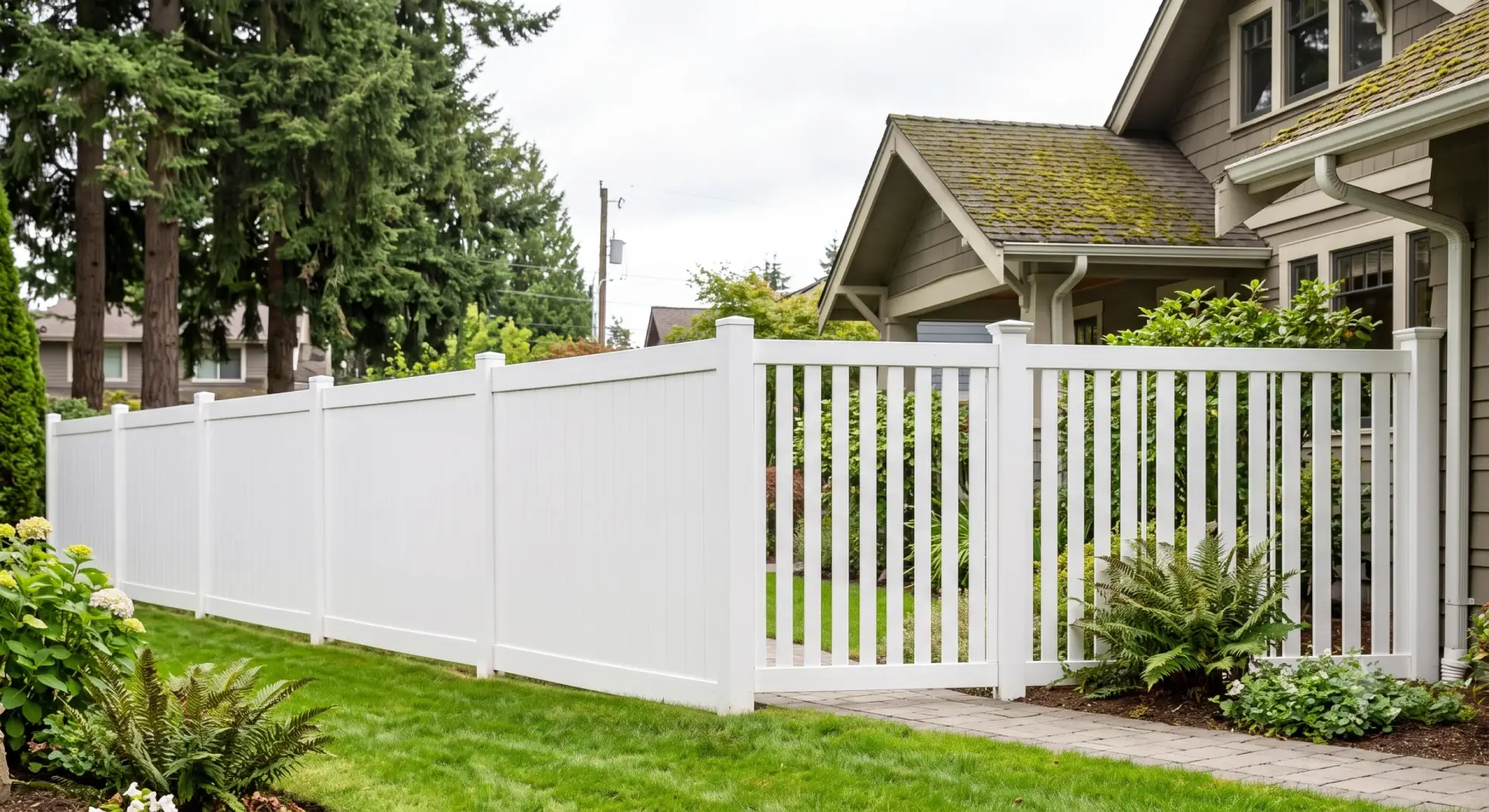
That is why comparing vinyl privacy fence or wood can be helpful before choosing. Vinyl can work well for homeowners who want privacy with lower maintenance. Wood can feel warmer and more natural. Chain link can keep a yard open and efficient. A hybrid design sits between those choices, but it should not be selected only because it sounds different.
The right fence depends on the property. A backyard with kids and pets may need security first. A patio may need privacy. A garden may need light. A long side yard may need a cost-effective boundary. Good fencing services should help customers sort through those needs without pushing one style for every property.
What to Ask Before Hiring Fencing Services Near Me
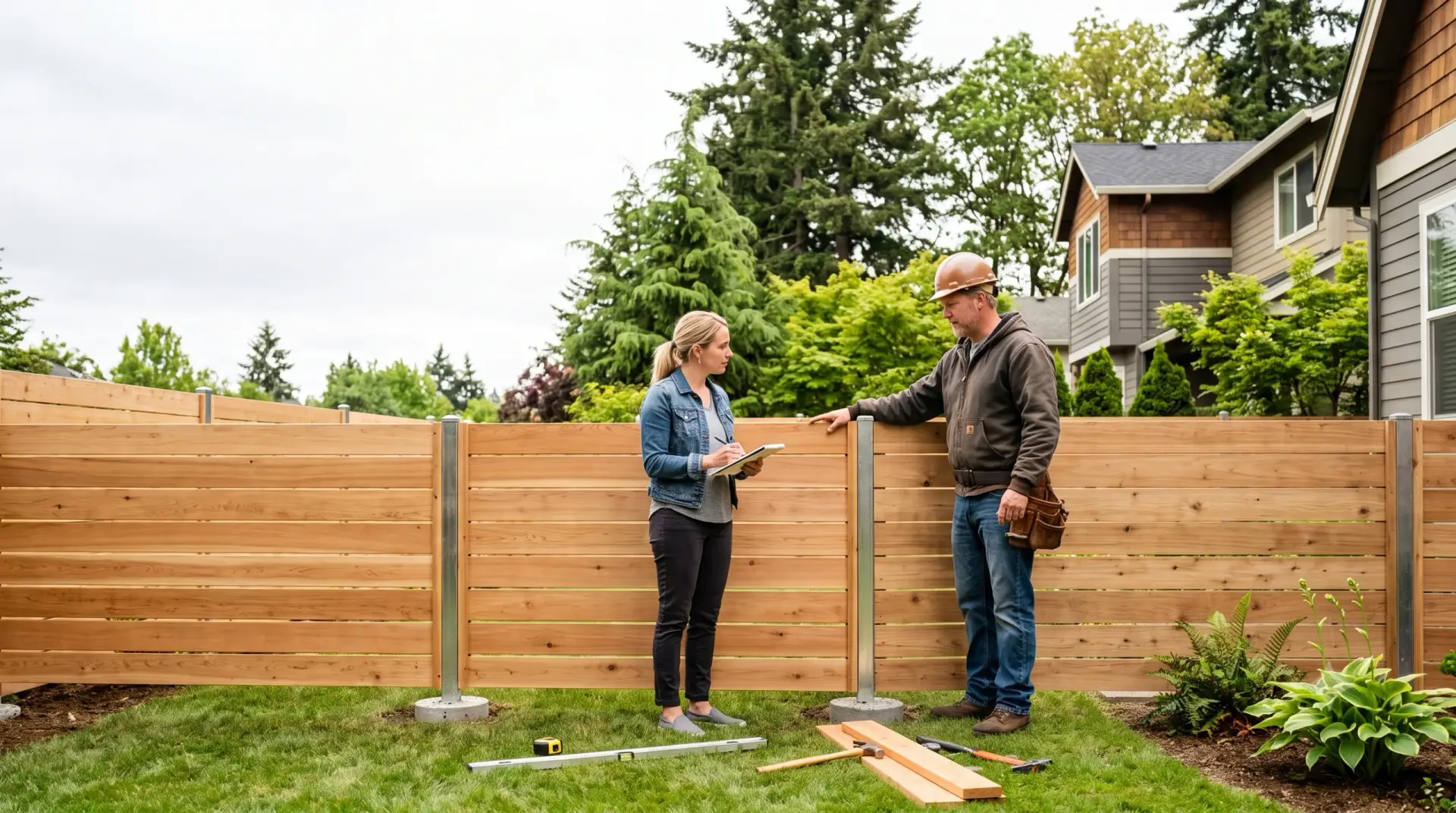
Searching for fence builders near me or checking a local contractor’s website can bring up plenty of names. The harder part is knowing which contractor will actually plan the fence around the site.
Before hiring, ask how the contractor handles property lines, post placement, gates, permits, slope, underground utilities, and material selection. In Washington, 811 is used to request a free underground utility locate before digging, which should happen before post holes are made.
It is also fair to ask what could change the price. A clean estimate should explain more than length and height. Access, corners, gates, old fence removal, soil, hardware, and finish choices can all affect the final cost.
A good contractor will explain what is straightforward, what needs attention, and where the yard needs a more careful plan.
When a New Fence Does Not Need to Feel Heavy
A wood post and chain fence can be a smart choice for Seattle homeowners who want a practical backyard fence without the heavy feel of full privacy panels. It keeps the open function of chain link while using wood posts to create a warmer, more finished style.
The success of the project comes down to planning, not just materials. Wood posts need to handle moisture and pressure. Chain link needs proper tension. Gates need strong posts and reliable hardware. The fence line needs to follow the yard in a way that feels natural rather than forced.
When those pieces are done well, the result is useful, secure, clean-looking, and built around the way the backyard is actually used.
FAQ
What is a wood post and chain fence?
A wood post and chain fence uses wood posts with chain link sections between them, creating a warmer look while keeping the open function of chain link. It gives the fence a warmer look while keeping the open function of chain link.
Is a wood post and chain fence good for backyards?
Yes, it can work well for backyards that need security, visibility, pet control, and a less heavy look than full privacy panels.
Is this cheaper than a full wood fence?
It can be more cost effective than some full wood fence designs, but the final cost depends on wood type, chain link style, gates, length, access, and labor.
What wood is best for fence posts?
Cedar and pressure-treated pine are common choices. Cedar is valued for natural durability and appearance, while pressure-treated pine is often chosen for practical cost and performance.
Does chain link look good with wood posts?
It can look good when the posts, hardware, rails, and chain link finish are planned as one system. Black or coated chain link can make the fence look cleaner.
Do Seattle fences need permits?
Seattle generally does not require a permit for fences 8 feet high or lower, unless masonry or concrete elements exceed certain limits or special site conditions apply.
How do gates affect the fence cost?
Gates add hardware, labor, stronger post requirements, and alignment work. A larger or frequently used gate can raise the total cost.
Should utilities be marked before fence installation?
Yes. Before digging post holes, Washington homeowners and contractors should use 811 to request a free underground utility locate.