Black chain link fence cost usually comes up when homeowners want something practical, but not too plain. Standard galvanized chain link gets the job done. It is open, durable, and familiar. Still, in a backyard with landscaping, a patio, pets, and neighbors close by, the bright silver look can feel a bit too industrial, especially for a person who sees that fence line every day.
That is where black chain link earns a closer look. It keeps the open feel of a chain link fence, but the darker finish tends to sit back visually. Against grass, trees, dark trim, or a shaded Seattle yard, it can look quieter and more finished.
At Cool Cat Fence, we do not treat black chain link as an automatic upgrade for every property. Sometimes, standard chain link is enough. Sometimes wood is the better choice. But when homeowners want a secure fence that does not visually take over the yard, black chain link can be worth the added cost, especially when they want expert advice from chain link guys who understand real yard conditions rather than a one-size-fits-all answer from fencing companies.
Why Black Chain Link Fence Costs More
A black chain link fence usually costs more because the material is coated. The fence still needs posts, rails, fabric, hardware, concrete, gates, hinges, the right tools, and careful installation. The coating improves the look and can slow visible rust compared with neglected bare metal. Wire gauge also matters: thicker wire has a lower gauge number and usually raises the cost, with 11.5-gauge often used for residential chain link and 9-gauge or heavier wire used for commercial or higher-security needs.
In Seattle, the average cost to install a black vinyl-coated chain link fence typically ranges from $15 to $45 per linear foot, while labor for chain link fence construction can run about $8 to $16 per linear foot due to local market conditions. Pricing may also be 20–30% higher than national averages because of Seattle labor rates, site access, soil conditions, and site-prep factors.
Fence item | Typical range | Notes |
Standard chain link fence installation | $8 to $40 per linear foot | Varies by height, gauge, labor, and site conditions |
Black vinyl-coated chain link | $15 to $45 per linear foot | Usually higher than galvanized chain link |
Black chain link materials | $5 to $20 per linear foot | Fabric, posts, rails, coating, and hardware |
Labor for chain link installation | $10 to $20 per linear foot | Depends on access, layout, terrain, and gates |
Those numbers are helpful, but they are still ranges. A short fence with easy access and one gate is different from a long Seattle side yard with uneven terrain, rocky soil, multiple corners, and old fence removal. Seattle’s combined sales tax is 10.35%, and it applies to both materials and labor, so the final number can rise even when the base estimate looks reasonable. That is why efficient fencing companies look at access, disposal, digging, and gate placement before treating a price range as a real estimate. Some companies price this too casually, and that is where problems start.
Chain Link Fence Value Is About Use, Not Just Price
A chain link fence is chosen because it works. Chain link fences are a popular choice for residential and commercial properties because they are durable, low-maintenance, and useful for keeping a dog in the yard, defining a property line, protecting a side area, or creating a secure boundary without fully blocking the view.
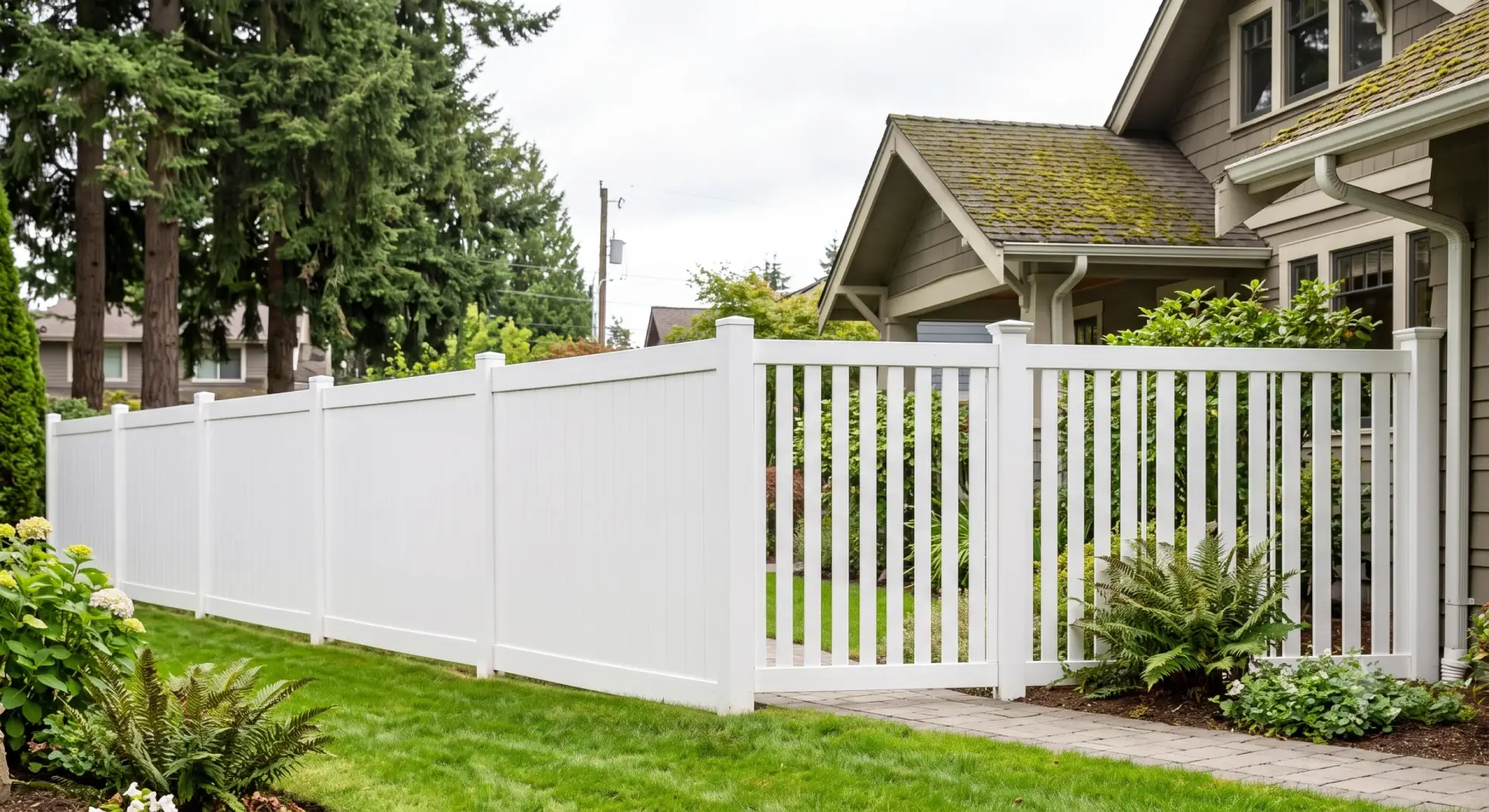
Still, it is not a privacy fence. Homeowners are sometimes surprised by that. Black fabric can make the fence less visually loud, but it does not block views from neighbors. If privacy is the main goal, it may be worth comparing vinyl fence options for real yard use with wood or another solid fence style before choosing chain link. Reliable fencing companies should explain that difference clearly before a homeowner pays for an upgrade that will not fix the real privacy problem.
This is where honest fencing services matter. The best answer is not always the most expensive one. The right fence depends on the yard, the budget, the expectations, and how the space is used.
Line Posts, Gate Posts, and the Details That Change the Job
The fabric gets most of the attention, but the posts do most of the work. Line posts hold the run. Terminal posts carry tension at ends and corners. A gate post has to handle movement, weight, and daily use because the gate functions like the working door of the fence system.
If the post layout is off, the whole fence feels off. If the gate post shifts, the latch stops meeting cleanly. If the line posts are not set straight, the fence can look wavy even with good materials. That is why fencing professionals and responsible fencing companies pay attention to layout before digging.
A string line helps keep the fence straight. Post holes need the right depth and spacing. Concrete mix, with cement as one of its components, has to be placed properly. In clay-heavy Western Washington soil, deeper concrete footings of about 24 to 36 inches may be needed, which can increase both material and labor costs. Gates also need enough width for real use, not just a narrow opening that looks fine on paper. In rocky soil, even a simple post hole can turn into the slowest part of the project. One hard hit against buried stone can slow the whole line, especially when a power auger head keeps catching on roots, debris, or rock.
Why Fence Installation Gets Harder on Uneven Terrain and Rocky Soil
Fence installation looks simple on flat ground. Seattle does not always give homeowners flat ground.
Uneven terrain changes the way a chain link fence is installed. Chain link fences can be installed on slopes using either a stepped method or a racked method, depending on the degree of slope and the desired look. Steep topography can also add about $4–$8 per linear foot when specialized installation techniques are needed.
The ground also affects the posts. Western Washington soil can hold moisture, and certain areas may need deeper or more careful concrete work so the posts stay secure. In colder regions, contractors also think about the frost line, but in Seattle, the bigger everyday issue is usually moisture, drainage, and soil movement.
This is why chain link fence installation in Seattle should not be treated like a generic job. Rain, slopes, roots, tight access, wind exposure, and soft ground all affect installation methods. Skilled fencing companies account for those site conditions before setting posts because a fence that is not planned for the site may look fine at first and then start shifting after a few wet seasons, especially where wind pushes against gates or long open runs.
When the Black Chain Link Upgrade Makes Sense
Black chain link is not always necessary. It becomes more worthwhile when the fence is visible, when the yard has finished landscaping, or when the homeowner wants security without a heavy visual barrier. In a close residential community, that quieter appearance is often appreciated because the fence protects the space without making the yard feel boxed in.
It often makes sense when:
- the fence line is visible from a patio, deck, or main window;
- the yard has dark trim, trees, or landscaping that black fabric can blend into;
- the homeowner wants chain link function without the silver metal look;
- neighbors are close, but full privacy is not the goal;
- the project needs a secure boundary that still keeps the yard feeling open..
That is the practical middle ground. You are not paying for privacy. You are paying for a cleaner version of an already useful fence type.
This is where black chain link fence in real backyards is different from looking at a product photo. In a real yard, the darker finish can make the fence feel less noticeable. That does not mean it disappears. It just does not pull the eye as much.
When Wood or Another Fence Style Is Better for a New Fence
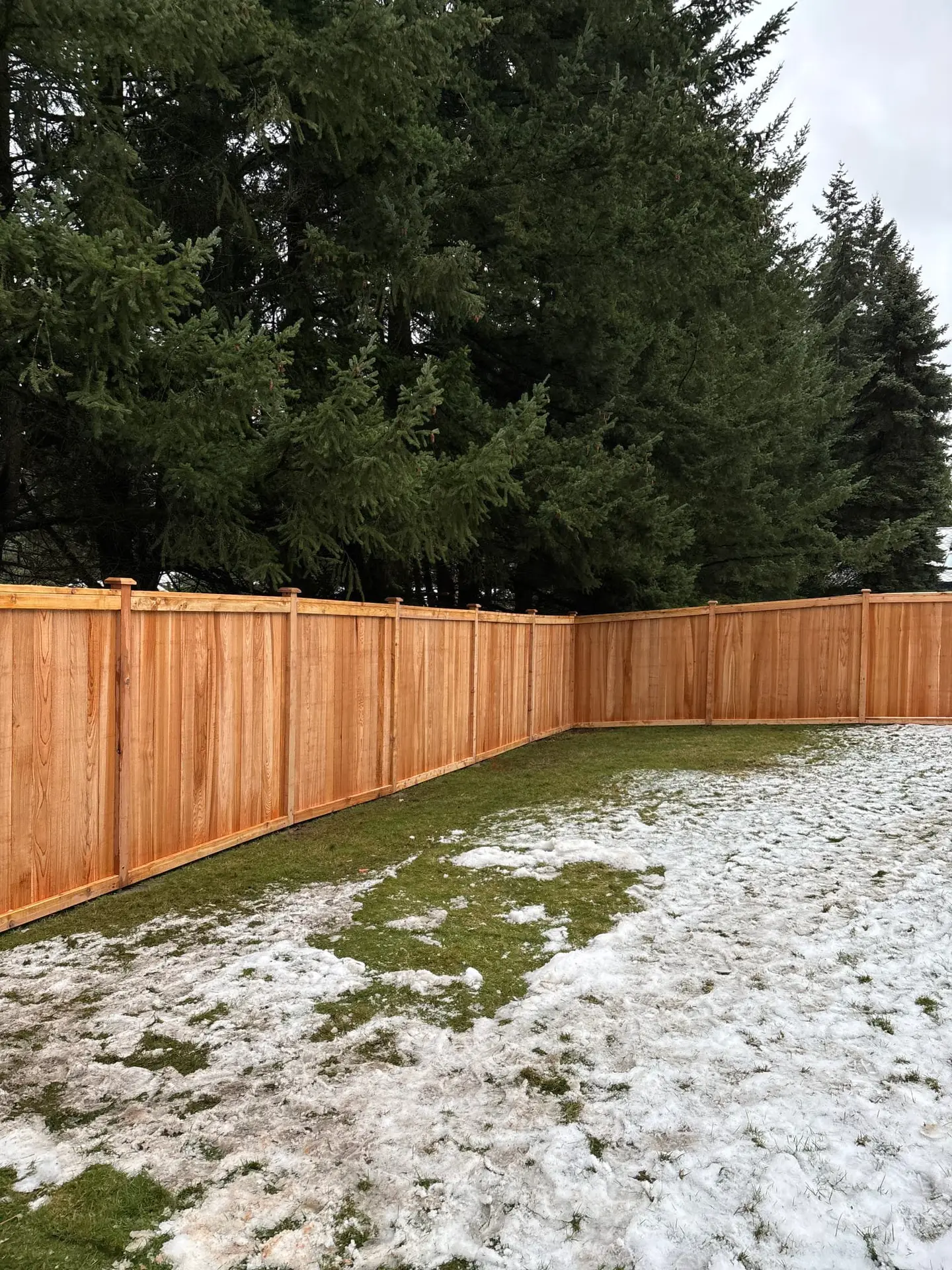
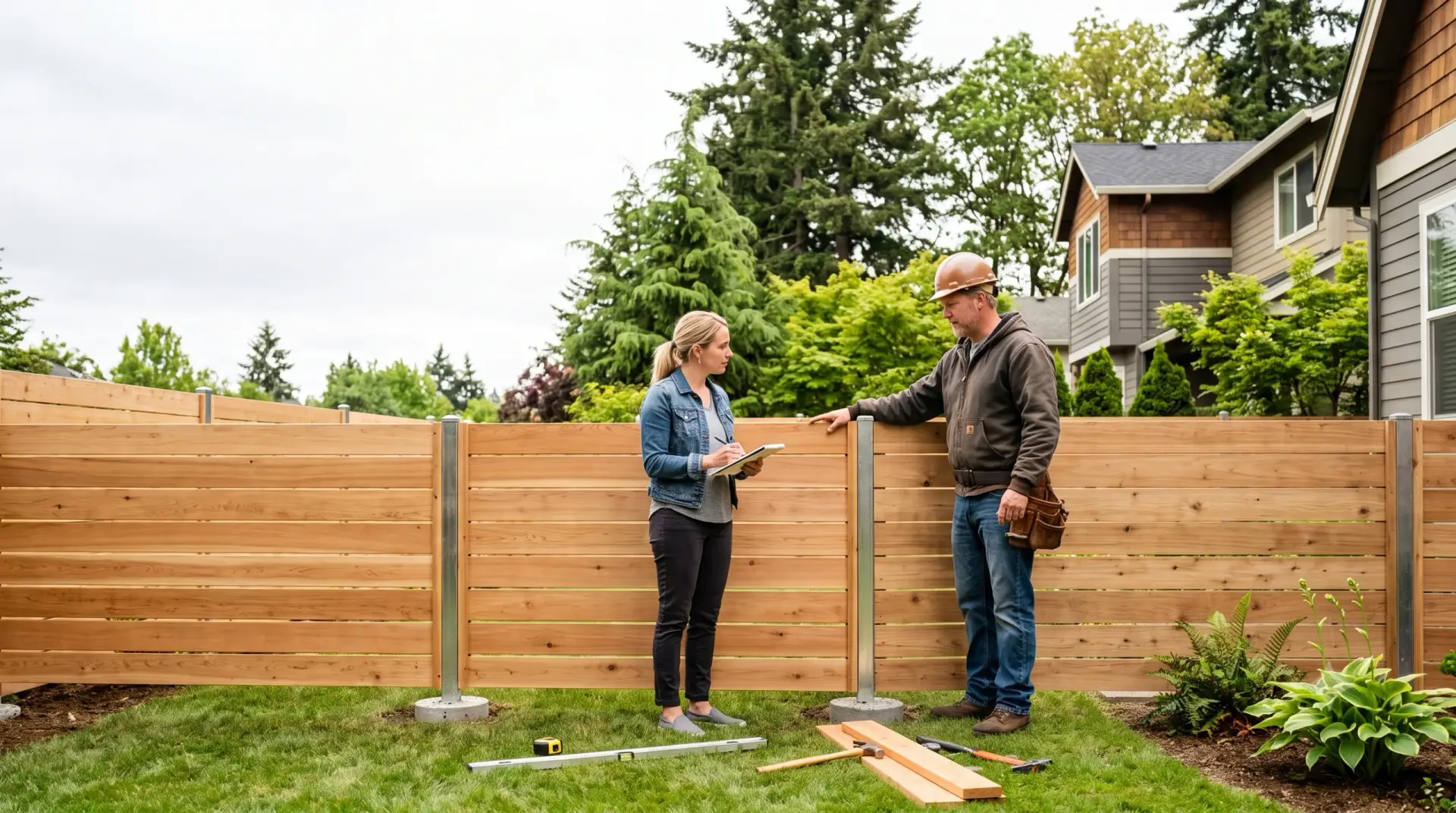
Black chain link is not the answer for every homeowner. If the goal is warmth, full screening, or a more architectural look, wood may be the better choice. A wood post and chain fence for backyards can also offer a useful middle ground when homeowners want structure, visibility, and a softer look than standard metal fencing. A horizontal wood fence design can create privacy and shape the yard in a way chain link cannot.
The tradeoff is maintenance. Wood needs more care over time. Chain link is usually lower maintenance, but it does not provide the same sense of enclosure. If an existing wood fence is already weathered or damaged, homeowners may also need to decide whether a fencing company should stain or repair it before replacing the whole structure. A good contractor should explain that clearly instead of pushing one material for every property.
Why Fencing Professionals and Fencing Services Should Check More Than the Fence Line
When homeowners search for a fence near me, it is tempting to compare only price. That can backfire. The lowest number may not include the same materials, hardware, gates, warranty coverage, or site preparation.
A useful estimate should be specific. Is the quote for galvanized or black-coated fabric? What gauge is included? How many gates are part of the job? Are old materials being removed? Will underground utilities be marked before digging? Before installing a chain link fence, homeowners should also check local regulations and obtain any required permits, since many municipalities have specific rules for fence installations.1 In Washington, calling 811 is the way to request a free underground utility locate before work that disturbs the soil. Better companies make these details clear before the project starts because careful workmanship starts before the first post hole is opened and before underground utilities marked on the property are treated as part of the working layout.
Seattle permit rules should also be checked for height and special conditions. Seattle SDCI says a permit is generally not needed for a fence 8 feet high or lower if it does not include masonry or concrete elements over 6 feet, unless special conditions apply.2 For fences over 6 feet, permit fees can generally range from $150 to $350 in Seattle, depending on the project conditions.
What Customers Usually Notice After Installation
A black chain link fence can look fantastic when the installation is clean. It can also look cheap if the line is crooked, the gate drags, the hinges bind, the fabric has poor stretch, or the posts are poorly set. The material upgrade only helps when the job underneath it has integrity.
Final Thoughts
Black chain link is worth the upgrade when the fence needs to be practical, secure, and less visually harsh than standard galvanized chain link. The cost depends on length, height, coating, fabric gauge, posts, concrete, gates, terrain, labor, and site access.
A new fence should fit the property, not just the budget line. For some yards, standard chain link is enough. For others, black chain link gives the same function with a cleaner finish.
FAQ
Is black chain link more expensive than regular chain link?
Yes. Black vinyl-coated chain link usually costs more than standard galvanized chain link because of the added coating.
What affects black chain link fence cost?
Length, height, wire gauge, coating type, gates, line posts, gate post strength, old fence removal, labor, terrain, and site access all affect black chain link fence cost.
Is black chain link good for backyards?
Yes, especially when homeowners want a secure, open fence that blends better with landscaping.
Does black chain link provide privacy?
Not by itself. It creates a boundary, but it remains open unless privacy slats or landscaping are added.
Is black chain link better than wood?
Not always. Black chain link is better for visibility and lower visual weight. Wood is better for privacy and full screening.
Can chain link be installed on uneven terrain?
Yes. Chain link can be installed on uneven terrain using stepped or racked methods.
Should underground utilities be marked before fence installation?
Yes. Before digging post holes, Washington homeowners and contractors should call 811 to request that underground utilities be marked.
Do I need a permit for a chain link fence in Seattle?
Seattle generally does not require a permit for fences 8 feet high or lower if masonry or concrete elements do not exceed 6 feet and no special conditions apply.