You have a perfectly good six-foot fence, yet your neighbor’s raised deck still offers a clear view into your backyard. Or your sloped lot makes that privacy fence look more like a garden border from the uphill side. Understanding Seattle fence height rules is the first step, but the real question is what actually creates privacy in your specific situation. At Cool Cat Fence, we help Seattle homeowners navigate both the regulations and the practical reality of building residential fences that deliver genuine seclusion.
For most homeowners, the basic answer is this: for properties located in typical Seattle residential zones, backyard fences are usually allowed to reach about six feet high, while front yard fence height is often limited to three or four feet. Seattle guidance also states that in neighborhood residential zones, fences are generally limited to six feet, with up to two additional feet allowed for open architectural features such as trellises.1 In practice, yard fence height also depends on where the fence sits on the lot and whether the project requires review because of slope, walls, or other site conditions. That said, the numbers alone do not tell you everything you actually need to know.
This article explains how fence height limits work in front and back yards, how measurement can change on sloped ground, when permits may come into play, and what homeowners can do when privacy is the goal but extra height is not an option. It is written for Seattle-area homeowners planning a new fence or making changes to one they already have.
Backyard vs Front Yard Fence Rules: Privacy and Height Restrictions
The height restrictions between your front yard and backyard exist for different reasons, and understanding this helps you plan smarter.
Backyard fences are generally intended to create privacy first. A solid six-foot fence will usually cut off most ground-level views from neighboring lots, which makes it a popular choice for backyards, gardens, and pool areas. In many standard residential zones, that height can often be built without a construction permit. Even so, it is worth checking with the city before starting, because local requirements can shift.
Front yard fencing is usually more limited. Solid fence styles are often capped closer to three or four feet, while a chain link fence or other open design may sometimes be allowed a little taller. On a residential property, the front section also needs to preserve visibility and access where cars, pedestrians, and driveways intersect. Seattle guidance also notes that fences and gates generally cannot restrict access to a street or alley from commercial or multifamily building exits, which reflects the same broader visibility and safety logic. A more open material can help protect sightlines, maintain basic security, and keep the house connected to the street, especially on lots located near an intersection or busy neighborhood corner.
The practical takeaway: your backyard offers more flexibility for privacy, while front yard design requires balancing security needs with visibility requirements. This is why many homeowners use different fence styles across their property, transitioning from open front sections to solid rear panels in a way that fits the surrounding neighborhood.
When a Taller Fence Is Not the Real Privacy Screen Solution
Sometimes the problem is not fence height at all. Before you start planning how to exceed standard height limits, consider whether a taller fence will actually solve your privacy issue.
Raised decks create sightlines from above that no standard fence can block. If your neighbor’s deck stands ten or twelve feet above grade, their view angle clears even a tall fence easily. The geometry simply works against you.
Sloped lots present a similar challenge. When you are on the downhill side, your fence appears shorter from your neighbor’s vantage point uphill. A fence that looks properly tall from your yard may offer minimal screen from their elevated viewpoint.
Windows and upper floors can also undermine height-based solutions. Second-story windows overlook most residential fences regardless of how close they stand to the property line.
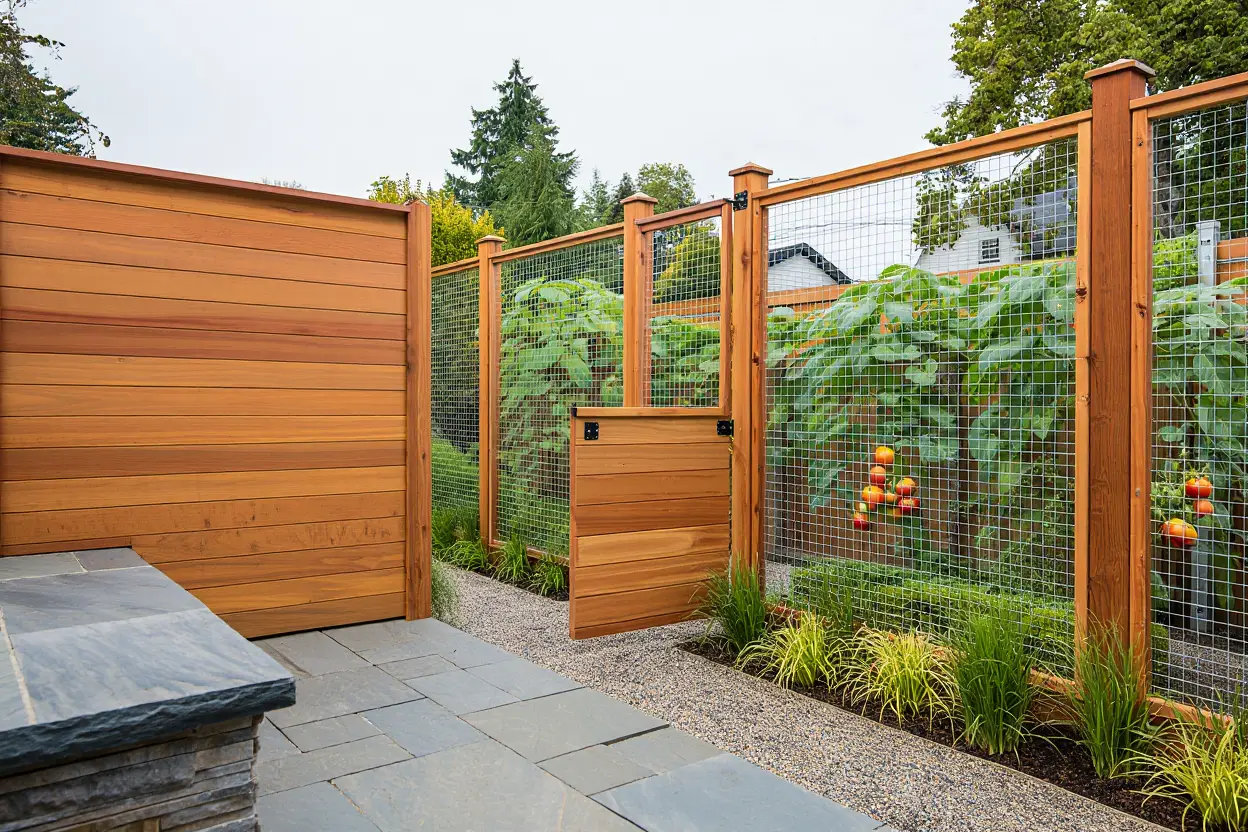
In these situations, design choices often outperform raw height. Horizontal designs for more privacy can reduce sightlines through staggered slat placement, while privacy fence screens or lattice toppers add effective coverage without pushing against height regulations.
Problem Scenario | Why Height Alone Fails | Better Privacy Move |
Neighbor has a raised deck | Sightline comes from above | Add a top screen element or adjust design openness |
Yard slopes downhill | Fence looks shorter from downhill side | Slope-aware layout and height planning |
Corner lot or near driveway | Visibility rules limit solid height | Use more open front section plus privacy in rear |
Wind exposure | Tall solid fences flex | Reinforce posts and choose designs that handle wind |
Uneven ground | Gaps form at the bottom | Kick board or tighter bottom detailing |
How Seattle Measures Fence Height Limits on Sloped Lots
Sloped lots are common across Seattle neighborhoods, and how the city measures fence height on a slope can work in your favor.
Rather than measuring from a single point, Seattle may allow fence height to be averaged along the run. This means parts of your fence may appear taller on the low side while the high side stays shorter, keeping the average within permitted limits and giving the screen more consistent width across the yard.
Practically speaking, Seattle allows fence height on sloped lots to be averaged in six-foot segments between posts, as long as no portion of the fence exceeds eight feet.2 That can make parts of the fence look nearly eight feet high from the other side while the average still stays at six feet. This approach helps the fence screen the yard more evenly across its full length instead of creating awkward steps or gaps along the visible fence length.
However, this measurement method has limits. Retaining walls combined with fences often face separate height calculations. A retaining wall plus fence combination may trigger different rules than a fence alone, and the combined structures might exceed what either could reach independently.
Before assuming slope rules work in your favor, confirm the specifics with city guidance. Seattle also states that in neighborhood residential zones, fences are generally limited to six feet, with up to two additional feet allowed for open architectural features such as trellises. On sloping sites, the fence can reach eight feet if the average height between posts stays at six feet. The measurement approach can vary based on your property location and other architectural features present.
Fence Placement, Lot Coverage, Permits, and Height Limits: Where Seattle Homeowners Get Surprised
Many standard fences do not require a construction permit, but there are enough exceptions that it is worth slowing down before assuming yours is one of them. In Seattle, fences do not count toward lot coverage limits, even though nearby structures and related site work still can affect review. City guidance also states that homeowners usually do not need a permit for a fence that is eight feet or lower, provided it does not include masonry or concrete elements over six feet and is not located in a flood-prone area. Even when a permit is not required, the fence still has to meet applicable code and land use standards.3
Masonry walls are a common surprise. Brick and concrete fences are usually treated differently from wood or metal because they are seen as more permanent forms of construction. So a fence that would be simple in one material may need building permit review once the material changes.
Retaining walls can trigger the same issue. If the fence is tied to a retaining wall, or even closely associated with one, the city may consider the combined height instead of looking at the fence in isolation. IIf the project involves retaining work, lot coverage issues, or another related building element, the review can become more complicated, and the combined structure may exceed what is allowed for a fence alone.
The site itself can matter just as much as the design. Properties located near flood zones, wetlands, or steep slopes may be subject to added regulations that go beyond the usual height limits, and some exceptions come from environmental review rather than fence rules alone. In a few cases, broader state law or safety standards can also affect what is allowed on the property.
Corner lots are another place where homeowners get caught off guard. Visibility triangle rules can override what would otherwise be allowed, simply because sightlines near intersections have to stay clear.
And then there are HOA rules, which sometimes end up being stricter than city code. Height, material, and style may all be regulated by the subdivision, even when the city would allow the fence as proposed.
The safest approach is to start with Seattle’s fence guidance, then check whether HOA covenants create any additional restrictions. Before digging post holes, it is also smart to contact 811 for a utility locate.4 In Washington, the service is free, the law requires underground utilities to be located before digging, and homeowners are expected to give at least two business days’ notice before excavation begins.5
Picking Privacy Screens and Fence Styles That Hold Up Long-Term
A fence that provides excellent privacy on installation day can fail that job within a few years if quality and construction fall short.
In real backyards, privacy often depends on detailing, not just height. A fence screen can help close a narrow sightline and recover usable outdoor space between the house and the lot line, while privacy fence screens are useful when you need to protect seating space or a swimming pool area without rebuilding the whole run. In tighter side yards, a second fence screen is highly recommended when trees, grade changes, or exterior steps leave one side exposed. For some layouts, privacy fence screens also make more sense than extending every panel, and each fence screen should be constructed and installed to match the fence material and withstand normal weather exposure.
Wood panels warp and shrink over time, creating gaps that reduce privacy. Cedar, while durable, can develop noticeable gaps between boards if not properly installed and maintained. These openings may seem minor but accumulate into real sightline problems.
Posts that lean compromise the entire structure. A fence standing tall but tilting gradually becomes less effective at blocking views and eventually requires repair or replacement. Sturdy, properly set posts prevent this common issue.
Gate sag creates low points that expose more of your yard than you intended. Heavy gates on undersized hardware droop over time, and that drooping section becomes a privacy gap. Any repair proposal should explain what is covered and how the opening width may change after adjustments along the property line.
When talking to contractors, ask specific questions about workmanship expectations. What happens if gaps develop? How are posts secured against lean? What is covered if problems appear after installation?
Understanding our fence warranty details helps you know what protection you have and what to look for when comparing contractors. A fence is a long-term investment in your property, and the installation quality determines whether it keeps delivering privacy for years or becomes a frustration.
FAQ
How Tall Can Residential Fences in a Seattle Backyard Be?
Many residential properties allow a backyard fence of around six feet, with limited situations where the overall height can approach eight feet depending on the design.
Are Electric Fences a Good Privacy Option in Seattle?
Electric fences are generally not supposed to function as a privacy screen for a typical home, and they can raise separate safety concerns. For most homeowners, electric fences make less sense than a well-built solid fence or screen solution.
Do Height Restrictions in Seattle Affect Permit Requirements for a Tall Fence?
Often not for standard fences, but permits can come into play for taller fences and certain materials or site conditions. Checking city guidance early prevents rework.
What Fence Height Limits Still Give Good Privacy in Seattle?
For many yards, six feet blocks everyday sightlines, but slope and raised decks can defeat that quickly. In those cases, design choices matter more than an extra foot.
Are Front Yard Fence and Chain Link Fence Height Rules Different From Backyard Fence Rules?
Yes. Front yards typically have tighter limits and may require more openness to maintain visibility near sidewalks and driveways.
Can I Build an Eight-Foot Privacy Fence or Fence Screen in Seattle?
Sometimes an overall height near eight feet is possible when the upper portion is open or decorative, but a fully solid eight-foot wall is usually restricted.
How Do Fence Height Rules Work on a Sloped Lot and the Other Side?
Seattle can allow averaging the height along sloped grade, which may let parts look taller on the low side while keeping the average within limits.
Do HOAs Have Their Own Height Limits and Privacy Screen Rules?
Yes. HOA rules can be stricter than city rules and may control height, style, and materials even if your plan is code-compliant.
Who Should I Talk to About Fence Placement and Privacy Before Changing Fence Height?
Start with the city’s fence guidance, then talk to a local contractor who works with Seattle rules regularly. It is also smart to give neighbors a heads-up to reduce disputes. If there is any doubt about the actual line, Seattle says you may need a survey and legal advice to resolve a property line dispute.6