Privacy fence cost depends on the length and height of the fence, the materials and design, and the work required on your property. Start with the installed price per linear foot, multiply it by the proposed fence length, and add any separately quoted work. For Seattle and Portland homeowners, we explain how gates, slopes, limited access, and old fence removal affect that calculation.
At Cool Cat Fence, we can help you compare cedar, vinyl, and steel panel options for your property. Before requesting an estimate, decide where you need solid screening, how many access gates you need, and which existing fence sections need replacing. These details help define the scope of your project.
Average Privacy Fence Cost in 2026

A per-linear-foot price measures the length of the fence, not its surface area. Before using that rate to estimate your budget, confirm whether it includes materials and installation, and whether gates, removal, disposal, and other work are included or priced separately.
How Much Does a 6-Foot Privacy Fence Cost Per Foot?
A 6-foot height alone does not determine the installed price. The material, board or panel layout, post system, and site conditions also affect the quote. Compare estimates for the same height and specifications, then check which additional items are already included before calculating your total.
The table below shows how different assumed installed rates affect the budget. These are calculation examples, not verified Seattle or Portland market averages or Cool Cat Fence quotes.
| Fence length | At $40 per linear foot | At $65 per linear foot | At $90 per linear foot |
|---|---|---|---|
| 100 linear feet | $4,000 | $6,500 | $9,000 |
| 150 linear feet | $6,000 | $9,750 | $13,500 |
| 200 linear feet | $8,000 | $13,000 | $18,000 |
Add only costs excluded from the installed rate. If removal or gate installation is already included, adding it again would overstate your budget. A site-specific fence estimate should identify the included work and any exclusions.
Key Factors That Affect Privacy Fence Cost
The total project cost for your privacy fence installation depends on more than the number of linear feet. Two yards can need the same fence length and still receive very different quotes because of material choice, terrain, gates, height, and site preparation.
1. Fence Material
Your choice of fencing materials plays a major role in both appearance and price. Instead of choosing by cost alone, compare how each material handles privacy, maintenance, moisture, and long-term value.
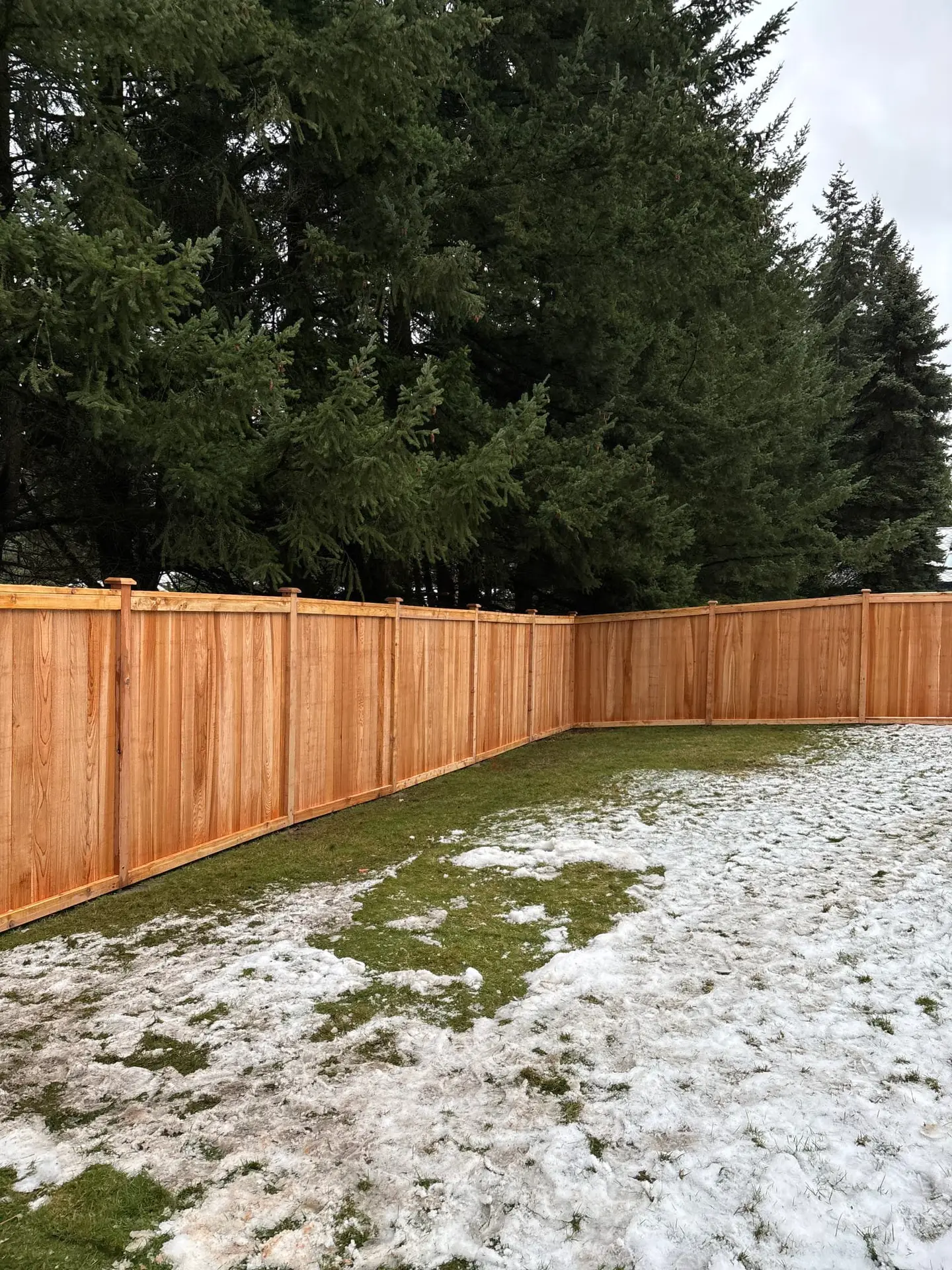
- Wood privacy fence: A classic choice for homeowners who want a natural look and strong backyard privacy. A cedar privacy fence is especially popular in the Pacific Northwest because it offers warmth, curb appeal, and good durability when installed and maintained properly.
- Pressure-treated wood: Often used as a more budget-conscious option for posts or structural components. It can be practical and durable, but it may not offer the same finished appearance as cedar.
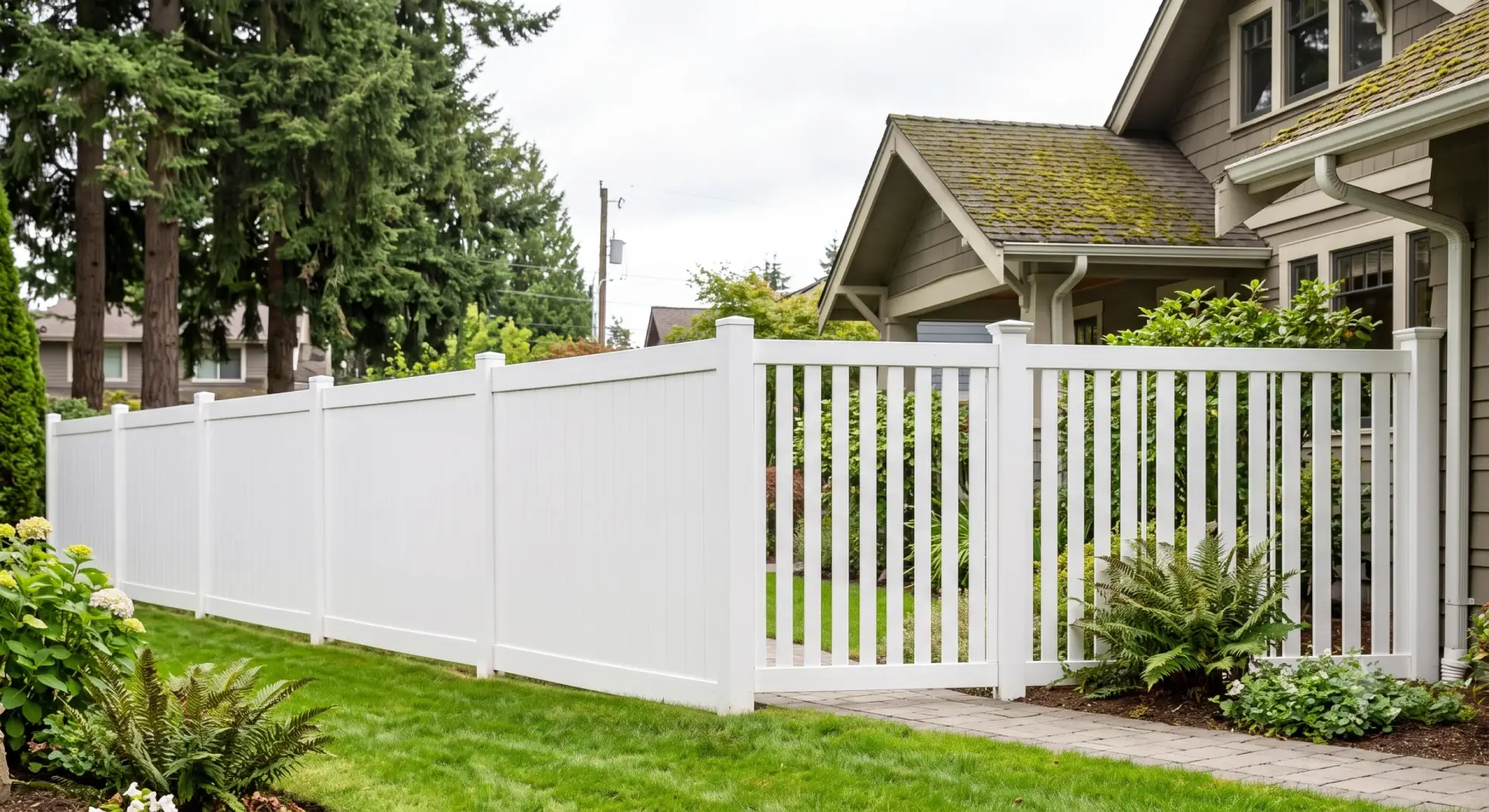
- Vinyl privacy fence: Vinyl does not need staining or painting. Our vinyl fence installation options are worth comparing if you want solid screening with less routine upkeep than a finished wood fence.
- Composite fencing: Usually costs more upfront than basic wood, but it offers strong durability, lower maintenance, and a clean modern appearance.
- Chain link with privacy slats: Not a true solid privacy fence, but it can add moderate screening at a lower cost. This option is more practical than premium-looking.
Metal and ornamental fencing: Aluminum, steel, and ornamental iron are usually better for security and curb appeal than full privacy. If privacy is the main goal, metal panel fencing or a mixed-material design may make more sense than open ornamental styles.
2. Fence Height
Most backyard privacy fences are around 6 feet tall, which is usually enough to block everyday sight lines from neighbors, patios, and side yards. An 8-foot fence will usually cost more because it requires more material, stronger posts, deeper setting, and sometimes additional review or permitting. Before choosing a taller fence, check local rules and HOA requirements.
3. Fence Style and Decorative Features
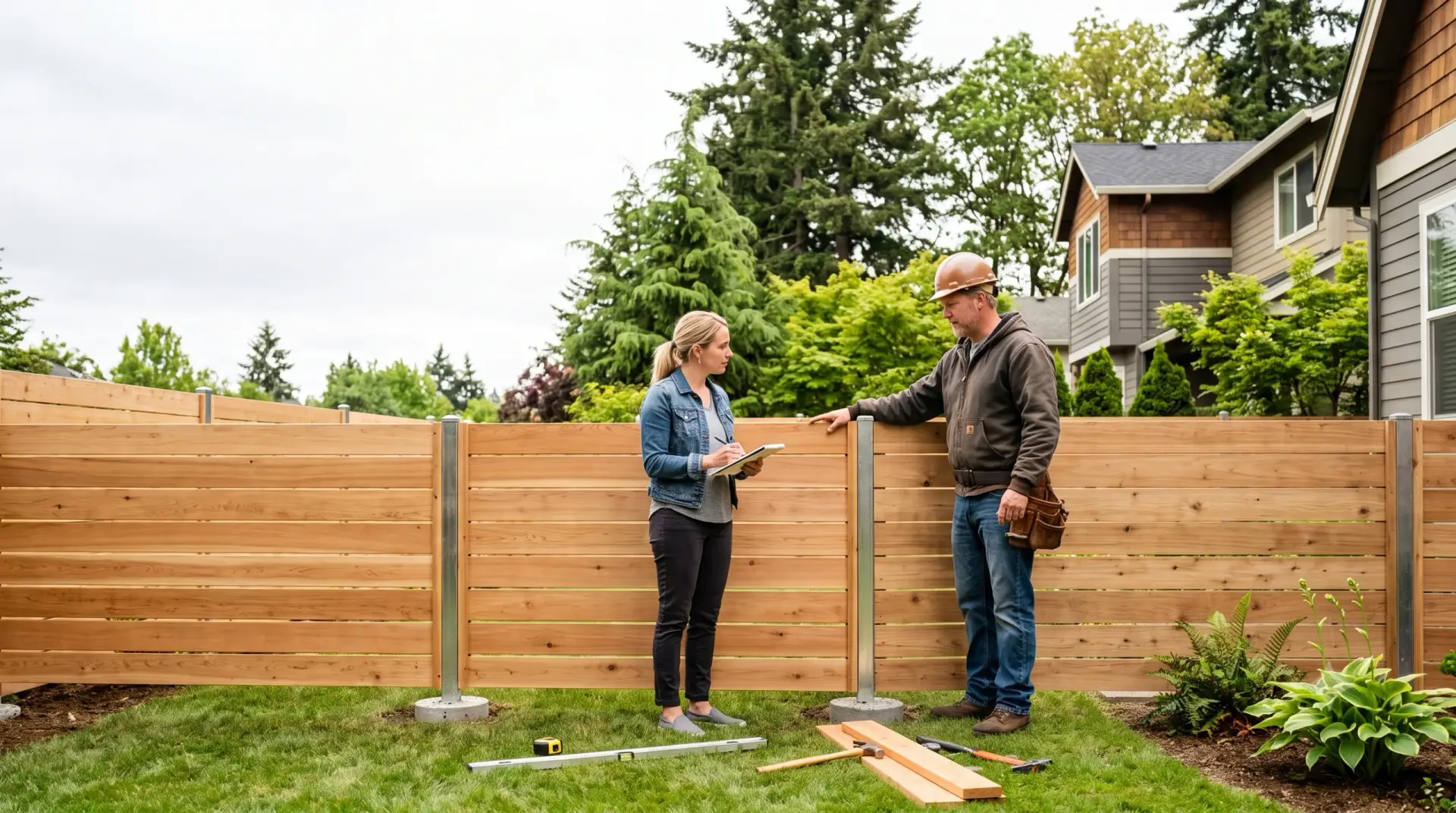
Fence style also affects the quote. If you prefer a contemporary layout, explore our horizontal fence options before deciding on board arrangement and finishing details. A simple vertical privacy fence is usually more affordable than a custom horizontal fence, board-on-board layout, lattice-topped design, or fence with decorative trim. Post caps, arbors, upgraded gates, and custom framing can make the fence look more finished, but they also add materials and labor.
4. Labor Costs
Labor costs depend heavily on access, soil, slope, layout, and the complexity of the fence style. A flat, open yard is usually faster to build than a narrow side yard with roots, rocks, elevation changes, or limited equipment access.
Hiring experienced fence contractors helps with post placement, alignment, anchoring, gate support, and local code considerations. Professional fence installation may cost more upfront than DIY, but it can prevent expensive problems like leaning posts, sagging gates, uneven panels, or premature repairs.
5. Property Conditions
Property conditions can change the quote quickly. Your privacy fence installation may cost more if the project includes old fence removal, steep slopes, rocky soil, drainage issues, tight access, tree roots, existing hardscaping, or landscaping close to the fence line. These details matter because they affect how long the job takes and how the posts need to be set.
Additional Costs to Consider

Beyond the per-linear-foot price, there may be additional costs that affect your total project budget:
- Gates: Walk gates, double gates, and custom framed gates add hardware, framing, and labor.
-
Permits or reviews: Check permit requirements and zoning limits separately. Seattle’s fence guidance distinguishes permit exemptions from restrictions on height and placement. Under Portland’s fence permit requirements, wood fences over seven feet and fences enclosing swimming pools require a permit. Confirm any applicable fees before finalizing your budget.
- Old fence removal: Tear-down and haul-away can add labor and disposal costs.
- Staining or sealing: Wood fences usually need protection to hold their appearance longer in wet Pacific Northwest weather.
- Vegetation clearing: Shrubs, vines, roots, and overgrown landscaping can slow down installation.
- Custom upgrades: Arbors, post caps, trim, anti-dig boards, reinforced gates, and privacy add-ons can all increase the final price.
The safest approach is to ask what is included in the quote before comparing one fence company to another.
Wood Privacy Fence vs. Other Fence Materials
Compare materials alongside the amount of screening you need. Our guide to solid and semi-privacy vinyl fences explains how panel design changes visibility, light, and enclosure. Make sure competing quotes provide the same level of privacy.
| Material | Planning Cost per Linear Foot | Maintenance | Best For |
|---|---|---|---|
| Wood privacy fence | $40–$90+ | Moderate | Classic backyard privacy, natural appearance, custom styles |
| Cedar privacy fence | $45–$100+ | Moderate | Pacific Northwest homes, warmer curb appeal, premium wood look |
| Pressure-treated wood | $30–$60 | Moderate | More budget-conscious wood privacy projects |
| Vinyl privacy fence | $35–$75 | Low | Homeowners who want privacy with minimal maintenance |
| Composite fencing | $45–$95+ | Low | Long-term durability, modern style, lower upkeep |
| Chain link with privacy slats | $25–$45 | Very low | Budget-conscious screening, pets, and practical boundaries |
Each option has trade-offs. Wood and cedar privacy fences usually give homeowners the most natural look and design flexibility, while vinyl and composite fencing can reduce long-term maintenance. Chain link with privacy slats can help control cost, but it will not look or feel as private as a solid fence. Metal panel fencing can cost more upfront, but it may make sense for homeowners who want a cleaner modern style, stronger durability, and more privacy than open ornamental fencing.
DIY vs. Professional Fence Installation

DIY fence installation can reduce labor costs, but it is not always the cheaper choice once you account for tools, delivery, mistakes, and time. A privacy fence needs accurate post placement, proper depth, strong anchoring, clean alignment, and gate support. If the posts are not set correctly, the fence can lean, sag, or fail earlier than expected.
Professional fence installation is usually the better choice when the yard is sloped or uneven, when you need multiple gates, when you are replacing an old fence, or when you want a horizontal or custom style. It also helps when you are unsure about property lines, city rules, or the right post system for your soil conditions.
If you’re weighing your options, Cool Cat Fence can help you compare materials, styles, and project conditions before you commit to a new fence.
How to Save on Your Privacy Fence Installation

Looking to reduce your privacy fence cost without choosing the cheapest possible fence? Focus on the choices that affect the quote the most: fence style, total linear footage, gates, site preparation, and material selection.
- Choose a simpler fence style. A clean vertical wood privacy fence usually costs less than a custom horizontal layout, lattice-topped design, or board-on-board fence.
- Limit the number of gates. Gates add framing, hardware, posts, hinges, latches, and extra labor. One well-placed gate is usually more cost-effective than several smaller access points.
-
Prepare the site before installation. Agree with the installer on which movable items and loose debris you can clear beforehand. Before digging or removing plants with tools that enter the soil, follow the 811 before-you-dig process: request utility markings, observe your state’s waiting period, and confirm that all notified utilities have responded.
- Be careful with decorative upgrades. Post caps, trim, arbors, upgraded gate hardware, and custom details can improve the finished look, but they should be planned into the budget from the beginning.
- Compare materials by long-term cost, not only upfront price. Wood may cost less upfront than some low-maintenance options, but staining, sealing, future upkeep, and available fence financing options should be part of the decision.
- Compare the same scope across quotes. Match the fence length, height, material specifications, post system, and gate sizes first. Then check materials, labor, removal, disposal, applicable permit or review costs, and custom add-ons. A lower total may reflect excluded work rather than a lower price for the same installation.
For Seattle and Portland homeowners, the biggest savings usually come from choosing the right fence style early and avoiding changes after the project has already been measured and priced.
Local Price Factors in Seattle, Portland, and Nearby Areas
Privacy fence pricing can look different from one neighborhood to another. A flat backyard in Portland may be easier to build on than a narrow Seattle side yard with limited access, older landscaping, or a steep grade. Properties in Bellevue, Tacoma, Everett, Olympia, Vancouver, Salem, or Tualatin can also vary based on soil, lot layout, local review requirements, and how much old fencing needs to be removed.
Common local factors that can affect privacy fence cost include:
- wet weather exposure and drainage around posts;
- sloped yards or retaining walls;
- tight access between homes;
- older fences that need demolition and haul-away;
- tree roots near the fence line;
- multiple gates for side yards, driveways, or pets;
- HOA or city requirements for height, placement, or style.
A local estimate should account for your slope, access, and existing fence. For a wood fence project in Portland, use our guide to questions to ask before installation to discuss posts, gates, maintenance, and the proposed scope with your installer.
Frequently Asked Questions
How much does a privacy fence cost in 2026?
The total depends on the fence specifications and installation conditions. Multiply the quoted installed rate by the fence length, then add any excluded work. Our examples show the calculation at several assumed rates; an estimate for your Seattle or Portland property is needed to establish the actual price.
How much does a 150-foot privacy fence cost?
At an assumed installed rate of $65 per linear foot, a 150-foot privacy fence would total $9,750 before any separately priced work. This is an illustrative calculation, not a quote. Confirm whether gates, demolition, disposal, and finishing are included before using the figure as your project budget.
Which privacy fence material is the most cost-effective?
A simple vertical wood privacy fence is often one of the most cost-effective solid privacy options. Pressure-treated wood can help reduce upfront cost, while cedar usually costs more but offers a warmer, more finished look. Vinyl and composite fencing may cost more upfront, but they can reduce long-term maintenance.
Does removing an old fence increase the cost?
Yes. Old fence removal can increase the total project cost because it adds tear-down, hauling, disposal, and extra labor. The condition of the existing fence also matters. A failing fence that is easy to remove may cost less to deal with than a fence surrounded by roots, concrete, landscaping, or difficult access.
Do gates make a privacy fence more expensive?
Yes. Gates usually increase the quote because they require extra posts, framing, hardware, hinges, latches, alignment, and labor. A double gate or custom gate will cost more than a standard walk gate. If you are trying to control privacy fence cost, plan gate locations carefully before requesting estimates.
Is a 6-foot privacy fence cheaper than an 8-foot privacy fence?
Usually, yes. A 6-foot privacy fence uses less material and typically requires less structural support than an 8-foot fence. An 8-foot fence can also trigger additional local requirements depending on the city, property type, or fence placement.