Modern low-cost fence designs usually sound like a compromise. Homeowners picture something temporary, too thin, or too obviously driven by budget. In real backyards, that is not always true. A lower-cost fence can still feel finished when the materials fit the property, the style stays restrained, and the plan accounts for moisture, labor, and other local factors from day one.
At Cool Cat Fence, that is a big part of our value conversation. We position cedar wood fences as naturally beautiful, horizontal fences as clean and contemporary, and vinyl as a low-upkeep option that can instantly improve yard appeal. Those are not interchangeable categories, but they do show that “finished” does not have to mean ornate or high-cost. It usually means the fence fits the property and keeps looking right after the install is over. That is also why long-term upkeep matters, especially with cedar fence maintenance in wetter climates.
Cheap-looking and Budget-Friendly Privacy Fence Designs Are Not the Same Thing
A fence starts looking cheap when the design ignores proportion, drainage, maintenance reality, or the visual relationship between the fence and the house. A fence starts looking finished when the posts, gates, spacing, and material choice make sense together. That applies whether the project is a privacy fence, a classic wood picket fence, or one of the many styles meant to balance curb appeal with a more affordable budget.
That is why wood fence and vinyl fence projects often end up being compared so closely. For homeowners also weighing visibility, security, and lower-cost perimeter options, black chain link fence examples can be useful as a point of comparison. Both can work in modern residential fencing. Both can be shaped into a straightforward privacy fence. Both can be made to feel clean rather than decorative. The difference is usually not just the opening cost. It is the kind of maintenance the homeowner is willing to live with, the climate the fence sits in, and whether the design relies on a natural look or a more uniform finish. On our vinyl page, we describe vinyl as durable, low-maintenance, and suitable for solid privacy or semi-privacy styles, while we position cedar as hard to beat for natural beauty across the site.
Why Simple Modern Fences Often Work Better for Curb Appeal
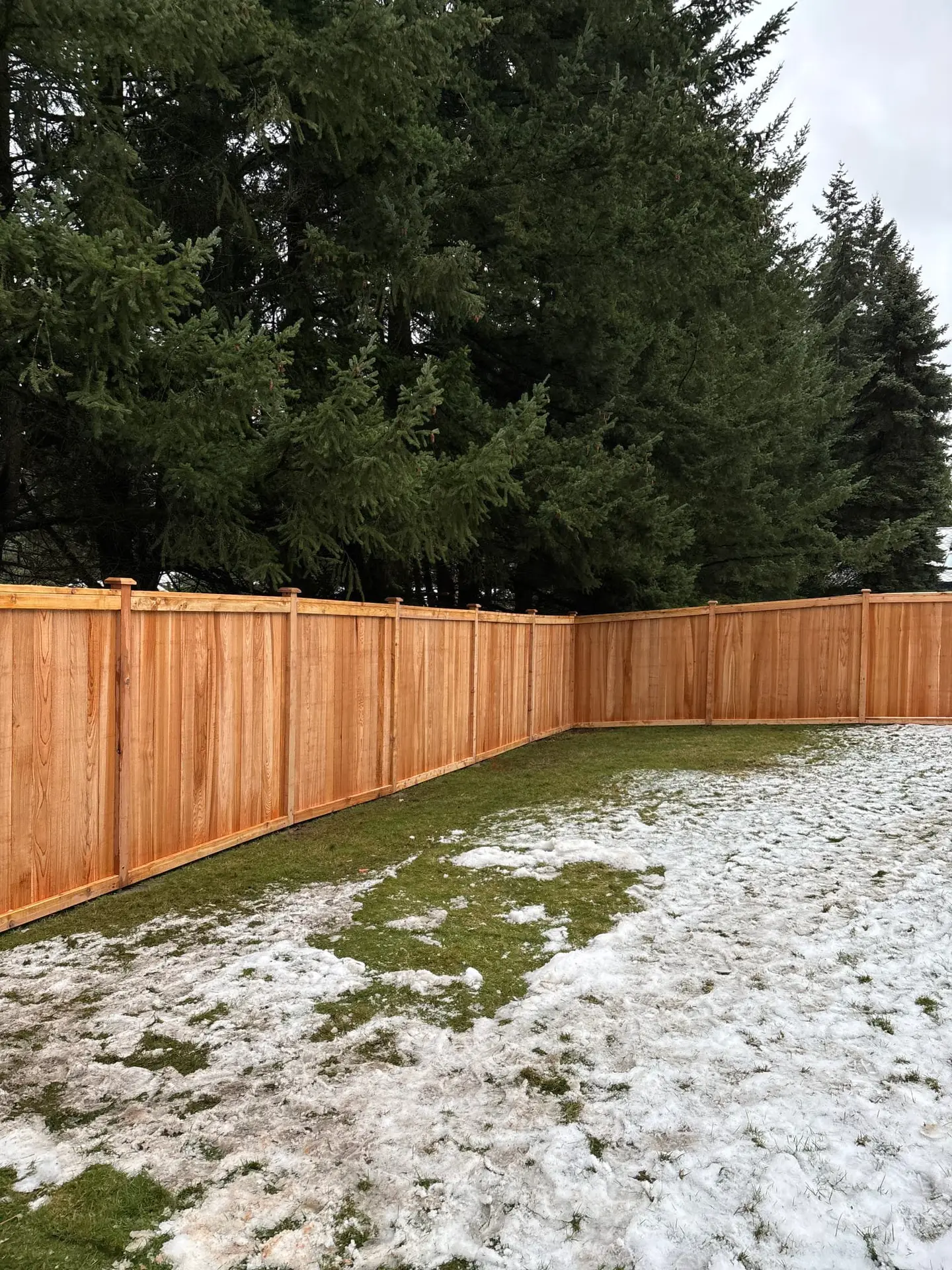
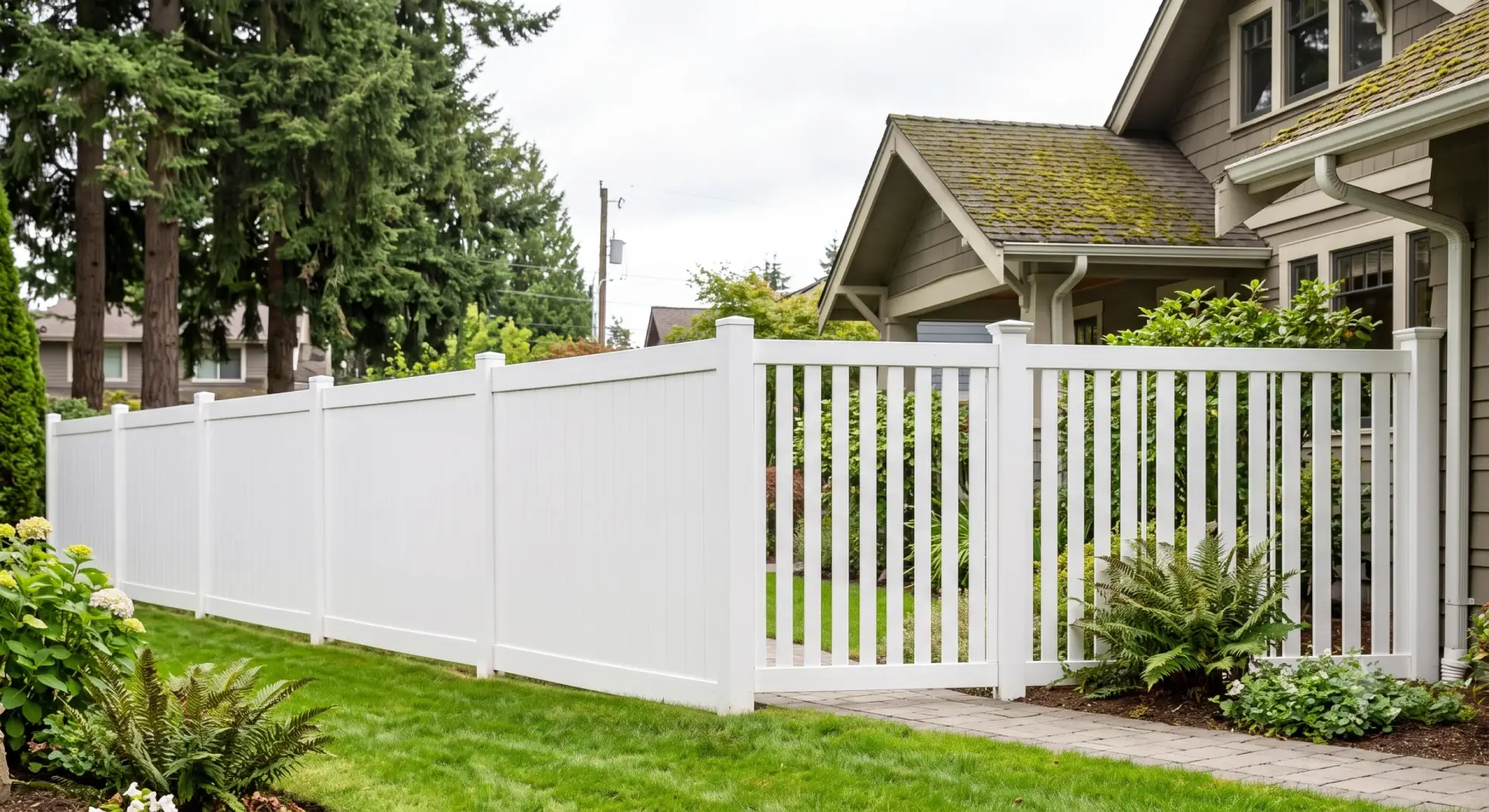
The most convincing low-cost modern fence is usually the one trying the least hard. Clean board runs, restrained gate design, and a material that suits the yard tend to age better than over-designed details. A plain cedar privacy run can feel sharper than a busy panel trying to imitate something more expensive. A straightforward vinyl privacy fence can also work when the backyard needs a cleaner, brighter, lower-upkeep edge.
This is where wood and vinyl both have real strengths. Wood and vinyl fencing can both produce a finished result, but they do it differently. Cedar brings warmth, texture, rustic charm, and a more natural fit with planting beds and softer landscaping. Vinyl brings consistency, minimal maintenance, and a crisp appearance that many homeowners like in tighter suburban settings. We note that vinyl fences need only occasional cleaning, are rot-resistant, and often come with a lifetime limited warranty; we also see cedar as one of our standout wood options for homeowners who want a more natural look. Vinyl fencing is made from synthetic plastic and is designed to be durable and weather-resistant, which helps explain why it often outlasts wood in many everyday settings. That natural resistance to rot and insect damage is part of why vinyl remains a top choice for some properties in harsh weather conditions.
The Real Cost Factors Are Usually Below Eye Level, Not in the Vinyl Fence Cost Estimate
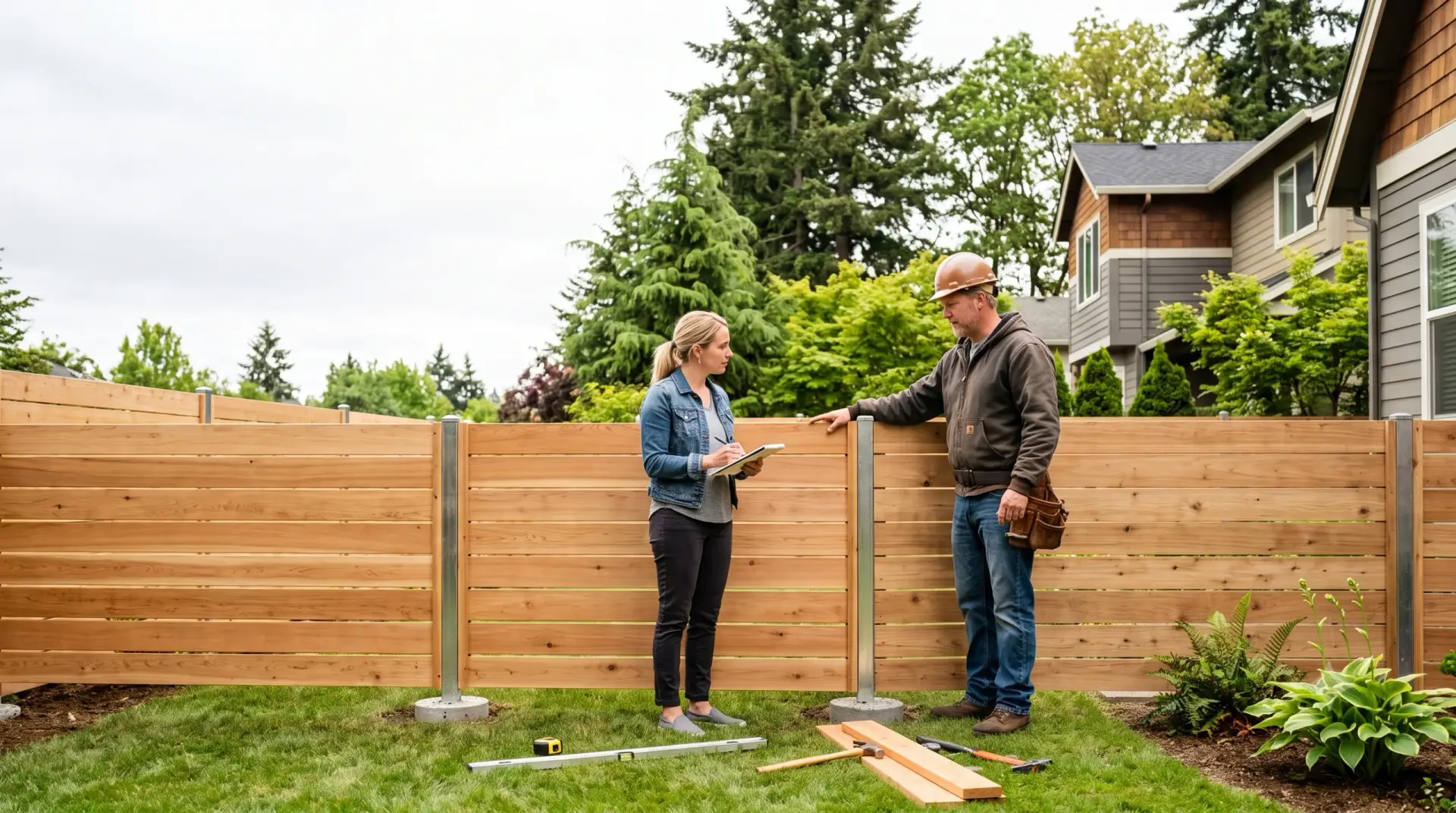
Most homeowners begin with style photos, then ask about vinyl fence cost, wood fence pricing, or a rough rate by linear foot. For a more detailed local breakdown, a wooden fence cost guide gives better context than a single national average. That is a normal start, but it is rarely where the real budget is decided. The biggest cost factors are often below eye level. Post depth, wet soil, access, slope, and drainage shape the project before paint, stain, or finish decisions ever come into play. Those cost factors affect the total cost far more than a simple number by linear foot, especially when a new fence involves demolition, hauling, and more tools than most DIY projects account for.
A short local cost snapshot helps put the “linear foot” discussion into perspective before homeowners compare wood and vinyl too loosely.
Metric | Verified number | Why it matters |
Seattle wood fence installation cost | $2,080–$5,424 | Shows the realistic local project range, not just a generic national estimate |
Seattle average wood fence cost | $3,752 | Gives readers a quick midpoint for budget planning |
Seattle labor cost | $11–$34 per linear foot | Useful when readers compare quotes by footage |
Seattle labor cost | $28–$67 per hour | Helps explain why access, terrain, and site complexity change the bill |
Added cost per gate | $220–$670 each | A practical reminder that gates move the budget fast |
That matters in the Pacific Northwest. In our drainage article, we explain that prolonged moisture around posts speeds rot, corrosion, and gradual movement in the fence line, and that long wet seasons keep soil damp for months.1 It also notes that standing water and runoff near the fence base are signs of a lifespan problem, not just a landscape issue. In other words, the fence that looked cheaper on day one can become the more expensive choice if water is allowed to sit where the posts meet the ground. That is exactly why how water affects fence lifespan belongs in a cost conversation, not only a repair conversation.
A Low-Cost Vinyl Fence Still Has to Survive the Region
That same logic is why material choice matters more than trend-driven language. Some homeowners like the rustic charm of cedar or redwood tones. Others want the cleaner look of white or tan vinyl. But in Seattle-area conditions, maintenance, moisture, and rot are not abstract concerns. On our vinyl page, we explain that, unlike wood, vinyl is rot-resistant and requires no staining or painting, and only occasional cleaning with soap and water. Most vinyl fencing is made from polyvinyl chloride, which helps explain why the material handles moisture so differently from wood.2 Vinyl requires very little seasonal attention, and vinyl fence upkeep is usually limited to rinsing, basic washing, and occasional cleaning rather than the sanding, staining, sealing, and paint prep that wood can require. Many vinyl systems also install faster because their panels are designed to lock together more efficiently than many wood builds. That makes vinyl a practical option for homeowners who want minimal maintenance and do not want yearly upkeep to be part of the plan.
Wood has its own strengths. Cedar is still a popular choice because it looks warmer, feels less manufactured, and can be customized more naturally for a modern backyard. A wood fence also gives homeowners more and more ability to customize details around gates, posts, and transitions when they want a more tailored aesthetic. Flexibility Wood can also be repainted or restained over time, which gives homeowners more freedom to refresh color as the yard changes. But unlike wood alternatives, vinyl is often chosen precisely because it does not require painting, staining, or sealing to hold its basic appearance. That does not make vinyl better for every property. It makes it better for some homeowners’ tolerance for upkeep, long-term maintenance, and overall durability.
A Simple Both Wood and Vinyl Comparison That Actually Helps Explain Total Cost
A price table would be misleading here because the provided Cool Cat sources do not publish fence-type price ranges in a form that would support a precise, source-backed wood-versus-vinyl chart. A comparison table is still useful, though, because the site provides verified guidance on upkeep, lifespan patterns, regional cost drivers, and the long-term factors that shape ownership cost. It also helps answer the most common questions about wood type, vinyl fence cost, longevity, and which materials make sense for residential fencing.
Fence option | Upfront cost pattern | Upkeep pattern | What helps it feel finished |
Cedar or other wood privacy fence | Usually lower than vinyl at the start, depending on the wood type, materials, and design. In our regional pricing article, we note that vinyl runs higher initially than wood. | Higher upkeep over time because wood can face rot, staining needs, and moisture-related wear. | Clean board layout, restrained gates, and good drainage so the fence ages evenly instead of failing at the base. |
Vinyl privacy fence | Higher upfront than wood in Cool Cat’s regional pricing article. | Lower upkeep. Cool Cat says vinyl is rot-resistant, needs only occasional cleaning, and can last 20 to 30 years or more with proper care. In practice, soap, water, and sometimes a pressure washer are enough to keep the fence clean. | Consistent lines, simple gates, and a layout that suits the house rather than over-styling the yard. |
Location Changes the Price More Than Most People Expect
One of the easiest mistakes in fence planning is assuming the same design should cost roughly the same everywhere. In our regional pricing article, we explain that fence quotes are driven by terrain, labor markets, local code, HOA requirements, and site access.3 It also says Olympia tends to sit at the more affordable end of the western Washington spectrum, while Bellevue and Mercer Island often run higher because of labor pressure, access constraints, and site complexity. That is the practical reason how location impacts fence pricing matters even when the fence style itself does not change.
So when homeowners compare materials, they should not treat a national average or a generic search result as a finished answer. A more honest budget starts with region, site, and use.
What Usually Gives a New Fence or Wood Picket Fence the Best Finished Look for Less
For many homeowners, the best bet is not the cheapest fence. It is the fence that stays visually clean without demanding constant repairs or looking temporary after the first wet season. That can mean a cedar design with simple posts, straightforward gates, and a realistic staining plan. It can also mean a vinyl privacy fence if the goal is lower maintenance, consistent appearance, and a cleaner long-term ownership experience. On some Seattle lots, spaced picket layouts and other airflow-friendly designs can help the wood dry faster after rain.
In that sense, low-cost modern fencing is not really about chasing the lowest number. It is about choosing materials and a style that do not fight the property. When that happens, the fence supports curb appeal, protects home value, and improves resale value, making the backyard feel intentionally finished instead of merely enclosed. 4 We frame vinyl as a low-upkeep option that enhances yard appeal, and we position cedar and horizontal fencing as strong design-forward choices for residential properties. Done well, a fence is a long-term investment in the look, function, and resale value of the property.
FAQ: Long Term Value, Home Value, and Resale Value
Are vinyl fences always more expensive than wood?
Not always. In many markets, vinyl costs more upfront than wood, but pricing still depends on region, labor, access, and project details.
Does vinyl really need much less maintenance?
Yes. Vinyl is rot-resistant and usually needs only occasional cleaning with soap and water.
Why can a cheap fence still end up expensive later?
Because drainage, moisture, rot, rain exposure, and even hidden warp in the boards or posts can shorten fence life if the base stays wet for long periods.
Is cedar still a good modern choice?
Yes. Cedar is a naturally attractive option that suits many residential designs, and it remains a popular choice because it can look good for decades with the right upkeep.
What matters more than a price per linear foot?
Site access, wet soil, labor conditions, and regional code often change the real total.
Can vinyl help curb appeal?
Yes. Vinyl fences can improve curb appeal by giving a yard a clean, consistent look with very little upkeep.
Why do fence prices change by city?
Fence prices change by city because terrain, labor markets, site access, code requirements, and local expectations all affect the final cost.
What is the safest low-cost approach?
Choose a simple design, match the material to the climate, and do not ignore drainage around the posts.