A backyard fence has to do more than look good on installation day. It has to hold up through wet seasons, repeated gate use, muddy traffic, shifting soil, pets, and the ordinary wear that comes from people actually living around it. That is where the wood-versus-vinyl privacy fence question gets more interesting. On paper, both can provide privacy, improve security, and give a yard a more finished edge, especially when looking at modern low-cost fence designs for a finished backyard. In real life, they age very differently. In Seattle, that difference matters. Cool Cat describes vinyl as a low-maintenance option that is rot-resistant, needs only occasional cleaning, and is built for Seattle weather, while its broader site presents cedar wood fencing as a natural, style-driven choice for homeowners who want warmth and visual character.
At Cool Cat Fence, that is really the choice. Not which material wins in theory, but which one works better once the fence becomes part of daily routine. A wood privacy fence can feel warmer and more traditional. A vinyl fence can feel easier, cleaner, and less demanding over time, especially when the requirements are privacy, security, and lower maintenance around the home. Neither answer is universal. The better choice depends on how much upkeep a homeowner is willing to accept, how important long-term appearance is, and whether the property needs a fence that can handle Seattle’s wet conditions with fewer compromises. Cool Cat’s Pacific Northwest failure guide notes that moisture drives rot risk in wood fencing, while its vinyl page says vinyl eliminates the rot cycle entirely.
Why Real Backyard Life Exposes the Difference Fast
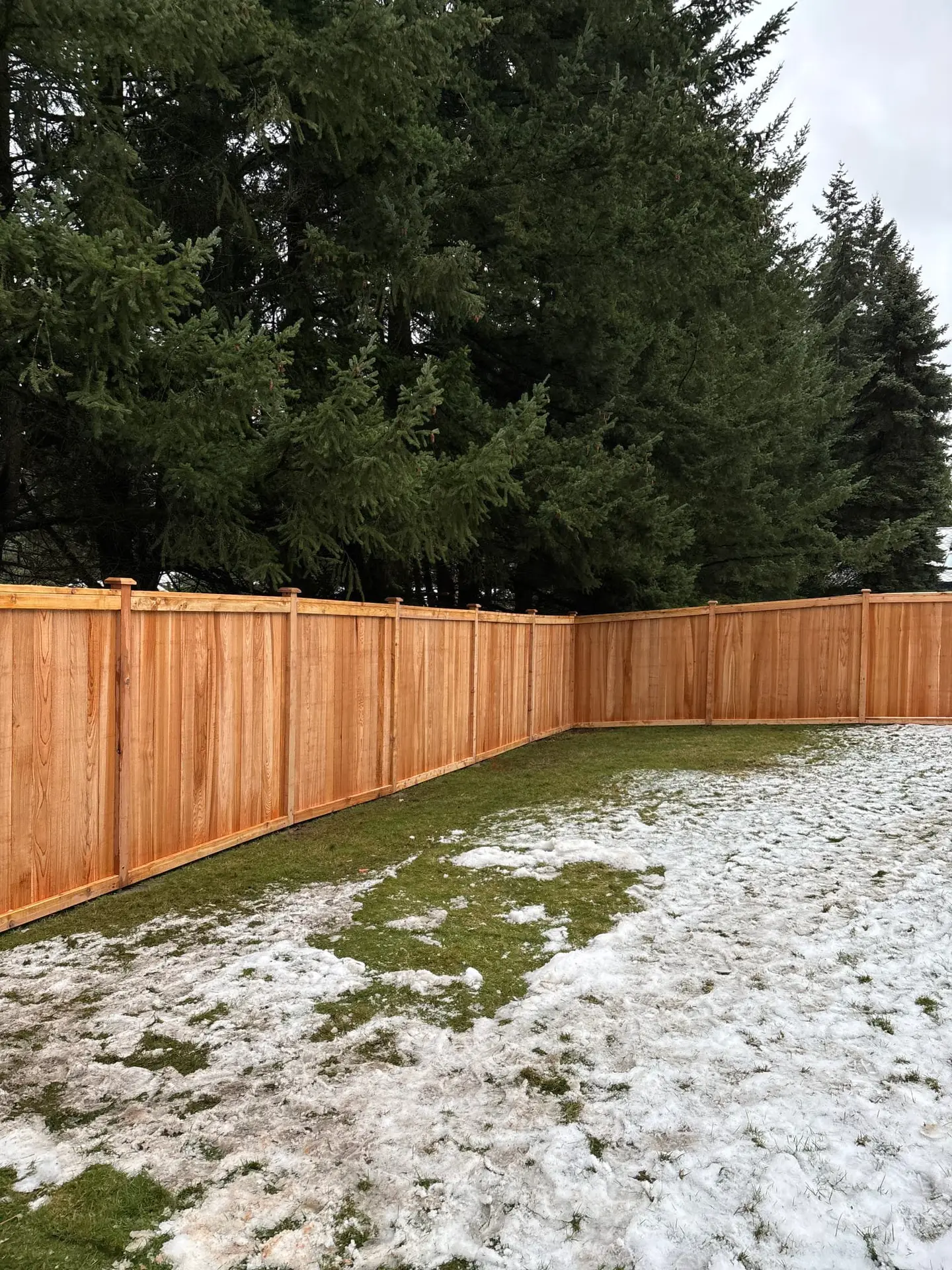
A fence is easy to judge when it is brand new. It is harder to judge after two winters, constant gate traffic, and the buildup of wet debris near the base of the posts. That is when material behavior starts showing. Wood can still be a strong, beautiful choice, but it asks more from the homeowner. It needs attention, and sometimes more than homeowners expect, especially when it comes to cedar fence maintenance and aging over time. In wet climates, lower boards, posts, and ground-contact areas take the most punishment. Cool Cat’s failure guide points to moisture trapped at grade, white fungal growth, splitting rails, and lower-board decay as real signs of wood systems absorbing water and starting to break down.
A vinyl fence usually changes that experience. It does not need staining or painting, and it is not vulnerable to rot the way wood is. For many homeowners, that is where the long-term cost picture starts to shift: vinyl can cost more upfront than some traditional materials, but minimal maintenance often saves time and money over the years. Cool Cat says vinyl fence systems are fade-resistant, require only occasional cleaning, and are designed to endure Seattle’s wet climate, strong winds, and storms. That does not make vinyl indestructible. Installation quality still matters, and even Cool Cat notes that rigid panels can be stressed if posts shift. But for homeowners who do not want the fence itself turning into an ongoing weekend responsibility, vinyl has a clear advantage.
What a Vinyl Fence Gate Feels Like in Daily Use
The material question gets very practical the moment you start thinking about a vinyl fence gate. Gates get used harder than almost any other part of a fence. They open with full hands, swing through muddy ground, get leaned on by kids, pushed by a dog, and sometimes start dragging long before the rest of the fence looks tired.
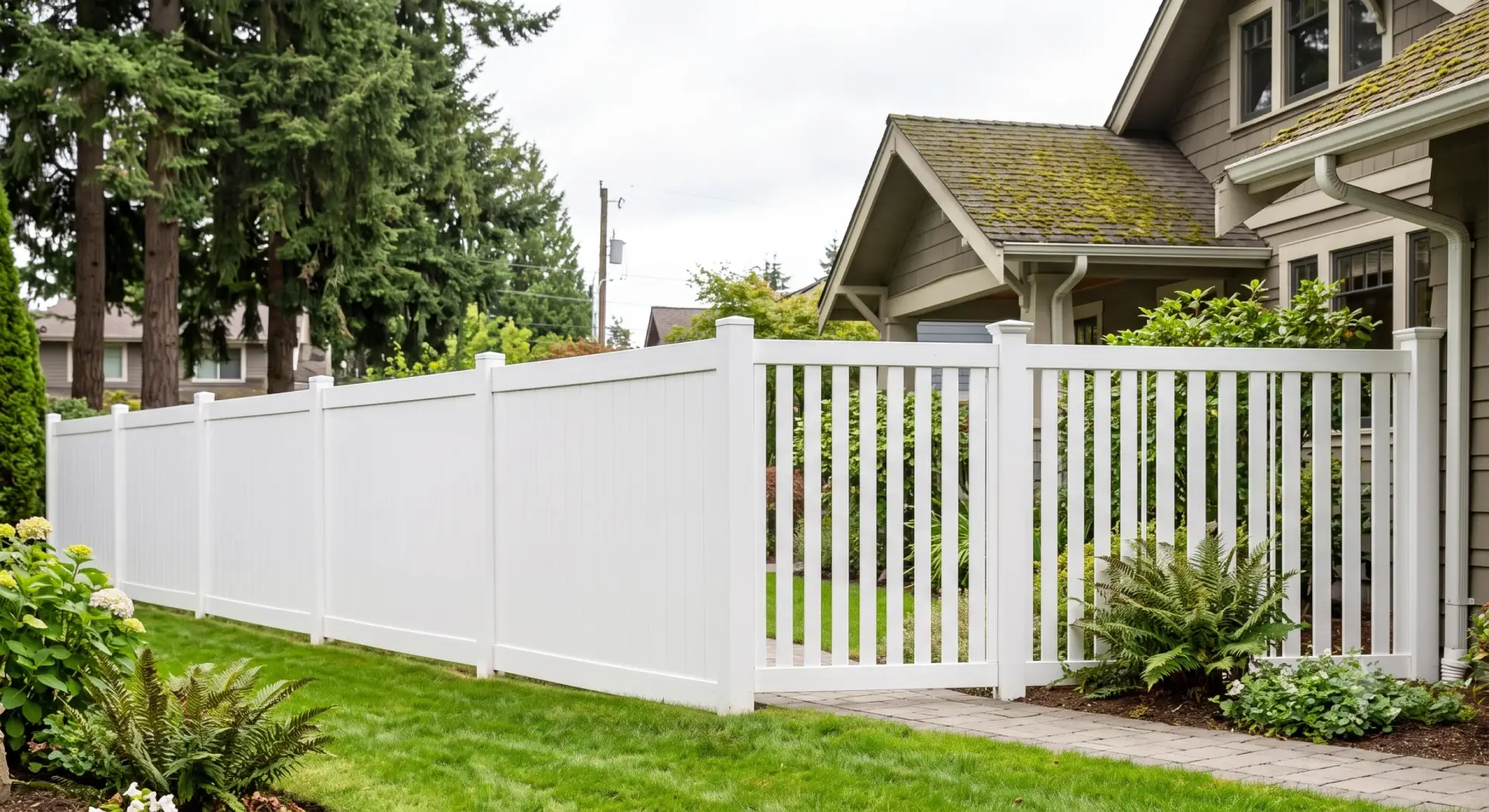
A good vinyl fence gate can be a strong answer for people who want predictable daily use with less upkeep. A vinyl fence gate does not ask to be repainted, and it fits the broader logic of a vinyl fence system that is meant to stay clean and simple over time. Details like reinforced hinges, proper latch placement, and post caps can also help the gate feel finished rather than temporary. That matters when a fence is not just a boundary but a repeated point of access. The same is true for a side gate, a larger entry gate, or even paired gates near a driveway. If the goal is a low-maintenance function, a well-built vinyl fence gate often works in the homeowner’s favor. Cool Cat positions vinyl as durable and low-maintenance, and that logic extends naturally to the gate portions of the system as well.
Wood gates can absolutely work, and they often look better to homeowners who value the natural texture of cedar or another wood species. But wood gates also tend to reveal movement, moisture exposure, and wear faster. That does not make them wrong. It just means the homeowner should be choosing them with open eyes.
Privacy, Color, and the Way the Fence Sits in the Yard
A vinyl privacy fence changes a yard differently than wood does. Wood absorbs light, shows grain, and usually feels softer against planting and mature landscaping. A vinyl fence feels more uniform. Some property owners like that because it makes the space look cleaner and more controlled, creating a calmer visual line around the yard. Cool Cat offers vinyl in multiple colors, including white, brown, and beige, and those choices can shift the look of the whole property. On Seattle lots, height also matters: residential backyard fences are generally limited to 6 feet, while some open architectural features may extend higher under specific code conditions. Seattle code generally allows fences up to 6 feet in required yards, with limited architectural features above that height if the total structure stays within 8 feet.1 White reads crisp and bright. A darker tone, like gray or even black, where available in broader fencing palettes, tends to feel quieter and less visually dominant. Gray can soften the look of a vinyl fence near planting beds, while black can enhance contrast around a modern home, as seen in black chain link fence in real backyards. Cool Cat’s page specifically highlights white, brown, and beige vinyl color options and notes that vinyl is available in multiple styles and heights.
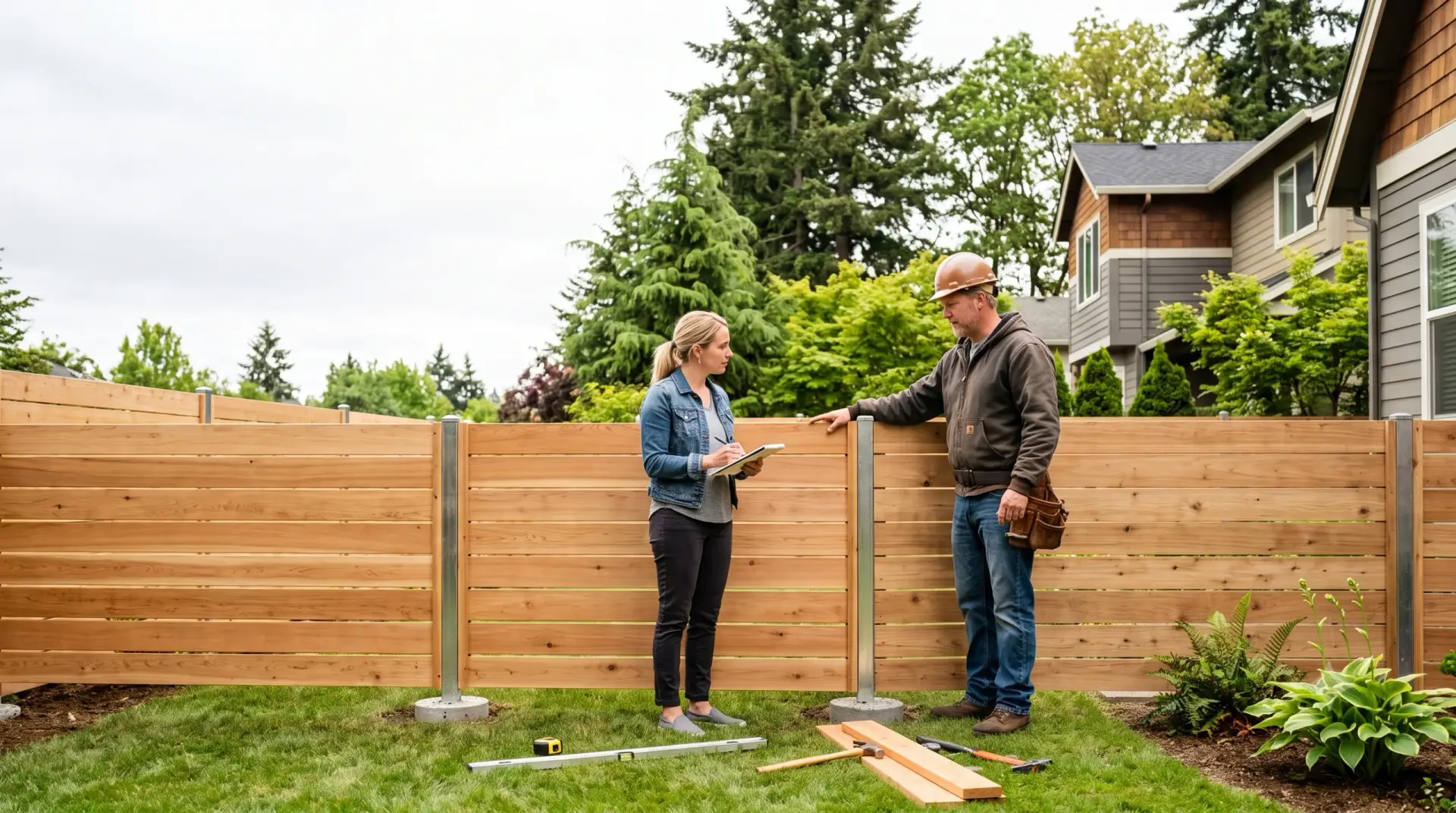
That said, wood still wins for homeowners who want a more natural finish. A cedar fence feels less manufactured, especially when homeowners explore horizontal wood fence ideas for backyard space. Cedar also explains why wood remains popular in the Pacific Northwest: it has natural character, decent rot resistance, and a warmer finish, but it still needs proper upkeep if the owner wants it to age well.2 It can be built to suit the house more specifically, provide a warmer edge to the property, and carry a different kind of value because it looks more grounded in the landscape. So when homeowners choose between wood and a vinyl privacy fence, they are not only choosing a material. They are choosing how much visual uniformity they want in the space.
What Seattle Conditions Do to the Decision
This comparison gets sharper in Seattle because moisture changes the math. Cool Cat’s wet-climate guide says Seattle receives more than 70 percent of its annual rain from October to March, and that wood which absorbs moisture through the wet season often reveals damage in spring. The same guide says vinyl absorbs under 0.1 percent moisture, compared with cedar’s far higher saturation range, and requires very little ongoing maintenance. Those are not cosmetic differences. They go directly to how long the fence keeps its structural integrity without demanding repeated upkeep.
For homeowners comparing vinyl and wood in Seattle, the practical differences usually look like this:
Factor | Vinyl privacy fence | Wood/cedar privacy fence |
Typical Seattle backyard height limit | 6 ft, with limited open architectural features up to 8 ft | 6 ft, with limited open architectural features up to 8 ft |
Typical lifespan | 20–30+ years | 15–25 years with proper care |
Regular maintenance | Occasional cleaning with soap and water | Sealing, staining, cleaning, and moisture checks |
Main moisture risk | Post movement or installation stress | Rot, lower-board decay, rail splitting, and ground-contact damage |
That is why fences fail in wet climates is not an abstract question. In Seattle, it is often the question. A wood fence can still be the right call if it is well-built, well-detailed, and properly maintained. In wet yards, that usually means paying close attention to post installation, drainage, and ground contact, because gravel or concrete footings can help reduce premature decay around fence posts. But if the owner wants fewer maintenance decisions and less vulnerability to moisture-related decline, a vinyl fence has a real advantage in this region, especially when durability matters more than a natural wood finish. Cool Cat’s vinyl page leans into exactly that point, presenting vinyl as a practical, weather-ready material for Seattle-area homes and businesses.
Repair, Replacement, and What Happens Later
One of the best ways to compare materials is to ask what happens when something goes wrong. Cool Cat’s Seattle repair guide says the repair-or-replace decision should be structural, not cosmetic, and that isolated problems like a single loose post or worn hinge can often be repaired, while broader alignment loss, chronic sagging, or multiple failing posts usually point toward replacement. In wet conditions, recurring issues tend to become expensive when the underlying problem is still there.
That matters for wood more often because wood is more exposed to moisture-related wear. A vinyl fence can still need repair, and Cool Cat explicitly says it offers repair services for existing vinyl fences. But the nature of the problem is often different. With wood, homeowners may be trying to maintain material that is already absorbing water and gradually weakening. With vinyl, the appeal is that the material itself is not entering the same rot cycle. So if the homeowner is already thinking ahead to fence repair or replacement in Seattle, that future maintenance burden should be part of the original material choice.
So What Works Better?
For real backyard life, a vinyl privacy fence usually works better when the priorities are low upkeep, predictable appearance, and fewer moisture-related headaches from the start to the end of the fence’s service life. It is a strong fit for homeowners who want privacy, cleaner ownership, and a fence that does not keep asking for attention. In Seattle, that is a serious advantage. Cool Cat’s own material guidance supports that view by tying vinyl to minimal maintenance, weather resistance, and freedom from the rot cycle.
Wood works better when the homeowner cares more about natural character, warmer aesthetics, and the look of a fence that feels less manufactured. Cedar can be especially appealing for that reason, but homeowners typically see price differences because construction methods, post choices, board layout, and material grade all affect the final estimate. A wood fence can absolutely be the more satisfying choice to live with, but it is rarely the easier one. That is the honest tradeoff. Many homeowners will still prefer wood, and that is reasonable. Others will be happy with a vinyl fence and even happier when they realize how much maintenance they avoided over the years.
FAQ
Is a vinyl privacy fence better than wood in Seattle?
Often, yes, if low maintenance and wet-climate durability are the priority. Cool Cat presents vinyl as rot-resistant and designed for Seattle weather.
Does a vinyl fence gate hold up well?
A well-built vinyl fence gate can work very well for daily use, especially when homeowners want less upkeep than wood usually requires.
Does wood still make sense for a backyard fence?
Yes. Wood still appeals to homeowners who want a warmer, more natural look and are willing to accept more maintenance over time.
Why do fences fail faster in wet climates?
Moisture trapped near posts and lower boards can accelerate rot, leaning, and structural decline in wood fencing.
Can vinyl fences be repaired?
Yes. Cool Cat says it offers repair services for existing vinyl fences.
Are vinyl fences available in different colors?
Yes. Cool Cat highlights white, brown, and beige vinyl options, as well as multiple styles and heights.
When is replacement smarter than repair?
When multiple posts are failing, alignment is lost, or the fence is deteriorating as a system rather than in one isolated spot.
Is vinyl always the right choice?
No. It is often the easier choice, but some homeowners still prefer wood for its appearance and the way it sits in the landscape.